Last Updated: October 12, 2026
Last Updated: October 12, 2026





~Avinash Rai Khanna, Former MP
India is a land of great sages, monks, saints, mahatmas, renunciants, and ascetics. This land teaches us the tradition of yajna. Yajna means living not for oneself, but for others. The culmination of this yajna tradition is seen in the life of Maharishi Dadhichi, who gave up even the slightest attachment to his own life before donating all his bones for the welfare of the world.
A scientific tradition began in our country, associated with the name of Maharishi Dadhichi, which began with eye donation and ended with body donation. Today, India is a leading country in the field of organ donation. The tradition of donating bodies after death is also gaining momentum in India. The corpse is used as a very useful laboratory book for the education of medical students. Our future doctors, or medical students, gain a much more direct understanding of the body’s internal mechanisms by looking at the pictures in the book than they can by directly observing the organs inside the corpse.
The tradition of eye donation has become very popular, but special care must be taken to ensure that the eyeballs must be removed and implanted into the eyes of another patient within a few hours of death. This cannot be done within three to four hours of death.
All the organs in our bodies have been gifted to us by God as a divine gift. Each organ holds immense significance in our lives. When we can meditate on divinely gifted organs like eyes, blood, kidneys, and so on, why hesitate to donate man-made organs? Just as many hospitals operate eye and blood banks, similarly, banks for artificial organs like heart valves, pacemakers, prosthetic arms and legs can be established after donation.
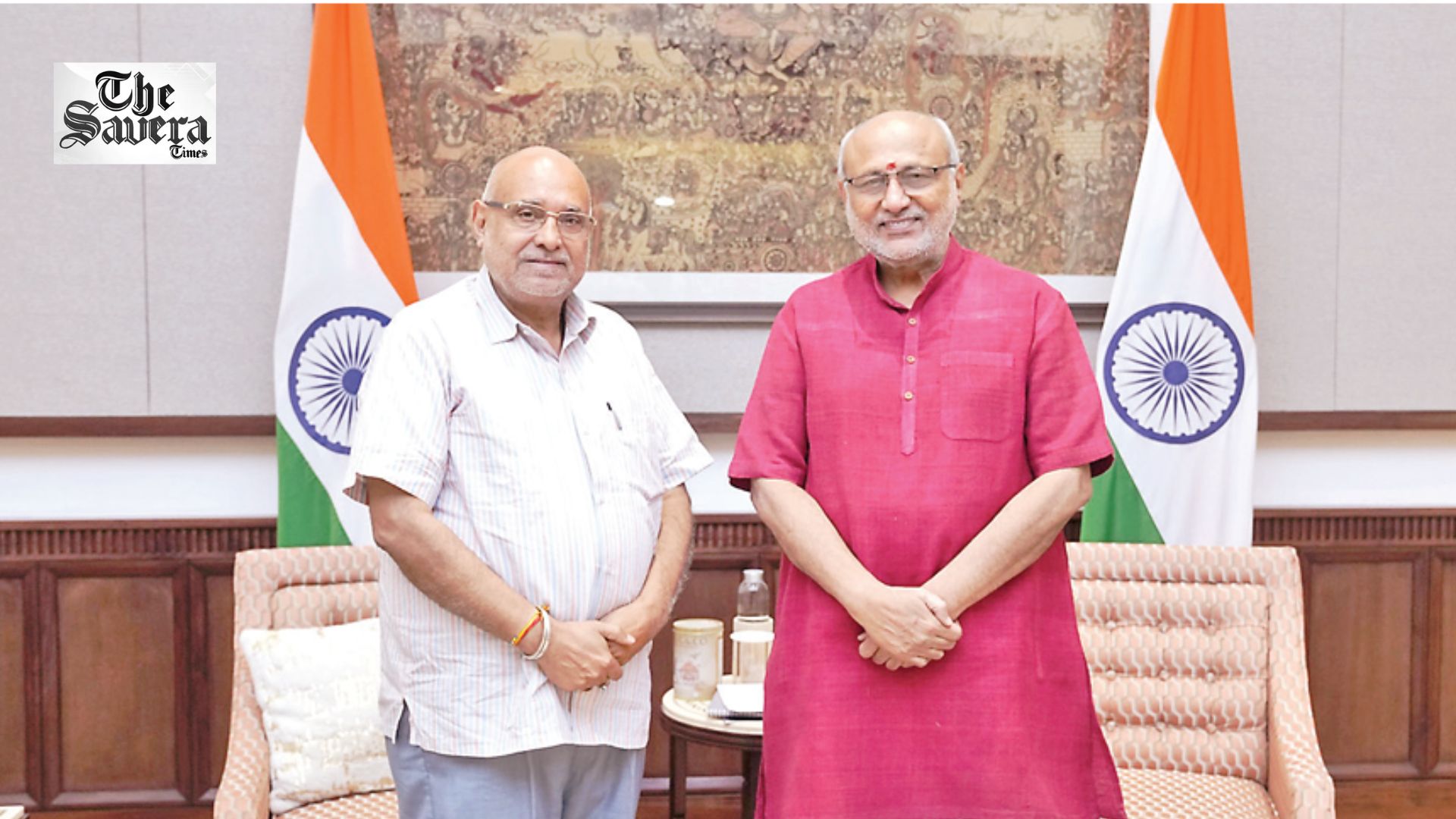
I have written a letter to the Prime Minister, Health Minister, and Vice President of India, specifically urging them to emphasize the importance of humanitarianism in the health sector and to encourage the public to embrace it. I even personally met with Vice President C.B. Radhakrishnan and had a detailed discussion on organ and body donation. He also acknowledged that if such initiatives were implemented as government schemes, a large number of patients could benefit. Sometimes, a valve is implanted for heart disease, and some receive a pacemaker. This valve and pacemaker cost approximately Rs 1.5 lakh to Rs 1.2 lakh. These artificial organs are not useless after death. Therefore, if these organs are removed from the dead body, they can be cleaned and transplanted into other patients. This initiative can be extremely helpful, especially for poor patients who do not have sufficient funds to purchase these organs.
A special research paper was published in the Indian Heart Journal (1996), which clearly demonstrated that reusing valves and pacemakers is beneficial in the long term. Some medical institutions in Mumbai and Vellore have successfully implanted valves and pacemakers donated after death into other patients. Scientifically, this is a completely successful process, but by creating public awareness and developing a well-organized system, this work can be made even more successful. The campaign, titled “My Heart, Your Heart,” could prove successful in inspiring the public. This campaign will benefit many patients and will also sow the seeds of unity, harmony, and humanity in society.
To achieve this, the Prime Minister should connect the entire Indian public with the “My Heart, Your Heart” campaign through “Mann Ki Baat” and other mediums. Today, the Indian public responds passionately to the appeals of our current Prime Minister, Shri Narendra Modi.
The Ministry of Health of India should involve various medical and research institutions and make and implement guidelines and working rules at the national level so that this great process is not misused anywhere.
In addition to these heartrelated organs, many other devices used by deceased individuals during illness or disability can also be donated to benefit the poor. For example, companies that manufacture artificial limbs like hands and feet can reconstruct them for implantation into other disabled individuals at a very minimal cost. Thus, such humanitarian initiatives, led by the Indian government, can ensure special medical support for the poor and helpless. Such traditions will also prove helpful in making India a uniquely spiritu
BJP leader Kirit Somaiya has announced plans to file a complaint against actor Imran Khan over alleged OCI...
Start your day with The Savera Morning Brief, bringing you the top India and world news, breaking developments,...

Maharashtra MPSC Chairman Vivek Bhimanwar has been sent on compulsory leave until the inquiry into the alleged paper...
Rahul Gandhi and other INDIA bloc leaders are set to march towards the Supreme Court over alleged electoral...
Uttar Pradesh Chief Minister Yogi Adityanath extends greetings on the second day of Shardiya Navratri, dedicated to Maa...
New Delhi: Chief Justice of India (CJI) Surya Kant has declined a request from the Congress-led INDIA bloc...
Aries: The day will be auspicious...