Last Updated: October 15, 2026
Last Updated: October 15, 2026





Islamabad: Pakistan’s Khyber Pakhtunkhwa province faces a deepening political, security, and economic crisis following the imposition of emergency and governor’s rule. According to a report, this decision has effectively ousted the Pakistan Tehreek-e-Insaf (PTI) provincial government from power.
The federal government led by Prime Minister Shahbaz Sharif and President Asif Ali Zardari justified the decision, alleging that the provincial government had failed to tackle militancy. However, this move came at a time when the PTI was protesting demanding the release of its founder and former Prime Minister of Pakistan, Imran Khan.
Khyber Pakhtunkhwa Chief Minister Sohail Afridi and several other PTI leaders have been detained. According to a report by India Narrative, this move strengthens the control of the federal government and the military. Khyber Pakhtunkhwa has long been a stronghold of Imran Khan’s party.
PTI calls Governor’s rule a ‘coup under the guise of emergency’
PTI spokesperson Zulfiqar Bukhari condemned the decision to impose Governor’s rule in Khyber Pakhtunkhwa, calling it a ‘coup under the guise of emergency’.
Bukhari wrote on the social media platform, “I strongly condemn the arrest of Chief Minister Sohail Afridi and Junaid Akbar, who had the sole mandate. This coup, carried out under the guise of emergency or Governor’s rule, has crushed the remaining democratic system in Pakistan. This will lead to further instability and its adverse consequences. The regime must be feeling proud of this.”
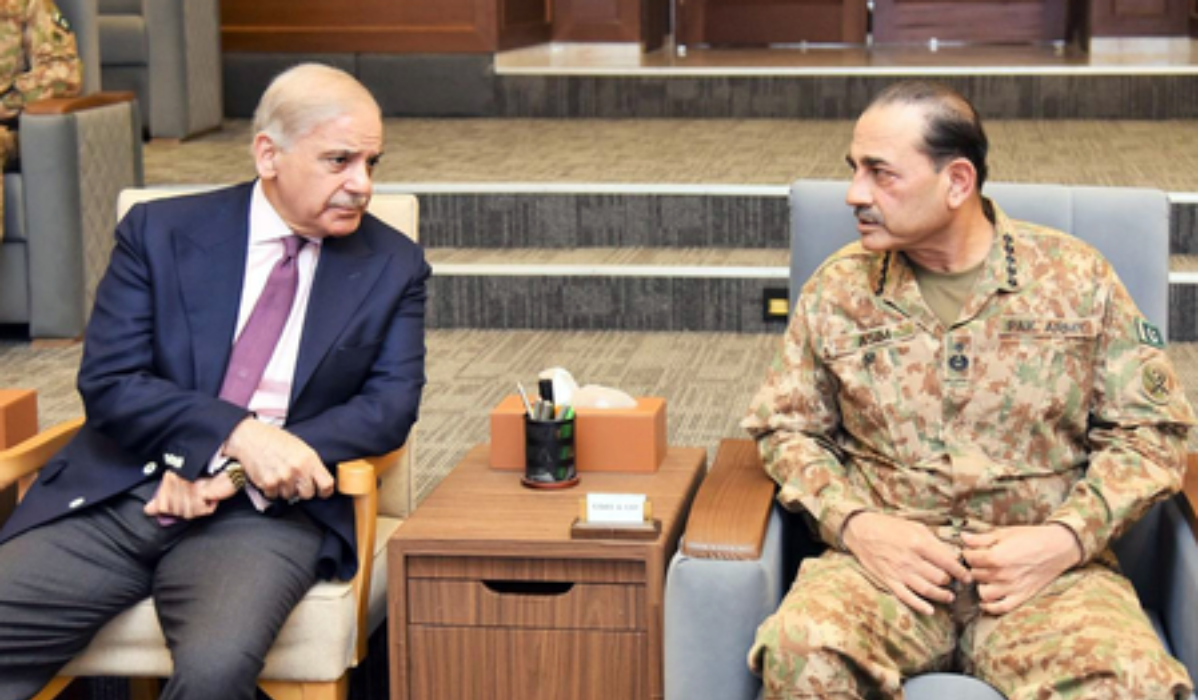
Meanwhile, the powers of Pakistan Army Chief Asim Munir have also been increased. He has been appointed Chief of Defence Forces while remaining the Army Chief.
According to the report, following constitutional and legal changes in Pakistan, Munir has been given operational command of the army, navy, and air force. Furthermore, his influence over the nuclear command structure has increased. He has also been granted lifelong legal immunity, and his tenure is likely to be extended until 2030. The report states that this has strengthened the military’s influence without a traditional military coup.
Terrorism and Security Threats Increase in Pakistan
Pakistan’s security situation has deteriorated rapidly. The Global Terrorism Index 2026 ranked Pakistan as the world’s most affected country by terrorism, based on data from 2025.
According to the report, more than 1,000 terrorist incidents occurred in Pakistan, resulting in over 1,100 deaths. This is the highest number of deaths since 2013.
Violence has further increased in 2026. According to a research center cited in the report, deaths from violence increased by 83 percent in the third quarter compared to the previous quarter. Most of these deaths occurred in Khyber Pakhtunkhwa and Balochistan.
According to the report, police, security forces, and civilians are being targeted in Pakistan. Tehreek-e-Taliban Pakistan (TTP) and Baloch separatist groups are also carrying out frequent attacks.
In response, Pakistan has carried out airstrikes in Afghanistan and increased the deployment of security forces along the border.
Pakistan’s Economy Dependent on IMF Assistance
Pakistan relies on assistance from the International Monetary Fund (IMF) under the Extended Fund Facility (EFF) and the Resilience and Sustainability Facility to support its economy.
According to the report, a staff-level agreement reached in early October 2026 paves the way for approximately $1.2 billion in additional financial assistance. However, this requires approval from the IMF’s Executive Board.
Pakistan’s economic growth rate is projected to be 3.5 to 3.6 percent, while inflation is expected to be around 9.9 percent. The country’s foreign exchange reserves have recovered from previous low levels. The government is also working towards privatization and fiscal reforms.
However, fluctuations in energy prices, rising debt, and weak investment remain obstacles to economic recovery.
The report states that Pakistan’s economic stability remains fragile and the country’s economy remains largely dependent on external financial assistance.
Islamabad: At least 31 children and two female teachers were killed, and more than 50 other people were...
Islamabad: Pakistan Tehreek-e-Insaf (PTI) claimed that one person was killed and more than a dozen injured after police...
The Pakistan security establishment has issued an urgent directive recalling retired army personnel for re-enlistment to combat severe...
Islamabad: A child was killed and four other people injured as rains continue to wreak havoc in Mardan...
Drug menace in Punjab is not only Punjab’s problem, it is a national problem. Punjab shares 553 kms...
The current phase of the conflict in Pakistan’s Balochistan province resurfaced in the early 21st century, driven by...
Aries: The day will be auspicious...