Last Updated: October 22, 2026
Last Updated: October 22, 2026





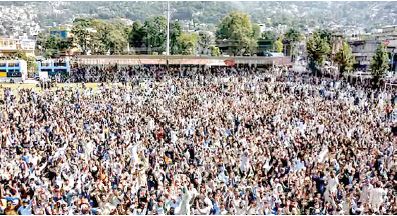
The Pakistani government has reached an agreement with protesters in Pakistan-occupied Kashmir (PoK), ending days of unrest that had left several people dead and many injured. The demonstrations, driven by economic grievances and demands for better governance, had gripped the region since late September and exposed deep-seated frustration among residents over Islamabad’s policies in the territory.
The latest round of protests began on September 29, 2025, when talks between the authorities and the Jammu Kashmir Joint Awami Action Committee (JKJAAC) collapsed. The committee, representing various civil and political groups in PoK, had presented a 38-point charter of demands that included relief on electricity tariffs, fuel prices, and improved public services. When their demands were not met, the group called for a strike and mass demonstrations that quickly turned violent.
The unrest followed a deadly episode in Khyber Pakhtunkhwa, where 30 civilians were killed in Pakistan Air Force airstrikes reportedly carried out using Chinese-made LS-6 laser-guided bombs launched from J-17 fighter jets. The tragedy heightened public anger across several regions, including PoK, where residents accused the government of neglecting civilian welfare while pursuing military operations.
As protests spread, violent clashes broke out between demonstrators and security forces. At least 10 people, including three policemen, were killed, and hundreds were injured. Roads were blocked, government offices were shut, and normal life came to a standstill. The situation prompted Islamabad to take urgent steps to prevent further escalation.
On October 1, Prime Minister Shehbaz Sharif sent a high-level delegation to Muzaffarabad to engage with the protesters and defuse tensions. The team was led by former prime minister Raja Pervaiz Ashraf and included senior government officials and lawmakers. Over two days of marathon discussions, the delegation negotiated directly with JKJAAC representatives in an attempt to reach a compromise.
The talks concluded late Wednesday night, with both sides signing a detailed agreement to restore peace in the region. Minister for Parliamentary Affairs Tariq Fazal Chaudhry announced the breakthrough on social media, saying the “final agreement” had been signed and protesters were returning home. “All roads have been reopened. This is a victory for peace,” he wrote on X.
The agreement, comprising 25 points, addressed several key demands of the protesters. Among the immediate measures, the government pledged compensation for the families of those killed in the violence. It also promised to register terrorism cases against those involved in acts of vandalism and violence that led to the deaths of both police personnel and civilians, signaling a bid to balance accountability with reconciliation.
The federal government also agreed to set up two new intermediate and secondary education boards in Muzaffarabad and Poonch divisions to improve access to educational facilities across PoK. In addition, the local government will release funds within 15 days to implement a health card scheme that guarantees free medical treatment for patients. The plan includes the phased installation of MRI and CT scan machines in every district, with support from Islamabad.
One of the most significant components of the accord was the commitment of PKR 10 billion from the federal government to upgrade the region’s electricity infrastructure. This move aims to address long-standing complaints about erratic power supply and inflated electricity costs, which were among the central triggers of the protests.
The agreement brought an end to one of the most intense periods of civil unrest in PoK in recent years. The demonstrations reflected growing discontent over economic hardship, inflation, and limited public services in the region. While the accord has temporarily restored calm, observers say its implementation will be the real test for the Sharif government.
For now, life in Muzaffarabad and other affected towns is gradually returning to normal. Shops have reopened, traffic has resumed, and protest camps are being dismantled. Yet, the events of the past week have left behind questions about governance, resource allocation, and Islamabad’s relationship with its administered territories. The deal may have ended the protests, but the discontent that fuelled them remains close to the surface.
Pakistan's Defense Minister Khawaja Asif has questioned alleged plans by senior government officials to permanently settle abroad. He...
The Baloch Liberation Army (BLA) has claimed responsibility for carrying out 34 operations between October 9 and 20...
Russian President Vladimir Putin said on Wednesday that Russia's first tanker carrying 40,000 tons of diesel fuel will...

Ten people were killed and 44 others injured in a horrific road accident in Pakistan's Punjab province. The...
North Korean leader Kim Jong-un's influential sister, Kim Yo-jong, and a military marshal inspected fortification work along the...

New Delhi: US Secretary of State Marco Rubio has assured India that America’s relations with any country in...
Aries: The day will be auspicious...