


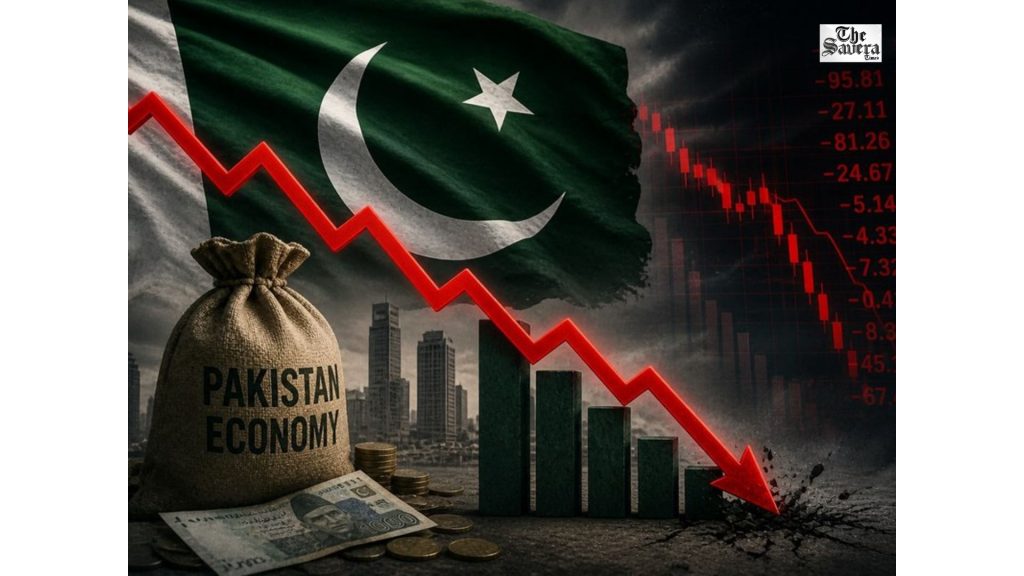
New Delhi: Pakistan’s foreign exchange buffers could fall sharply to $6.8 billion by the end of 2026 and approach $1.6 billion by FY28, if the country’s current macro policies continue to collapse, a new report has said.
The report cited analysts as saying that Pakistan has very limited room to absorb the fuel price hike because of its thin foreign exchange reserves, dependence on imported energy and reliance on IMF-backed reforms.
Lower imports in Pakistan due to policy curbs and weaker demand were likely to ease immediate pressure on the foreign exchange reserves but it would intensify domestic shortages, raise inflation and weigh down the growth.
Such cascading economic risks would raise the probability of fallout from Pakistan’s IMF‑backed program.
“But that recovery remains fragile, with the funding heavily dependent on strict adherence to conditions focused on fiscal discipline, tax expansion and governance reforms,” it said.
“Pakistan’s bid to mediate between the US and Iran has put Islamabad near the centre of efforts to defuse the Middle East conflict, but with no lasting peace yet in sight, its fragile economy is becoming increasingly exposed to the fallout from the war,” the report said.
Pakistan has implemented sweeping austerity and fuel‑conservation steps since March which include a four‑day government work week, remote working permissions, two-week school closures and fuel allowance cuts for government vehicles.
Another recent report has warned that Pakistan is in severe dependence on Gulf financing, and over‑reliance on Saudi Arabia increases vulnerability of foreign policy compromise.