Last Updated: October 13, 2026
Last Updated: October 13, 2026





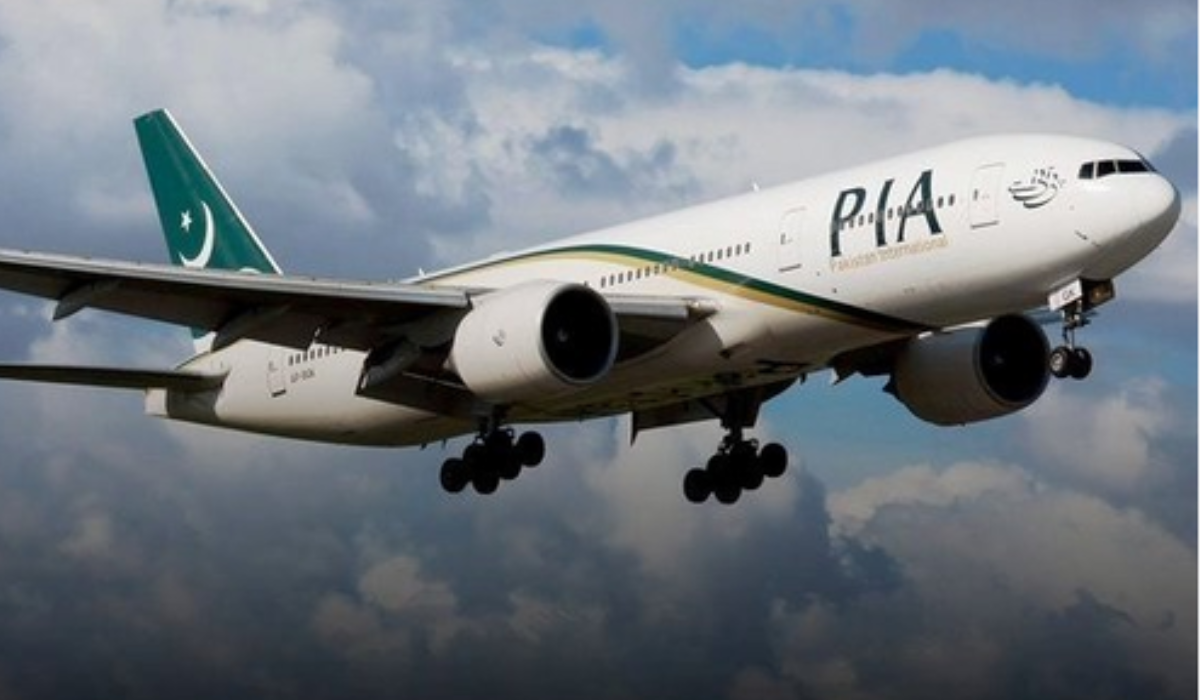
New Delhi: Poor governance and mismanagement, fueled by political interference, are leading to Pakistan’s state-owned enterprises incurring huge losses, which are then sold at throwaway prices. According to an article published in Pakistan’s Express Tribune, governments continue to postpone difficult decisions instead of implementing reforms.
The article states that state-owned enterprises are run for long periods despite declining performance, political interference, and weak accountability. When these institutions are mired in huge losses and unsustainable debt, privatization is suddenly presented as a solution. During this time, professional management is replaced by political appointees, business discipline is lost, and inefficiency becomes the norm. Selling them after years of neglect and losses incurred with public funds is simply socializing the losses and transferring the profits to private hands.
PIA and PTCL: Examples of a Failed Privatization Policy
The article states that privatization in Pakistan has often been less a part of planned economic reforms, but rather a forced “fire sale.” Pakistan International Airlines (PIA) is a prime example. Once a prestigious regional airline, PIA was weakened by overstaffing, political interference, and a lack of business thinking. Governments turned it into a tool for political patronage rather than a commercial entity. Despite billions of rupees spent, service quality declined and competitiveness was lost. Ultimately, its privatization was not part of a strategy, but an admission of long-standing administrative failure.
Privatization advocates often cite the telecommunications company PTCL as an example of success. True, technical and operational improvements were made after privatization. However, according to the article, this case also highlights the flaws in Pakistan’s privatization policy. Even years later, thousands of former government employees and pensioners are embroiled in legal battles over salary, pension, and service entitlements. This demonstrates that while the emphasis was on completing the transaction, human and legal responsibilities were ignored.
No Benefits to Consumers, Rising Prices and Weak Regulation
The article also points out that the notion that privatization always results in cheaper services is misleading. Pakistan’s experience is the opposite. K-Electric is a case in point—despite privatization, electricity rates did not decrease but instead rose to record levels. Without strong regulation, privatization merely replaces public monopolies with private monopolies, with greater pricing power and less accountability.
The article also mentions Britain’s railway system, where privatization fragmented the system, increasing fares, becoming commonplace, and leaving behind a burdensome old infrastructure. In contrast, European countries like Germany and France maintained public ownership and developed modern, high-speed rail networks that are superior in reliability and efficiency to Britain’s private system.
The Pakistan security establishment has issued an urgent directive recalling retired army personnel for re-enlistment to combat severe...
Islamabad: A child was killed and four other people injured as rains continue to wreak havoc in Mardan...

Drug menace in Punjab is not only Punjab’s problem, it is a national problem. Punjab shares 553 kms...

The current phase of the conflict in Pakistan’s Balochistan province resurfaced in the early 21st century, driven by...

Patna: Four minor girls drowned while bathing in a pond in Bankat village under the Paharpur police station...

Kabul: Pakistan’s actions have imposed a heavy human toll on Afghan civilians, with millions of refugees displaced, tens...
Aries: The day will be auspicious...