Last Updated: October 13, 2026
Last Updated: October 13, 2026





~Abhishek Vij
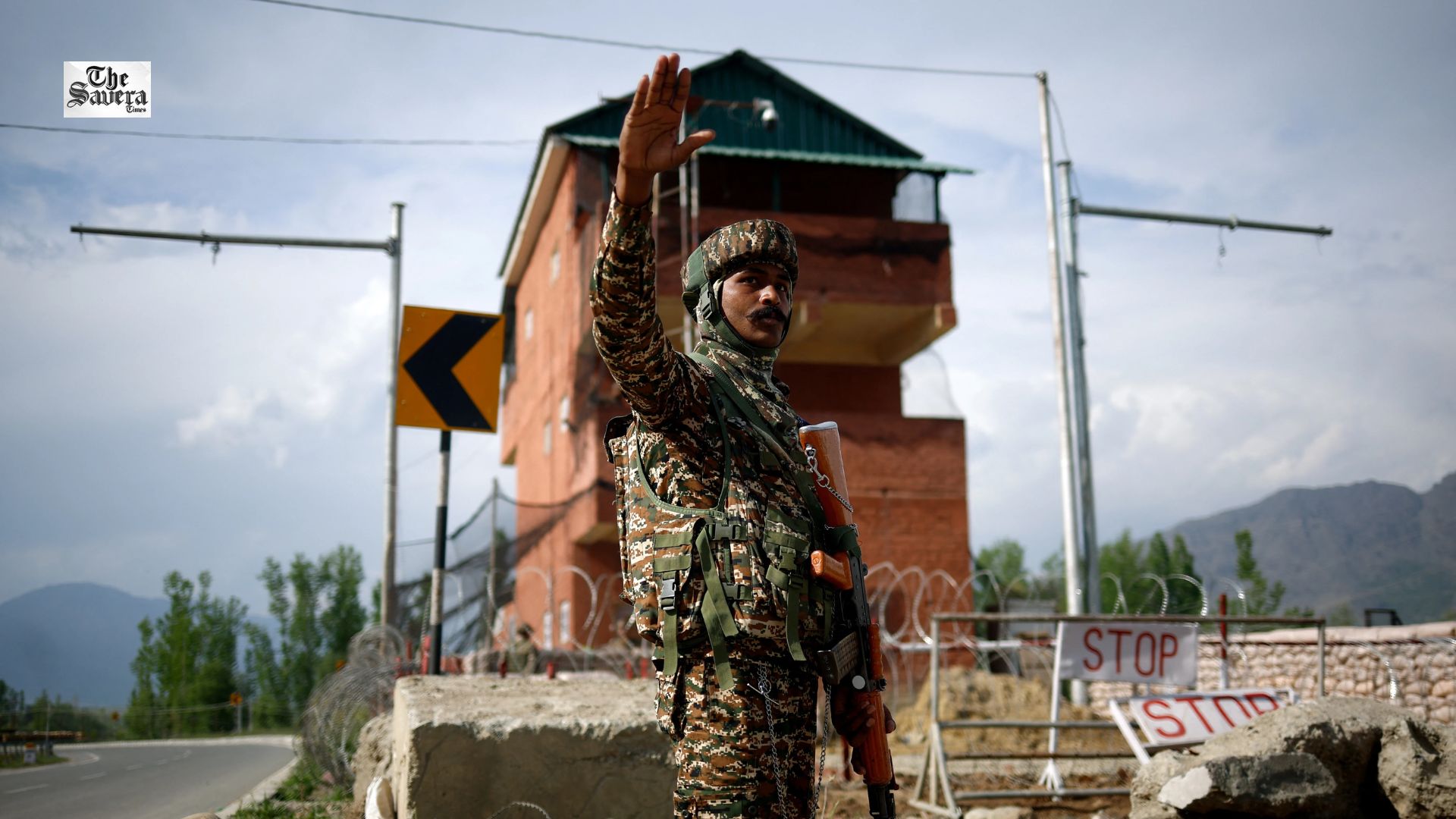
Has global politics today become centered on war? It often follows a pattern: first a proxy war, then a diplomatic conflict, followed by instigating tensions over an issue to launch a direct attack, accompanied by claims of victory and declarations of destroying the enemy nation. We are not discussing a potential US-Iran or Israel-Hezbollah war here; rather, we are analyzing the recent threats of war issued by Pakistan against India—statements claiming they would “teach India a lesson” or make it “pay a price.” India’s Defence Minister, Rajnath Singh, responded on Saturday, stating that if India were forced into a war, it would not end quickly; it would be a prolonged conflict, and India would once again strike Pakistan by entering its own territory. Indian leaders have consistently maintained that “Operation Sindoor” has not been abandoned but merely suspended.
Should Pakistan commit any act of aggression, the operation would be resumed immediately. Recently, PPP leader Bilawal Bhutto Zardari threatened India in the Pakistani parliament, stating that if India attempted to revoke the Indus Waters Treaty and halt the water supply to Pakistan, Islamabad was prepared to teach New Delhi a lesson. Defence Minister Rajnath Singh has already delivered a stern rebuttal to this empty bluster. Indeed, Pakistani leaders—both prominent and minor—frequently engage in such hollow rhetoric.
The question arises: is Pakistan stoking this heated political rhetoric because the majority of citizens in PakistanOccupied Kashmir have turned against Pakistan and its rulers? Local residents there observe that PakistanOccupied Kashmir has not achieved even a fraction of the progress seen in Indian-administered Kashmir over the years. The region is plagued by starvation, unemployment, and corruption; the youth face a bleak future, and people struggle to secure basic necessities for daily survival. Ultimately, the demands of the local population are modest—simply access to flour and essential rations. Following the abrogation of Articles 370 and 35-A in Indian Kashmir, the situation has normalized to such an extent that the strains of ‘Vande Mataram’ are once again echoing in Srinagar’s Lal Chowk. After many years, malls, plazas, and cinemas have reopened in Srinagar, and there has been a resurgence of tourists. The people of Indian Kashmir are once again moving towards the prosperity and affluence that was once their hallmark.
Notably, the first Amarnath Yatra following the Pahalgam massacre of the previous year concluded successfully, and the next Yatra is set to commence on July 3, 2026. While Indian Kashmir is scaling new heights of development, the backwardness of Pakistan-occupied Kashmir has become unbearable for its residents. It is our view that Pakistani rulers frequently stoke hostility towards India to divert public attention from domestic discontent; they also maintain a military presence in Pakistan-occupied Kashmir to suppress dissent whenever necessary. This is why they persist in their old tactic of threatening India with war. However, they must remember that India is now a strong nation, fully capable of effectively countering any act of audacity by the enemy.
US President Donald Trump says Vladimir Putin may be more willing than Volodymyr Zelenskyy to reach a peace...

A magnitude 6.1 earthquake struck Panama early Tuesday at a depth of 10 kilometres. The tremor followed a...

US President Donald Trump has indicated the possibility of meeting North Korean leader Kim Jong Un during his...
Donald Trump has denied involvement in the federal investigation involving Congresswoman Ilhan Omar after agents searched her Washington...
Yemen's Houthis have claimed a new missile strike on Riyadh airport, while Iran has offered to facilitate dialogue...

As the United States and China intensify their competition for leadership in artificial intelligence (AI), a new study...
Aries: The day will be auspicious...