


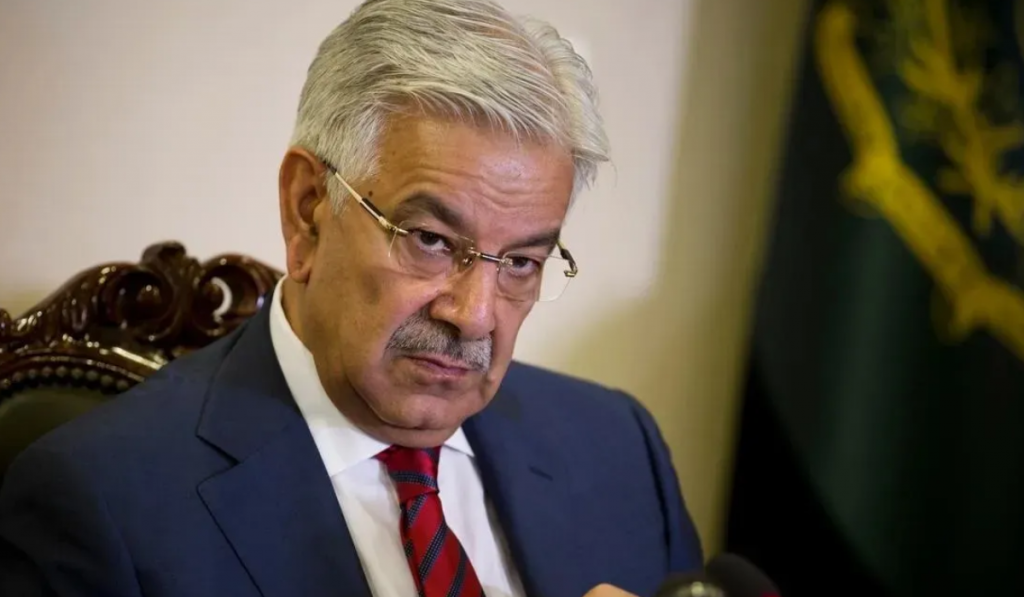
Islamabad: Pakistan’s Defense Minister Khawaja Asif has questioned alleged plans by senior government officials to permanently settle abroad. He claimed that some influential officials were making arrangements to settle abroad while holding government positions.
In a post on the social media platform X on October 18, Asif alleged that several officials had planned to purchase homes or obtain permanent residency in Canada, the United States, the United Kingdom, and other European countries. He cited Portugal as a particularly popular destination among the officials concerned.
The minister questioned whether officials preparing to move abroad while holding government positions were truly committed to Pakistan and their responsibilities.
Asif said, “They prepared for this in a planned manner while serving in the Pakistani government. This raises questions about their dedication to their country and their job during their tenure.”
Allegations of influential officials preparing to settle abroad
Khwaja Asif claimed that some of the officials allegedly preparing to settle abroad previously held important positions and had close connections with various governments. However, he did not publicly name any of the officials.
The minister also alleged that a middleman who arranged permanent residency abroad for influential government officials disappeared after accepting a large sum of money. However, he did not disclose the amount allegedly taken or the identity of the person.
Questioning the officials’ commitment to the country, Asif asked whether their loyalty was beyond doubt or whether they were simply preparing to leave the country.
No documentary evidence has been publicly disclosed to support these allegations. It is also unclear how many officials are planning to settle abroad, whether they have already received permanent residency in other countries, or whether any government investigation has been initiated in the matter.
Questions Raised About the Accountability of Government Officials
Following Khawaja Asif’s statements, a debate has erupted regarding the accountability of Pakistan’s senior bureaucracy. In particular, issues such as the purchase of property abroad and the acquisition of permanent residency while holding government positions are at the center of discussion.
This matter is also significant in the context of Pakistan’s political system, where the military has wielded considerable influence alongside the elected government and administration. The military’s historical role in the country’s political affairs has impacted the relationship between elected governments, government institutions, and the bureaucracy.
Asif’s allegations have raised questions about whether senior officials’ alleged plans to settle abroad could impact public trust and administrative accountability. However, these are merely allegations, and the identities of the officials involved and their affairs have not been independently verified.
Military Influence Remains Within the Shahbaz Sharif Government
Pakistan’s current political system revolves around the government led by Prime Minister Shahbaz Sharif and his party, the Pakistan Muslim League-Nawaz (PML-N). This government has the support of the Pakistan People’s Party (PPP).
However, the military’s influence remains strong in Pakistan’s political system. Army Chief Asim Munir has also emerged as a prominent figure in the country’s politics and foreign policy.
The report also links Munir’s growing domestic influence to his relationship with US President Donald Trump. It claims that his strengthening position in Washington has increased his influence in Pakistan.
The report also argues that the changes made under his leadership have impacted Pakistan’s democratic and constitutional institutions. However, detailed evidence is not provided to support these claims.