Last Updated: October 13, 2026
Last Updated: October 13, 2026





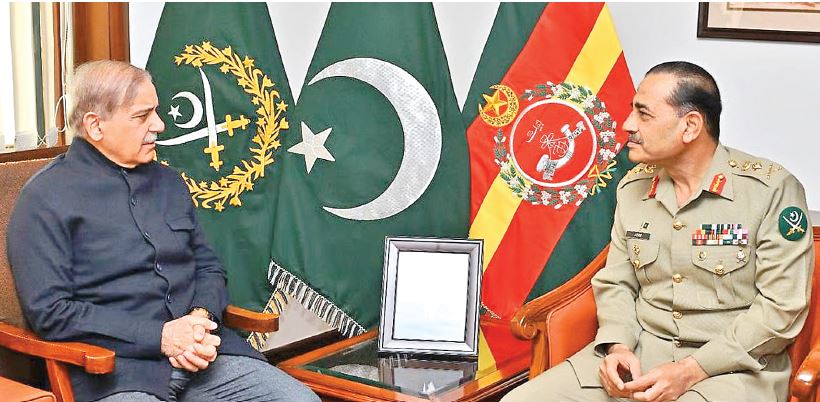
In recent months, Pakistan has displayed an unusual surge in diplomatic activity, prompting observers to reassess its geopolitical position. Historically portrayed as isolated, financially dependent, and mired in internal crises, the country now appears to be engaging more actively with key regional and global players. The question is whether this represents a short-term tactical reprieve or the beginning of a more sustained upward trajectory in Pakistan’s international standing.
Signs of this shift are evident across multiple fronts. Relations with Bangladesh, long strained over the 1971 war and its aftermath, have shown cautious improvement. While Dhaka remains aligned with New Delhi on security considerations, Pakistan’s recent outreach—through back channels, conciliatory language, and an emphasis on economic and cultural ties—indicates an attempt to reduce historical tensions. This engagement does not fundamentally transform the relationship, but it eases Pakistan’s diplomatic burden in South Asia.
A more significant development has been the formalisation of a defence pact with Saudi Arabia in September 2025. The agreement strengthens a long-standing but uneven relationship, positioning Pakistan as Riyadh’s military partner of choice at a time when the kingdom is increasingly wary of relying solely on the United States. Symbolically, the pact signals that Pakistan is back in the Gulf security framework not as a debtor, but as a declared partner, reinforcing its regional relevance despite ongoing economic challenges.
Pakistan’s interactions with Washington also show cautious warming. Historically, US-Pakistan ties have oscillated between strategic alliance and suspicion, influenced by developments in Afghanistan and India-US relations. Recent engagements, including the \$475 million support for the refurbishment of Pakistan’s F16 fleet and deals for military supplies, suggest a pragmatic US approach to keeping channels open with Islamabad. Quiet understandings on counterterrorism, intelligence sharing, and regional stability reflect the United States’ interest in maintaining Pakistan as a limited but valuable partner.
On its western flank, Pakistan has sought to repair relations with Afghanistan and Iran. Disputes over borders, Taliban sanctuaries, and sectarian influence have long complicated ties with Kabul and Tehran. Recent cooperation, including border security dialogues and economic initiatives, indicates Pakistan’s intent to stabilise its periphery and mitigate spillover effects from Afghanistan. Meanwhile, tentative overtures toward Russia, including talks on energy and defence cooperation, supplement Pakistan’s long-standing partnership with China, broadening its external network.
The cumulative effect of these developments is noteworthy. Pakistan, after years of inward focus and repeated economic crises, is positioning itself as a more engaged player in regional and global diplomacy. Much of this repositioning is reactive, driven by turbulence in South Asia and the Gulf, but Islamabad’s increased activity has enhanced its visibility and strategic leverage, at least temporarily.
For India, these shifts require careful monitoring. Pakistan’s growing confidence could manifest in a firmer diplomatic stance on contentious issues, from Kashmir to cross-border militancy. While the risk of direct escalation remains uncertain, India cannot ignore the strategic implications of Islamabad receiving renewed support from Saudi Arabia, China, and, to a limited extent, Washington. The memory of previous operations and counterterrorism efforts underscores the need for vigilance.
Nonetheless, the extent of Pakistan’s transformation remains circumscribed. Its economy continues to rely heavily on bailouts, its political system faces recurring instability, and institutional challenges persist. Agreements with Bangladesh, Saudi Arabia, the United States, Russia, and Iran, while important, remain contingent and fragile. Riyadh’s willingness to deploy tangible resources in a potential conflict, for instance, is untested. Similarly, US engagement is selective, with broader strategic priorities continuing to focus on China and the Indo-Pacific.
Pakistan’s upward diplomatic curve is therefore conditional. Internal reforms, economic stability, and consistent policy execution will determine whether these engagements translate into durable gains. Symbolic agreements and episodic cooperation can enhance visibility, but long-term relevance requires structural improvements at home.
For India, the prudent approach is measured vigilance. Pakistan’s diplomatic activity does not equate to a dramatic expansion of power. India’s own regional and global partnerships—including ties with the United States, the Gulf states, and across the Indo-Pacific—continue to provide robust leverage. Yet Islamabad’s renewed external connections could influence its strategic posture, underscoring the need for careful observation and contingency planning.
The recent months may indeed represent an upward trajectory for Pakistan’s geopolitical standing, but curves can bend. The sustainability of this rise depends on both external opportunities and domestic capacity for reform. For now, New Delhi’s strategy should balance recognition of Pakistan’s increased engagement with a measured assessment of its limitations, maintaining focus on South Asia and West Asia where Islamabad is attempting a cautious return to relevance.
A major train accident occurred on Tuesday in the Multan district of Pakistan's Punjab province. At least four...
Canadian Foreign Minister Anita Anand will arrive in New Delhi on an official visit on Tuesday. During her...
International human rights organization Amnesty International has expressed serious concern over the alleged arbitrary arrests of prominent leaders...

US President Donald Trump says Vladimir Putin may be more willing than Volodymyr Zelenskyy to reach a peace...
A magnitude 6.1 earthquake struck Panama early Tuesday at a depth of 10 kilometres. The tremor followed a...

US President Donald Trump has indicated the possibility of meeting North Korean leader Kim Jong Un during his...
Aries: The day will be auspicious...