Last Updated: October 20, 2026
Last Updated: October 20, 2026





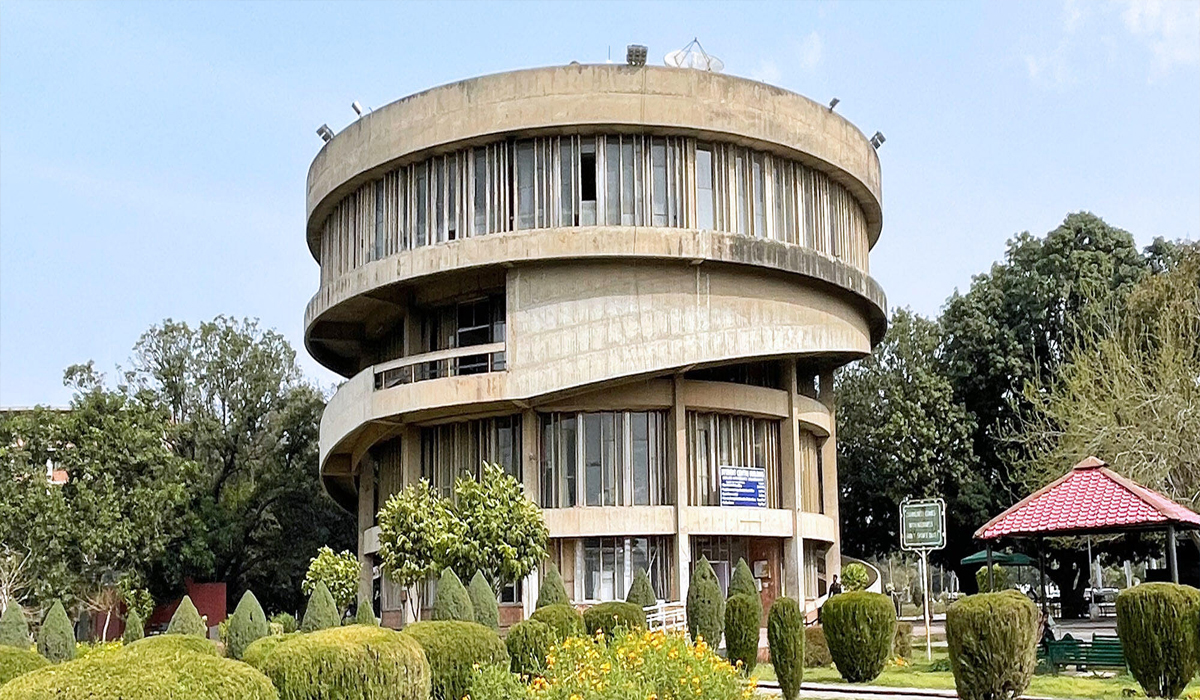
Written by Sheena Sandhu: The ongoing protests at Panjab University against the restructuring of its Senate and Syndicate reflect a larger tension that Indian higher education institutions face today — the clash between tradition and transformation. While student and teacher bodies have raised concerns over the recent notification changing the composition of these apex decision-making bodies, it is essential to view the reforms in the broader context of India’s National Education Policy (NEP) 2020, which envisions universities as autonomous, accountable, and globally competitive centers of learning.
The Roots of Discontent
For decades, Panjab University’s governance has been anchored in a Senate-Syndicate model that draws its lineage from the pre-independence era. The Senate, with over 90 elected members, and the Syndicate, derived from it, have historically represented various constituencies — teachers, graduates, legislators, and nominees of the government. This model, while democratic in intent, has often become unwieldy, politicized, and slow-moving in practice.
Recent years have seen repeated deadlocks over appointments, finances, and academic policies. Allegations of political interference, election-related factionalism, and dilution of academic priorities have eroded public faith in the university’s governance. The result: Panjab University, once among India’s top academic institutions, now struggles to find a place in national rankings — a decline not caused by its scholars or students, but by structural stagnation.
The UGC Committee’s recommendations, aligned with the NEP 2020 framework, aim to make university governance more streamlined, professional, and merit-oriented. The new structure proposes to replace the election-heavy Senate with a more compact, expertise-driven Governing Council, while reconstituting the Syndicate as a high-level Executive Board with representation from academia, industry, and alumni of global repute.
This is not about silencing voices or curtailing democracy — it is about ensuring that decision-making rests in hands best equipped to lead in a rapidly changing academic world. The NEP envisions universities where excellence, innovation, and integrity drive governance, not electoral arithmetic or campus politics.
The restructured model emphasizes: Academic autonomy with accountability, ensuring decisions are evidence-based and forward-looking. External expertise, bringing in accomplished alumni, researchers, and professionals who can help Panjab University integrate with global research ecosystems. Efficiency and speed, reducing bureaucratic delays that have historically plagued academic reforms. Transparency, as appointments and policy decisions will be subject to clear institutional criteria rather than factional negotiations.
Why Opposition Exists
Understandably, the proposed changes have met with resistance from those who have traditionally held stakes in the old system. Many fear a loss of representation, especially from elected teacher and graduate constituencies. Others worry about over-centralization or the diminishing of local voices in favor of bureaucratic or technocratic control.
These concerns must be heard with empathy — yet it is also true that representative democracy cannot substitute for institutional excellence. The university’s mission is not electoral but educational. The real test of governance should be whether it helps students learn better, promotes research, and enables the university to compete globally.
A Way Forward
The government and university administration must now engage constructively with stakeholders to ensure that reform is inclusive, not imposed. Transparency in the nomination process, safeguards for academic freedom, and periodic review mechanisms can help allay fears of autocracy.
But retreating from reform altogether would be a mistake. The world’s best universities — from Oxford to Singapore National University — have evolved precisely because they embraced structural change when it was needed most. Panjab University, too, stands at such a crossroads today.
Conclusion
The protests in Chandigarh are a reminder that change in academia is never easy. Yet, if Panjab University is to reclaim its stature as a premier institution of higher learning, it must modernize its governance structures in line with global standards and NEP’s vision. The new Senate and Syndicate frameworks are not an erosion of democracy but an evolution toward academic excellence and institutional integrity. The time has come for Panjab University to look beyond the politics of representation and embrace the promise of transformation.
(The writer is retired civil servant. Views are personal)
A dispute over car removal in Amritsar, Punjab, escalated into a Amritsar, Punjab, claiming the life of a...

Punjab's Shahi Imam Maulana Muhammad Usman Rahmani Ludhianvi has received another death threat. According to reports, during his...

nisters Barinder Goyal and Dr Balbir Singh today visited Government Rajindra Hospital in Patiala to enquire about the...

Acting against drug trafficking and illegal arms supply in Punjab, the Amritsar Commissionerate Police has busted a network....

SAD MP Harsimrat Kaur Badal has written to Amit Shah seeking a CBI probe into anti-drug activist Parvinder...

SAD MP Harsimrat Kaur Badal has criticised Punjab CM Bhagwant Mann for travelling to France amid protests over...

Aries: The day will be auspicious...