Last Updated: October 6, 2026
Last Updated: October 6, 2026





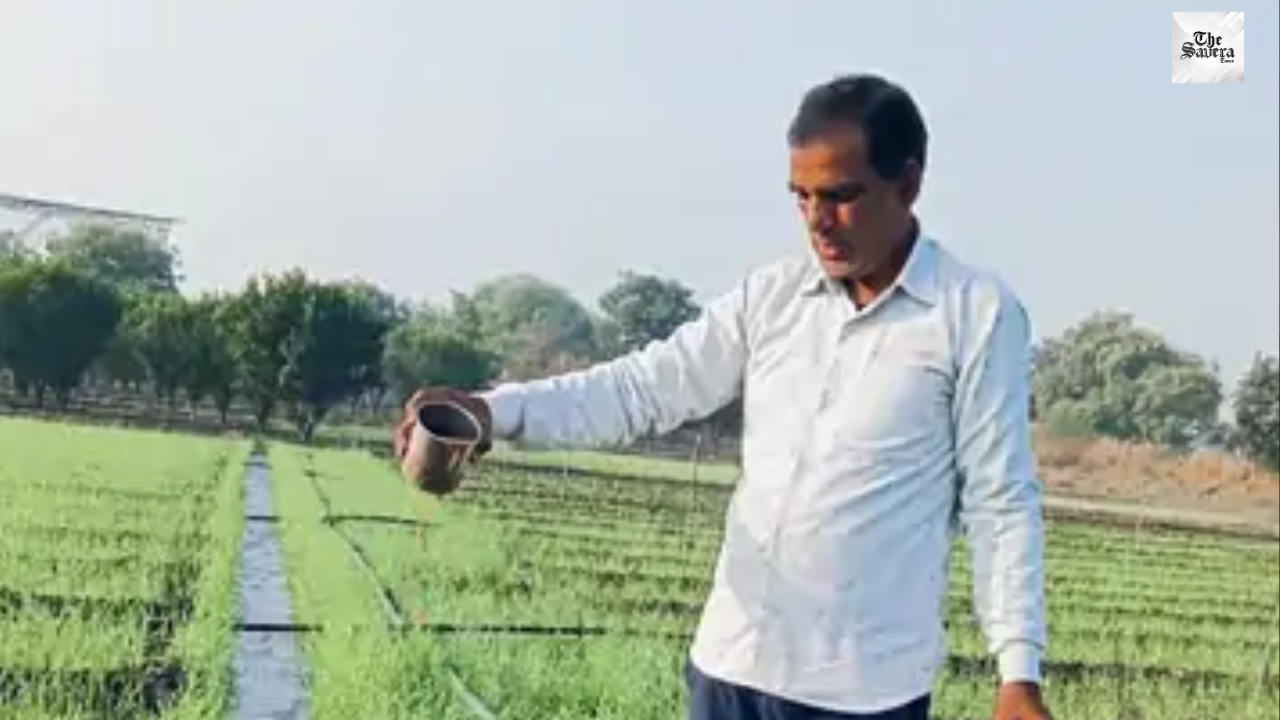
A young farmer from Rajasthan has become an inspiration for many by successfully establishing a papaya orchard despite having studied only up to Class 9. His determination and interest in innovative agriculture have helped him transform traditional farming practices and explore new possibilities in horticulture.
The farmer, who belongs to the Jhalawar region of Rajasthan, decided to move beyond conventional crops and experiment with high-value fruit farming. By focusing on papaya cultivation, he aimed to increase income while also learning more about modern agricultural techniques.
His journey reflects how dedication and curiosity can help farmers adopt new ideas and improve their livelihoods even without formal higher education.
To ensure the success of his orchard, the farmer brought high-quality papaya saplings from Maharashtra, a state known for advanced horticulture practices. These improved varieties are known for better yield, disease resistance and good fruit quality.
After studying the cultivation process and soil requirements, he carefully planted the saplings in his field and began managing the orchard using modern techniques such as proper irrigation, spacing and organic nutrient management.
Within a short time, the papaya plants started growing well, giving him confidence that his experiment with fruit farming was on the right track.
Instead of relying solely on traditional knowledge, the young farmer started learning about scientific farming methods through agricultural experts, online resources and interactions with other progressive farmers.
He adopted practices such as:
Proper soil preparation before plantation
Efficient irrigation methods
Balanced use of organic and chemical fertilizers
Protection from pests and diseases
These methods helped him maintain the health of the plants and improve productivity in his orchard.
Agriculture experts say papaya is a fast-growing fruit crop that can begin producing fruit within a year, making it an attractive option for farmers looking for quick returns.
Encouraged by the success of his papaya orchard, the farmer now has an ambitious goal — to establish a bio research center in the future. His aim is to study plant varieties, improve farming techniques and help other farmers adopt sustainable agriculture.
The proposed center would focus on experimenting with fruit crops, plant varieties and organic farming methods. By sharing his experiences and research, he hopes to guide local farmers in improving crop productivity and profitability.
He believes that research and innovation are essential for the future of agriculture, especially as farmers face challenges such as climate change, pests and rising production costs.
The farmer’s initiative has drawn attention in his region as an example of how youth can transform agriculture through innovation and determination. His story highlights the importance of experimenting with new crops and adopting scientific methods in farming.
Local residents and farmers have praised his efforts, saying that such initiatives can motivate others to explore new agricultural opportunities.
Experts say that stories like these demonstrate how education is important but passion, curiosity and hard work can also drive success. By thinking beyond traditional crops and focusing on horticulture, the young farmer has opened new possibilities for himself and for the farming community.
His journey from a ninth-grade education to building a successful papaya orchard and dreaming of a bio research center stands as a powerful reminder that innovation in agriculture can come from anyone willing to learn and experiment.
The JDA has launched an anti-encroachment drive on New Sanganer Road in Jaipur, targeting illegal constructions linked to...

Jaipur: Rajasthan will hold its 2026 Panchayati Raj elections in four phases, with voting beginning on October 23 and...

Since taking charge as Mayor of the Jaipur Municipal Corporation, Sunil Kothari has stepped up field inspections of...
Sabarkantha Police seized 967 cannabis plants weighing 345.6 kg and valued at ₹1.72 crore from a farm in...
Rajasthan ACB arrested a Railway Senior Section Engineer and two Jaipur Discom officials in a ₹10,000 bribery trap...

Jaipur: Rajasthan Police arrested three men from Madhya Pradesh in connection with the alleged recording and circulation of...