Last Updated: October 21, 2026
Last Updated: October 21, 2026





Sheena Sandhu
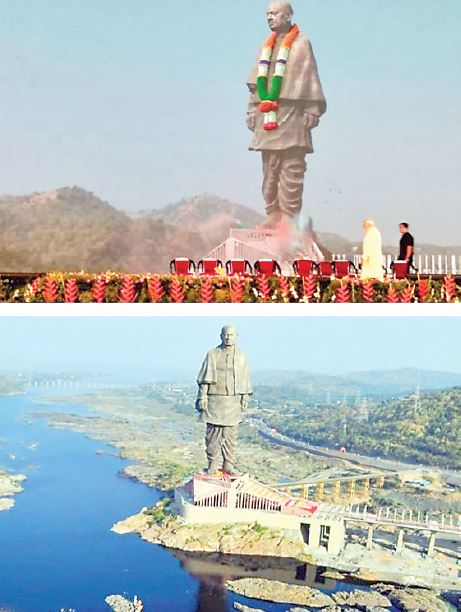
On October 31, India will mark the 150th birth anniversary of Sardar Vallabhbhai Patel, commemorated since 2014 as Rashtriya Ekta Diwas or National Unity Day. The milestone comes at a time when India’s unity — painstakingly achieved in the chaotic years of Independence — is once again being tested by social, political and regional fault lines. Remembering Patel today is not merely about statues, marches or commemorative coins; it is about revisiting the foundational questions of cohesion, trust and belonging in a diverse democracy.
Patel’s achievement
Born in 1875 in Nadiad, Gujarat, Patel’s political journey traversed the lawyer’s bar, Gandhian satyagrahas, and finally the crucial role of deputy prime minister and home minister in independent India’s first cabinet. His defining contribution was the integration of more than 560 princely states into the Indian Union. In the late 1940s, when the subcontinent was scarred by Partition, the map of India was still a patchwork of semi-autonomous kingdoms and feudal estates. Patel, with the persuasive diplomacy of V.P. Menon and the support of Nehru and Mountbatten, succeeded in bringing these disparate units into the Republic.
Junagadh, Hyderabad and Kashmir posed formidable challenges, yet Patel’s combination of firmness and tact ensured that the Union did not disintegrate before it was born. This achievement remains one of the great state-building exercises of the 20th century, securing for India both geographical continuity and political legitimacy.
The meaning of National Unity Day
When the government instituted Rashtriya Ekta Diwas, it was intended to go beyond ceremonial homage. Each year, citizens take a unity pledge, and public institutions organise the “Run for Unity” and cultural programs. The Ministry of Home Affairs frames the day as an opportunity to “reaffirm the inherent strength and resilience of our nation to withstand threats to unity, integrity and security.”
In practice, however, the day risks becoming another ritual. The real test is whether it can trigger conversations about what unity means in today’s India. Patel’s idea of unity was not uniformity; it was the ability to forge togetherness amidst diversity, while ensuring allegiance to a common Constitution.
Why Patel matters today
Seventy-five years after his death, Patel’s legacy resonates in four important ways:
Beyond symbolism
The sesquicentennial year has been marked with announcements: a commemorative ₹150 coin, a 152-km unity march in Gujarat, cultural events nationwide. These are welcome, but Patel himself was not a man of grand gestures. His politics was rooted in pragmatism, negotiation and results. To honour him meaningfully, commemoration must be coupled with substance:
The unfinished task
Unity in India has never been a settled achievement. It has always been a process, renewed with each generation. Patel showed that it was possible to overcome distrust and fragmentation through vision and will. But his work remains unfinished.
On his 150th birth anniversary, the question is not whether we remember Patel, but whether we live up to his legacy. National Unity Day should remind us that integration is not a historical event, but an everyday responsibility — of governments to govern inclusively, of institutions to act impartially, and of citizens to value the collective over the narrow.
In commemorating Patel, India must pledge not just to preserve territorial unity, but also to nurture the social and moral unity without which even the strongest state structure will falter. Patel’s greatest gift was not the map he secured, but the belief that unity, once forged, could endure. It is for us to prove him right.
(The writer is a retired civil servant, views are personal.)
Reduced water levels at Har Ki Pauri and other Haridwar ghats have inconvenienced pilgrims during the Upper Ganga...

Six people returning from a Dussehra Mela were seriously injured when a car hit them on National Highway...

A bus travelling from Pachiound to Ramnagar fell into a gorge at Gulli Gula in Udhampur district. Nine...

Start your day with The Savera Morning Brief, bringing you the latest news from India and around the...

Union Home Minister Amit Shah will pay tribute to police martyrs at the National Police Memorial in New...
Four more people, including two women, have been arrested in the Tiger Shroff firing case. Delhi Police are...
Aries: The day will be auspicious...