Last Updated: October 26, 2026
Last Updated: October 26, 2026





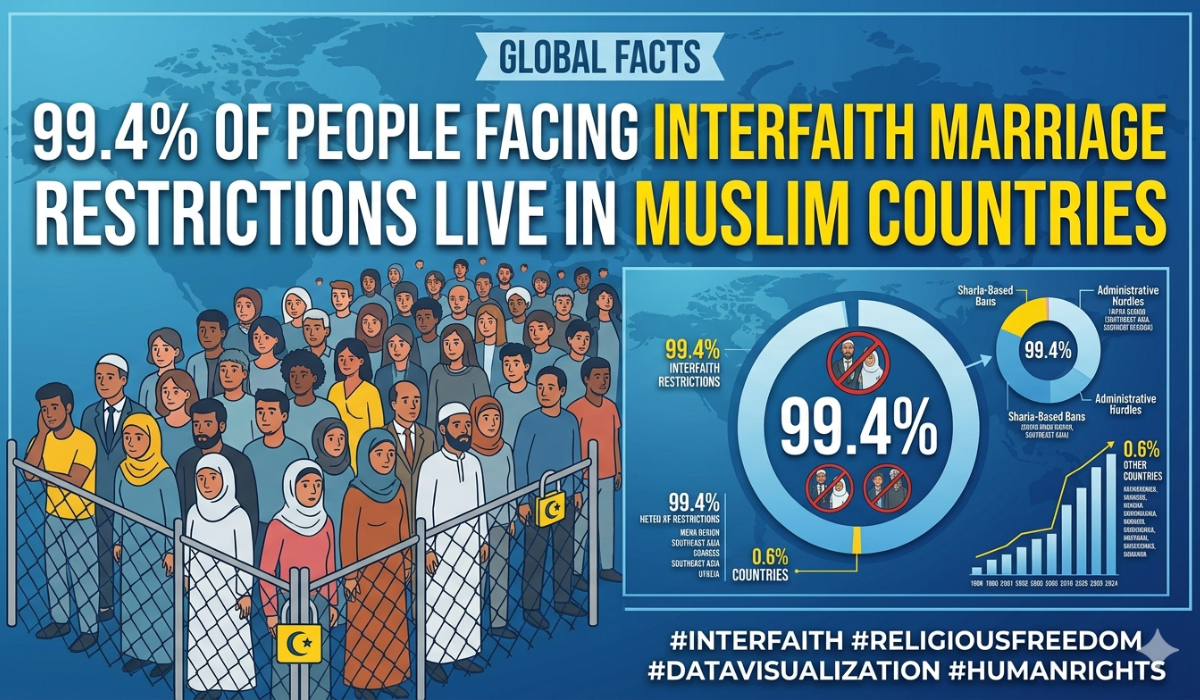
Interfaith marriage: when two individuals from different religious backgrounds marry is often seen as a strong indicator of how open and pluralistic a society is. The reasoning is simple: if a country allows its citizens to freely marry across religious lines without legal barriers, it reflects a level of tolerance, equality, and separation between religion and state power.
The study you’ve shared examines this idea globally by focusing specifically on state-imposed legal restrictions on interfaith marriage (IFM). It deliberately excludes social pressures, cultural norms, or voluntary religious practices and instead looks only at what the law permits or prohibits.
Key Global Findings
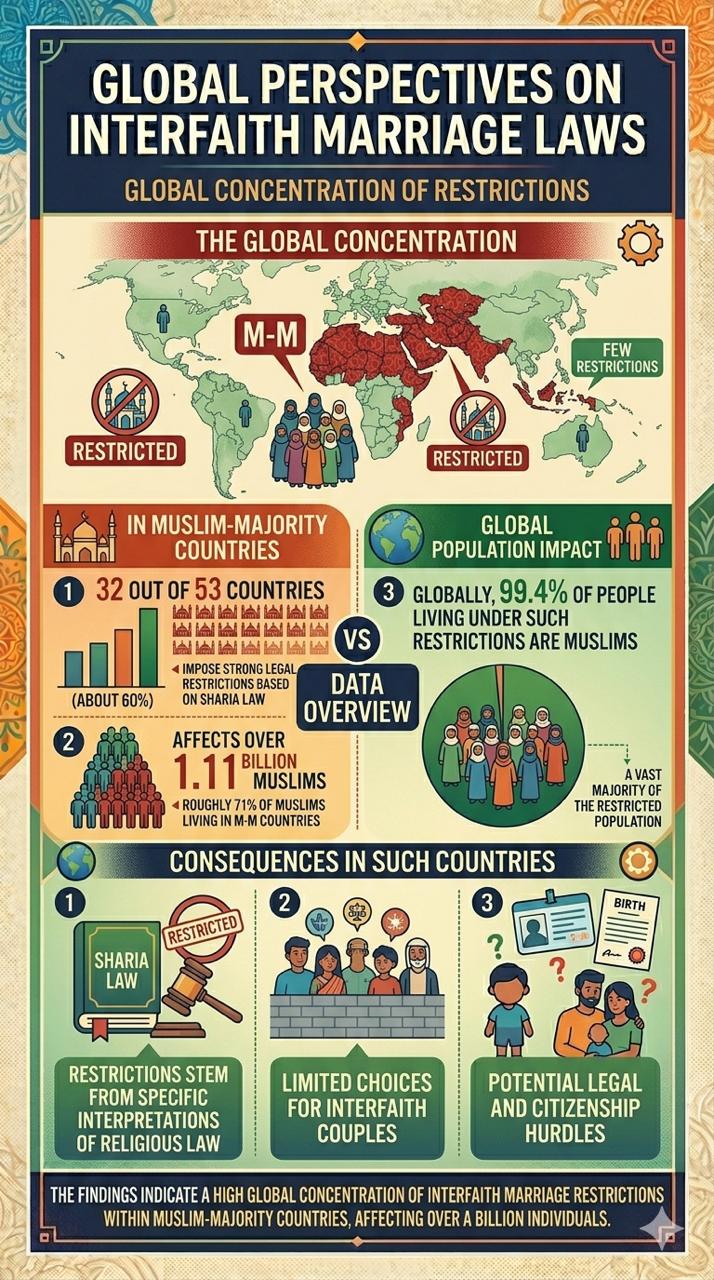
The most striking conclusion is that almost all legal restrictions on interfaith marriage globally are concentrated in Muslim-majority countries.
32 out of 53 Muslim-majority countries (about 60%) impose strong legal restrictions based on Sharia law.
These restrictions affect over 1.11 billion Muslims, which is roughly 71% of Muslims living in those countries.
Globally, 99.4% of people living under such legal restrictions are Muslims.
In contrast:
Only one Jewish-majority country (Israel) has restrictions.
Only one Christian-majority state (Vatican City)has restrictions.
None of the 14 Dharmic-majority countries (Hindu, Buddhist, Jain, Sikh) impose legal restrictions on interfaith marriage.
This creates a sharp global contrast in how different legal systems treat religious freedom in marriage.
To keep the analysis focused, the author filtered out unrelated marriage issues such as:
Child marriage, Gender discrimination, Polygamy, LGBTQ+ laws
Only explicit legal restrictions on interfaith marriage were included.
Nature of Restrictions
These restrictions are typically derived from classical interpretations of Sharia law, which:
Allow Muslim men to marry Christian or Jewish women (with conditions)
Prohibit Muslim women from marrying non-Muslim men unless the man converts to Islam
In many countries, these rules are codified into national law, meaning they are not optional—they are enforced by the state.
Countries with Severe Restrictions
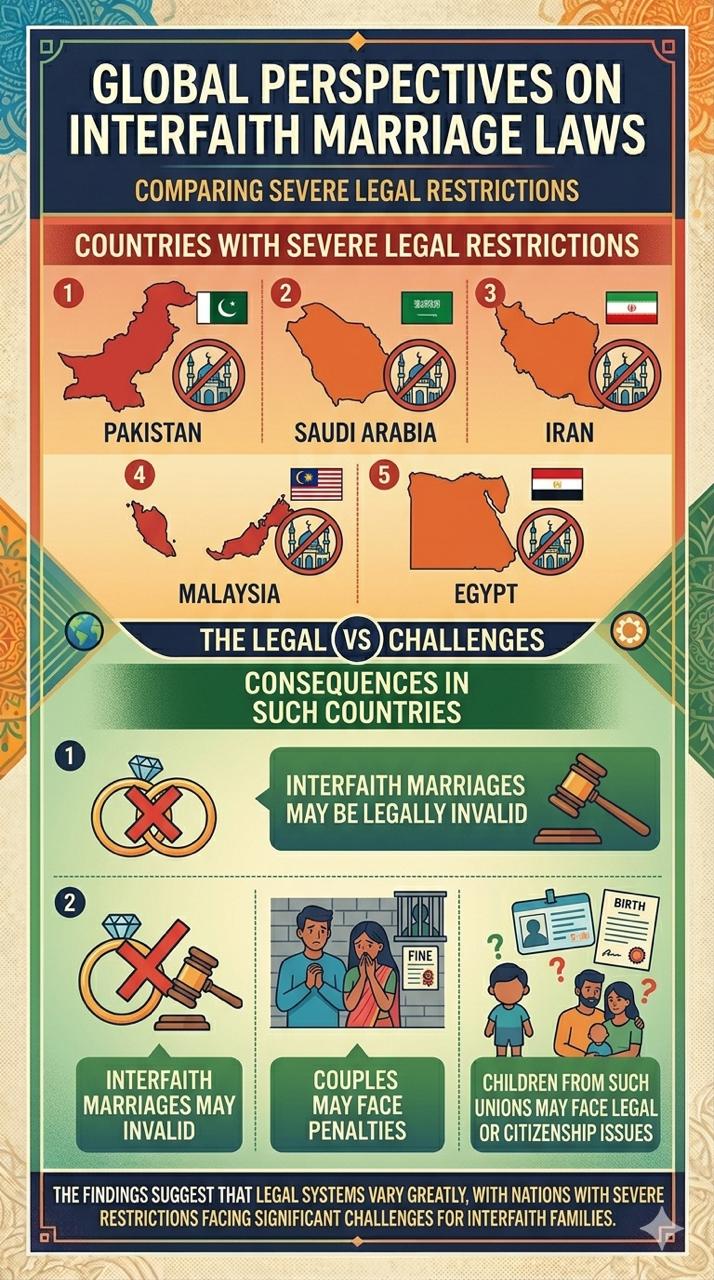
Pakistan, Saudi Arabia, Iran, Malaysia, Egypt
In such countries:
Interfaith marriages may be legally invalid
Couples may face penalties
Children from such unions may face legal or citizenship issues
Exceptions Within Muslim Countries
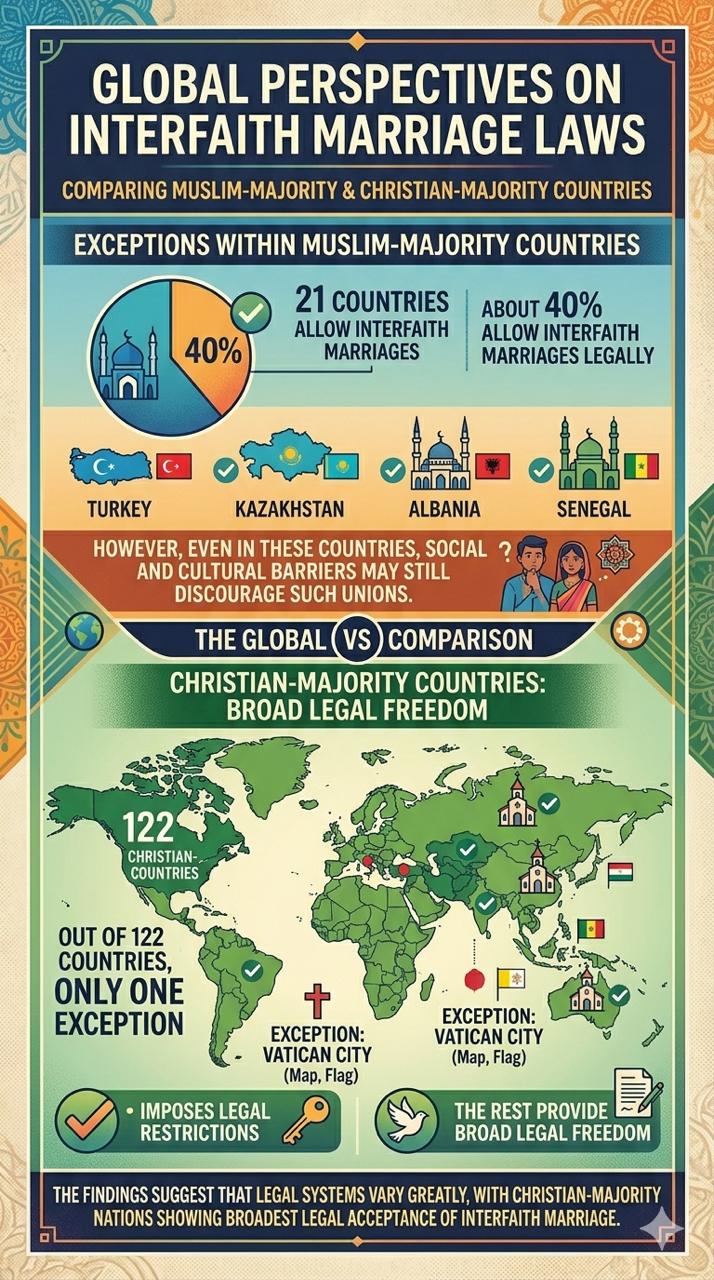
Not all Muslim-majority countries follow this model. About 21 countries (roughly 40%) allow interfaith marriages legally, including:
Turkey, Kazakhstan, Albania, Senegal
However, even in these countries, social and cultural barriers may still discourage such unions.
Christian-Majority Countries: Broad Legal Freedom
Out of 122 Christian-majority countries, only Vatican City imposes legal restrictions.
India has a dual legal system:
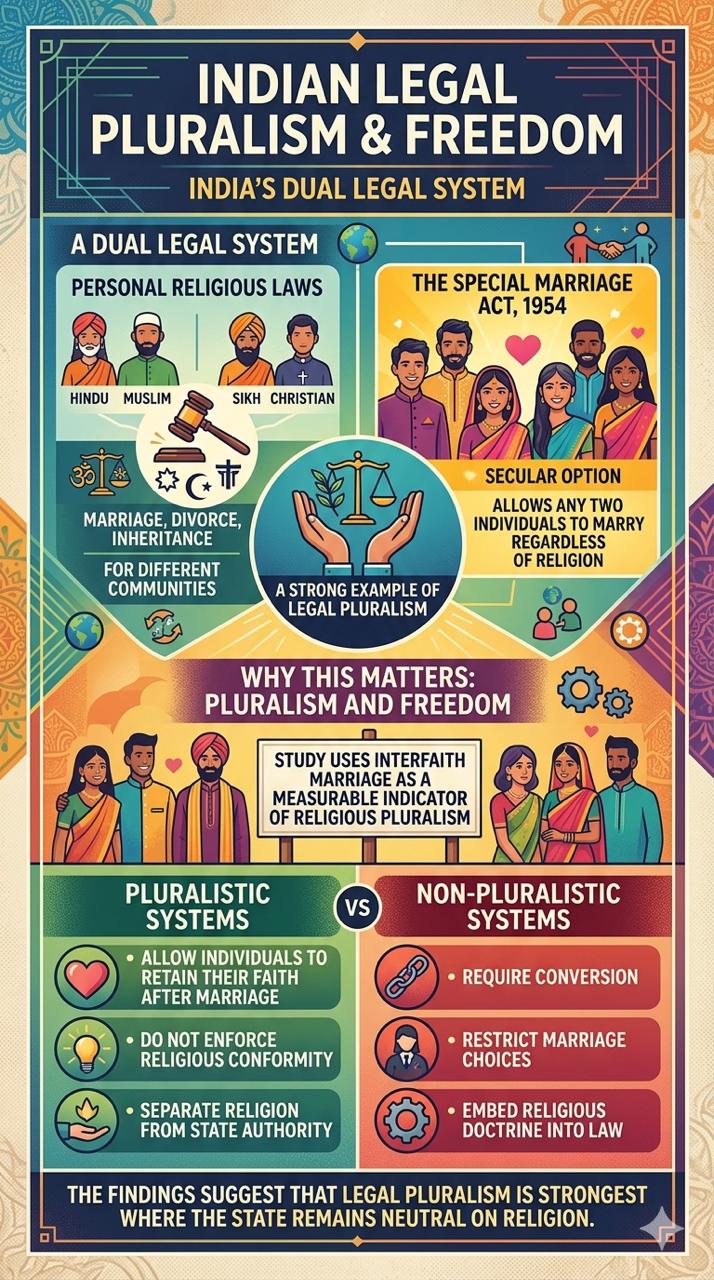
Personal religious laws for different communities
A secular option via the Special Marriage Act, 1954
This allows any two individuals to marry regardless of religion, making it a strong example of legal pluralism.
Why This Matters: Pluralism and Freedom
The study uses interfaith marriage as a measurable indicator of religious pluralism.
Conclusion: A Clear Global Divide
This analysis highlights a clear global pattern:
High legal restrictions: Concentrated in many Muslim-majority countries
Moderate/unique cases: Israel
Minimal restrictions: Christian-majority countries
No restrictions: Dharmic-majority countries
The key differentiator appears to be the relationship between religion and the state:
Where religion dominates law → restrictions increase
Where state remains secular → freedom increases
Ultimately, interfaith marriage serves as a powerful lens to evaluate not just legal systems, but broader societal values around freedom, equality, and coexistence.
Arjuna asks, "O Krishna, you praise the renunciation of action and yet you also advise its execution. Tell...

For Anindita Shrivastava, architecture is more than a physical object: it is a framework for living.

Imagine opening WhatsApp on your phone, but the SIM card linked to your account is not inside the...

elieve it or not, but at least 10 crore Indians, a majority of whom are based in the...

There are some conversations that stay with you long after they are over. A few days ago, I...

As is the tradition in our country full of faith and festivals, Dussehra was celebrated with great pomp...

Aries: The day will be auspicious...