Last Updated: October 22, 2026
Last Updated: October 22, 2026





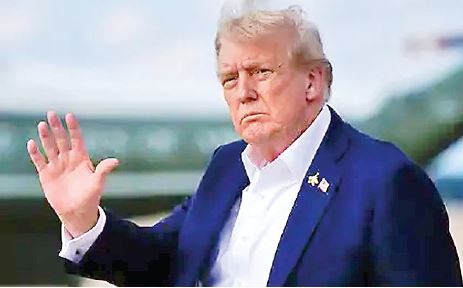
Last week, President Donald Trump threatened to impose triple-digit tariffs on imported pharmaceuticals, a move that drew immediate attention across the industry and Washington. The duties were scheduled to take effect on Wednesday. In a turn of events, the White House has now said it may not need to impose the tariffs immediately, after opening negotiations with major drugmakers aimed at averting the levy, according to a report by Politico.
A White House official told reporters that the administration has paused plans to enact the duties while it seeks voluntary commitments from pharmaceutical companies. The official said the talks are intended to secure measures that would address the administration’s stated concerns without resorting to punitive tariffs. The pause was described as temporary and contingent on the outcome of ongoing discussions.
The apparent shift in approach was underlined by comments from Commerce Secretary Howard Lutnick during a White House event tied to a deal announced with Pfizer. When asked about the proposed pharma tariffs, Lutnick said the administration planned to allow negotiations to proceed. “We are going to let [the talks] play out and finish these negotiations, because they are the most important thing to the American people,” he said. “So we are standing by and helping and working with them.”
The negotiations come on the heels of a multi-pronged agreement between the White House and Pfizer, unveiled on Tuesday. Under the arrangement announced by the president, Pfizer has agreed to invest $70 billion to expand pharmaceutical manufacturing capacity in the United States. The company also committed to participate in a direct purchasing platform called “TrumpRx.gov,” through which it will offer discounted prices on what the announcement described as a “large majority” of its primary care treatments and on “some select speciality brands.”
In return, Pfizer secured a three-year pause on the tariffs that had been threatened. The White House framed the pact as a template for similar agreements with other companies. The president said he expected comparable announcements in the coming days and urged other pharmaceutical manufacturers to enter into arrangements that would increase domestic production and lower prices for consumers.
Trump was explicit in his warning to companies that do not engage with the administration. “What we’d do is put a tariff on them of an equivalent amount, and we take it that way, and nobody wants to play that game,” he said, adding, “So they’re all going to be good.” The language underscored the administration’s readiness to resort to tariffs if voluntary deals did not materialise.
Despite the public posture of leverage, key elements remain unclear. Officials have not specified how the proposed tariffs would be calculated, how broadly they would apply, or the precise legal steps required to implement such measures. The administration’s recent statements indicate a willingness to translate pressure into negotiated commitments, but they stop short of detailing how the threat of tariffs would be operationalised if talks failed.
Industry reaction to the Pfizer deal and the broader negotiating strategy was not detailed in the White House statements that followed the announcement. The reported pause in tariff implementation suggests the administration hopes to secure private-sector concessions on domestic production and pricing that it considers sufficient to warrant postponement of trade penalties.
The arrangement with Pfizer highlights the administration’s emphasis on reshoring pharmaceutical manufacturing and obtaining short-term price relief for consumers through direct purchasing mechanisms. The $70 billion investment pledged by Pfizer, as described by the White House, is positioned as a major boost to U.S. manufacturing capacity. Participation in TrumpRx.gov is presented as a method to offer discounted access to commonly used medicines.
How the approach will play out across the broader pharmaceutical sector remains to be seen. The White House has signalled that it will pursue similar deals with other name-brand drugmakers. Whether those companies will agree to comparable investments or discounting arrangements, and whether the administration will follow through on its tariff threat where negotiations falter, are open questions.
For now, the immediate effect is that the scheduled imposition of triple-digit tariffs has been put on hold while the White House and major drug companies continue talks. The administration’s public statements frame the pause as a negotiation tactic intended to win industry commitments that address perceived problems in supply and pricing without resorting to punitive trade measures. Observers and stakeholders will be watching closely to see whether further agreements follow Pfizer’s model and how the White House intends to translate its leverage into lasting policy changes.
Pakistan's Defense Minister Khawaja Asif has questioned alleged plans by senior government officials to permanently settle abroad. He...
The Baloch Liberation Army (BLA) has claimed responsibility for carrying out 34 operations between October 9 and 20...

Russian President Vladimir Putin said on Wednesday that Russia's first tanker carrying 40,000 tons of diesel fuel will...
Ten people were killed and 44 others injured in a horrific road accident in Pakistan's Punjab province. The...

North Korean leader Kim Jong-un's influential sister, Kim Yo-jong, and a military marshal inspected fortification work along the...

New Delhi: US Secretary of State Marco Rubio has assured India that America’s relations with any country in...
Aries: The day will be auspicious...