Last Updated: October 11, 2026
Last Updated: October 11, 2026





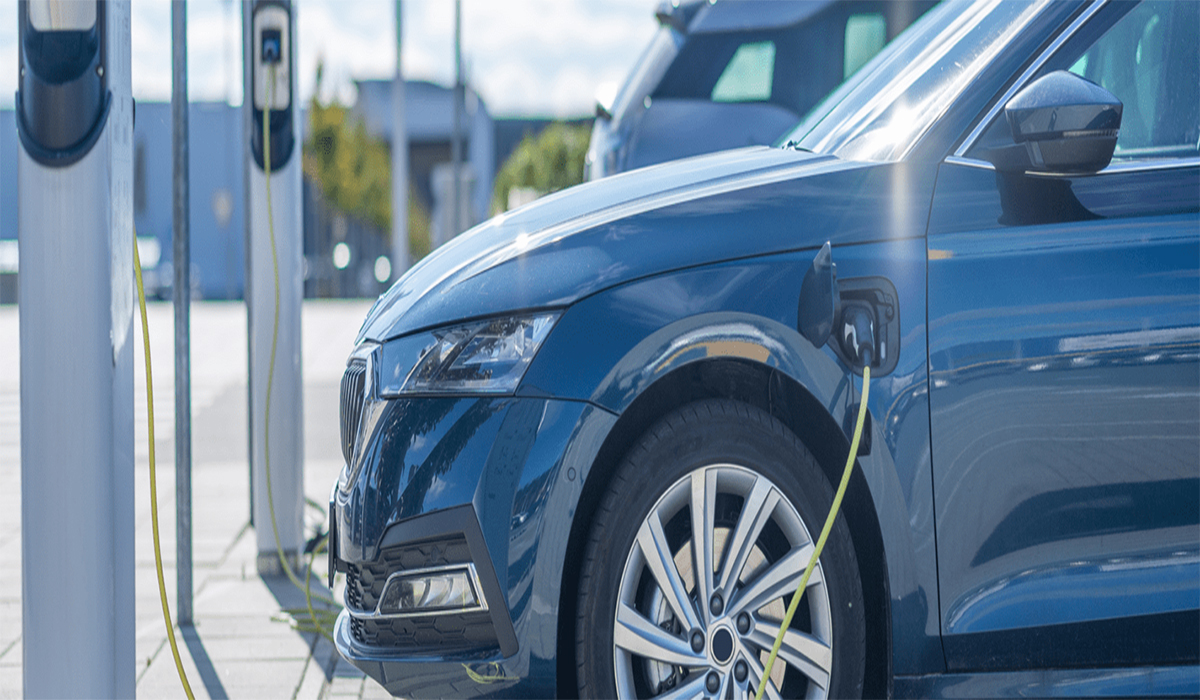
China has launched a formal trade challenge at the World Trade Organization against India’s electric-vehicle push, accusing New Delhi of providing subsidies that give Indian EV makers an unfair advantage in global markets. The complaint, filed by China’s Commerce Ministry, marks a notable escalation in economic tensions as both countries jockey for position in the rapidly expanding electric-vehicle sector.
What China alleges
In its WTO submission, Beijing contends that India’s subsidies for electric vehicles and batteries distort trade and violate multilateral rules. The Chinese ministry says the measures amount to import substitution subsidies that breach the WTO principle of national treatment and other obligations. The ministry warned it would take “firm measures” to safeguard the interests of its domestic industries. The dispute arrives against a broader geopolitical backdrop. India has recently moved to shore up supplies of critical minerals. New Delhi announced plans to create a National Critical Mineral Stockpile for rare-earth materials after China tightened controls on exports of certain components. Beijing’s latest export guidelines, to take effect from November 8, will require approval for any component containing rareearth magnets that exceed 0.1 percent of a product’s total value. The user-provided material notes that roughly 85 percent of the world’s rareearth refining occurs in China.
India’s incentives for EVs
India has rolled out an array of incentives to accelerate domestic EV production and adoption. The government’s toolkit includes an Electric Vehicle Policy, the Production-Linked Incentive (PLI) scheme, and the FAME-II programme for faster adoption and manufacturing of electric vehicles. More recently, the Centre launched the Rs 2,000-crore PM eDRIVE scheme, which subsidises p u b l i c f a s t – c h a r g i n g infrastructure—covering up to 80 percent of costs and, in some cases, 100 percent of costs for charging stations. The government has said subsidies for e-trucks, e-ambulances, e-buses and charging infrastructure will run until March 2028, while subsidies for electric twowheelers, three-wheelers and cars will end in March 2026. India is among the world’s most generous subsidisers of EVs. The user-supplied data states that India’s best-selling electric model, the Tata Nexon, receives subsidies amounting to about 46 percent of its sales price. For context, the text lists China o�ering roughly 10 percent subsidies for top models, Korea 16 percent, Germany 20 percent, and Japan and the US around 26 percent.
China’s market position and motive
China is the dominant force in global EV production and sales. The report notes Beijing accounted for about twothirds of global EV sales in September, roughly 1.3 million units that month. Chinese manufacturers such as BYD have expanded aggressively and recently outperformed Tesla in some overseas markets, underscoring the scale of China’s EV industry. Analysts quoted in the source material argue that Chinese automakers, facing domestic overcapacity and intense price competition, are seeking new export markets. The user text indicates that more than 50 Chinese EV builders exported some 2.01 million electrified vehicles overseas in the first eight months of the year, a 51 percent rise year-on-year. At the same time, Chinese EV makers face trade barriers abroad — the European Union has imposed a 27 percent tariff on Chinese EVs — and political pushback in several markets.
A step in WTO procedure
C h i n a ’s r e q u e s t f o r consultations is the first formal step in the WTO dispute-settlement process. Indian officials have said the commerce ministry will review China’s detailed submissions. If consultations do not resolve the matter, the complaining party can request the WTO to set up a panel to adjudicate the dispute.
The broader supply-chain context
The legal action follows moves by both countries to secure industrial advantage. The Chinese export controls on rare – earth magnet components are intended to regulate flows of inputs used in electric motors and other high-tech applications. The trade filing coincides with India’s push to reduce reliance on imported critical minerals and to strengthen domestic EV manufacturing. The user-supplied material also references a reported response by the United States. It states that US President Donald Trump imposed a 100 percent tariff on China for curbs on rare-earth exports, a measure presented in the same context as other international responses to China’s export controls.
What this could mean
T h e W T O c h a l l e n ge underscores the international stakes in the energy transition. Subsidy disputes are likely to become more frequent as governments use incentives to build domestic industries in strategic sectors such as EVs, batteries and critical minerals. For India, the complaint raises questions about how to balance industrial policy aimed at building domestic capacity with commitments under global trade rules. For China, the action reflects concern that India’s incentives could erode Chinese producers’ access to a major and growing market. Next steps India and China will now enter consultations as required by WTO procedures. Officials in New Delhi have said they will examine China’s claims. If consultations fail to produce a satisfactory solution, the matter can advance to a WTO adjudication panel. Until then, the dispute will remain a test case for how trade rules are applied to industrial policies that underpin the global push to electrify transport
The CJP clarified that a petition circulating on social media over the alleged detention of its leaders was...
CJP founder Abhijeet Dipke and leaders Saurav Das and Ashutosh Ranka were placed under preventive arrest amid security...

India has criticised the UN human rights office’s concerns over police action against CJP protesters in Delhi, citing...
Uttar Pradesh CM Yogi Adityanath and Union Minister Nitin Gadkari greet people on the first day of Sharadiya...
New Delhi: Delhi Traffic Police has announced traffic restrictions and possible diversions at around 30 key intersections and...
Pakistan’s religious minorities continued to face violence, discrimination and persecution throughout 2025, with blasphemy accusations and minority women...
Aries: The day will be auspicious...