Last Updated: November 23, 2026
Last Updated: November 23, 2026




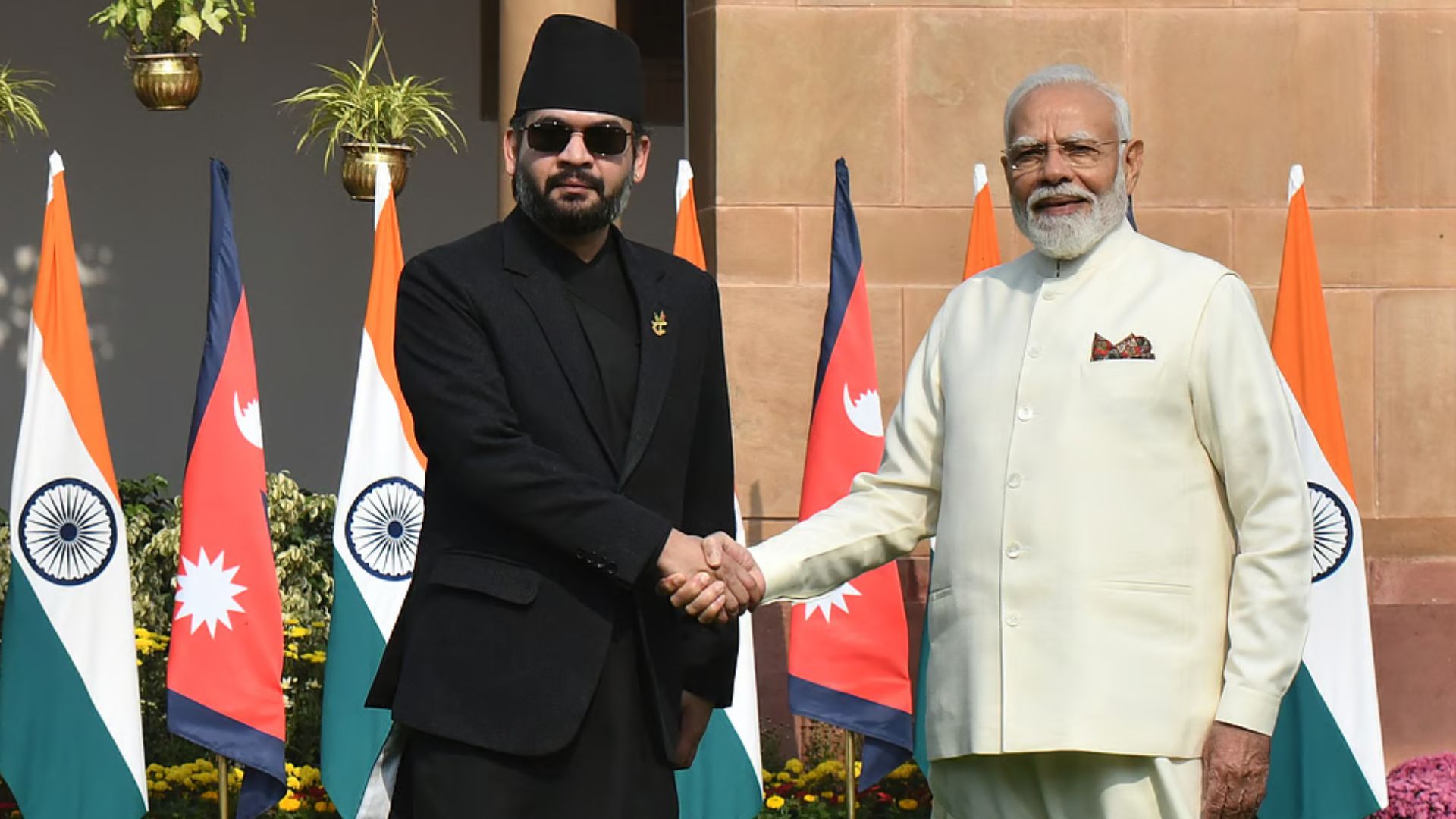
New Delhi [India]: Prime Minister Narendra Modi on Monday announced a Development Cooperation Package of 24,000 crore Nepali rupees to support Nepal’s post-flood reconstruction and long-term development, welcoming Nepalese Prime Minister Balendra Shah on his first bilateral visit to India after assuming office.
Delivering his press statement alongside Shah following delegation-level talks at Hyderabad House, PM Modi expressed condolences over the loss of lives in the severe floods that struck Nepal in August and reaffirmed New Delhi’s commitment to standing by Kathmandu in difficult times.
“We express our deep condolences for the loss of lives caused by the severe floods in Nepal in August. And today, to provide new strength to Nepal’s reconstruction and long-term development, we announce a Development Cooperation Package of 24,000 crore Nepali rupees,” PM Modi said.
Outlining the objective of the financial package, he added, “Our resolve will be that the lives of the affected families get back on track, new opportunities are created, and Nepal’s capacity to deal with future disasters is also further strengthened.”
Warmly welcoming the Nepalese Prime Minister, whom he noted had addressed the United Nations a few months ago as the world’s youngest Prime Minister, PM Modi praised Shah’s leadership and the mandate given to him by Nepalese voters earlier this year.
“After becoming the Prime Minister of Nepal, it gives me great pleasure to welcome Balendra Shah ji to India on his first bilateral visit. A few months ago, when he addressed the UN as the world’s youngest Prime Minister, we saw a clear glimpse of his vision. And today, during our discussions over the past few hours, I have felt his clear vision and commitment for the future of Nepal and for India-Nepal relations,” PM Modi said.
“This year, the historic mandate given to him by the people of Nepal reflects the aspirations and hopes of Nepal’s new generation,” he added.
Underscoring the deep-rooted ties between the two neighbours, the Prime Minister stated that bilateral relations are anchored in “close kinship and unbreakable trust.”
“India has always been a partner in the development journey of a strong and prosperous Nepal. In this spirit, today we have taken several important decisions to take our relations to new heights,” PM Modi said. “Friends, the relationship between India and Nepal is not merely of neighborhood, but one of close kinship and unbreakable trust. Our joys are shared, and our challenges too. We are partners in each other’s progress, and in difficult times, a support to each other as well.”
His remarks come as India and Nepal signed eight Memorandums of Understanding (MoUs) spanning space technology, security training, civil service capacity building, health, traditional medicine, sustainable urban development, and agriculture during Nepal Prime Minister Balendra Shah’s state visit to New Delhi.
In the space and communication sector, the Indian Space Research Organisation (ISRO) and Nepal’s Ministry of Information and Communication (MOIC) signed an MoU on the Establishment of a Satellite Communication (SATCOM) Network for the Utilization of the South Asia Satellite.
Strengthening cooperation in policing and forensic sciences, two agreements were inked: one for Academic and Research Collaboration between the National Forensic Sciences University (NFSU) in Gandhinagar, Gujarat, and the Crime Investigation Department of Nepal Police, and another between India’s Rashtriya Raksha University (RRU) and the National Police Academy (NPA) of Nepal.
To bolster institutional governance, the National Centre for Good Governance (NCGG) under India’s Department of Administrative Reforms and Public Grievances signed an MoU with the Nepal Administrative Staff College under Nepal’s Ministry of Federal Affairs and General Administration for a Capacity Building Training Programme for Civil Servants of Nepal.
In the healthcare sector, the two sides signed two pacts: an MoU between India’s Ministry of Health and Family Welfare and Nepal’s Ministry of Health and Food Safety on Cooperation in the field of Health and Medicine, alongside a government-to-government agreement on Cooperation in the field of Ayurveda and other Traditional Systems of Medicine.
The two governments also signed MoUs on Technical Cooperation in the field of Sustainable Urban Development and on Cooperation in the field of Livestock and Fisheries Development.
the two leaders jointly inaugurated and laid the foundation stones for six major cross-border connectivity, energy, and infrastructure projects during Shah’s state visit to New Delhi.
Highlighting cultural and rail connectivity, the two leaders launched the Sarayu-Kamala Express rail service connecting Ayodhya in India and Janakpur in Nepal.
Boosting road and trade infrastructure along the border, they inaugurated a new cross-border motorable bridge linking Dharchula in India with Darchula in Nepal. They also laid the foundation stone for a new Integrated Check Post (ICP) at Banbasa and reviewed construction progress on the ICPs at Bhairahawa, Sunauli, and Dodhara Chandani.
In the energy and hydropower sector, the two prime ministers laid the foundation stone for the 669 MW Lower Arun Hydroelectric Project.
Further strengthening bilateral petroleum cooperation, they dedicated Phase II of the Motihari–Amlekhgunj Pipeline (MAPL) and laid the foundation stone for a petroleum terminal at Jhapa, which forms part of the proposed Siliguri–Jhapa petroleum pipeline.
The virtual inaugurations and groundbreakings took place following bilateral talks between the two leaders at Hyderabad House, where India and Nepal also exchanged eight Memorandums of Understanding (MoUs) spanning space technology, security training, civil service capacity building, healthcare, urban development, and agriculture.
Shah, who arrived in New Delhi on Sunday for a two-day state visit, his first since assuming office in March 2026, earlier paid tribute to Mahatma Gandhi at Raj Ghat and received a ceremonial welcome at Rashtrapati Bhavan.
Nepal's Prime Minister Balendra Shah and Indian Prime Minister Narendra Modi will inaugurate a new train service between...
Two people were killed in an unexploded ordnance blast in northern Afghanistan's Faryab province, highlighting the continuing danger...

At least 24 people were killed and another 24 rescued after a boat carrying mourners to a funeral...

US Democrats have secured at least 258 seats in the House of Representatives, marking their biggest general-election majority...
US President Donald Trump has accused Iran of intensifying drone and missile attacks after the November 3 midterm...

Iran's IRGC has claimed that two oil supertankers exploded after hitting naval mines in the Strait of Hormuz....