Last Updated: October 12, 2026
Last Updated: October 12, 2026





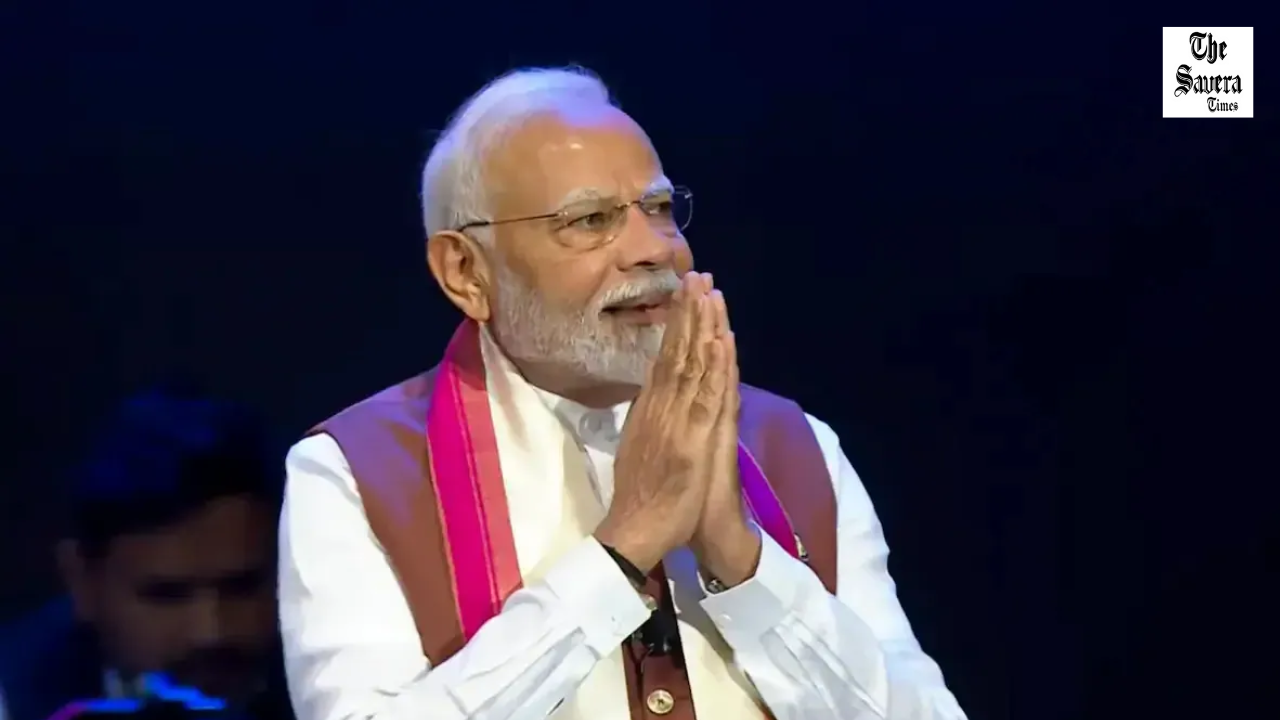
Prime Minister Narendra Modi has penned a heartfelt open letter to the people of West Bengal ahead of the 2026 Assembly elections, urging them to vote for a vision that he says will restore the state’s economic prosperity and cultural pride. The letter, dated February 23, 2026, is being distributed in both Bengali and Hindi across the state’s 294 constituencies as part of an intensified outreach effort by the Bharatiya Janata Party (BJP).
Modi opened the letter with a culturally resonant phrase “Joy Maa Kali” to connect emotionally with local sentiments and signal respect for Bengali tradition. Using evocative language, he described how seeing the current condition of West Bengal “breaks his heart” and appealed directly to voters to help fulfil the dream of a “Sonar Bangla” a prosperous, developed Bengal that lives up to its historical legacy.
In the letter, Modi sharply criticized the existing Trinamool Congress (TMC) government, alleging decades of misrule, appeasement politics and governance failures that have held back the state’s progress. He asserted that the people of Bengal are enduring “extreme deprivation”, and highlighted issues such as migration of youth due to lack of jobs, women’s insecurity, and concerns about illegal infiltration undermining democratic processes. Modi urged that this election is a pivotal moment a chance to decide the state’s future and improve the lives of the next generation.
To reinforce his message, the Prime Minister invoked cultural and historical icons such as Rabindranath Tagore, Swami Vivekananda, Sri Aurobindo and Subhas Chandra Bose, linking Bengal’s historic intellectual and cultural contribution to the promise of renewed progress under a fresh government.
Modi also emphasized his government’s track record on public welfare and development over the past 11 years, asserting that even in the absence of cooperation from the state administration, key central schemes have made an impact in Bengal. He cited evidence such as:
Inclusion of nearly five crore people in the Jan Dhan Yojana financial inclusion programmed.
Construction of 86 lakh toilets under the Swachh Bharat Mission.
LPG connections provided to more than one crore families through the Ujjwala Yojana.
Support to small traders and entrepreneurs with loans worth ₹2.82 lakh crore.
The reach of Ayushman Bharat healthcare coverage and Atal Pension Yojana benefits.
Direct income support to farmers under PM-Kisan.
These points were presented not only as achievements but as evidence of central government commitment to development, reinforcing Modi’s pledge to put Bengal on a similar path if given the opportunity to serve.
The emotional core of Modi’s letter rests on his vow to help make West Bengal a “Sonar Bangla” a phrase borrowed from Rabindranath Tagore’s poetry representing a golden, prosperous Bengal. Modi described his personal pledge to work for a “Viksit” (developed and prosperous) West Bengal, where employment opportunities grow, women feel safe, families thrive without migrating, and refugees persecuted elsewhere receive citizenship rights under the Citizenship Amendment Act (CAA).
He wrote that if given the chance to govern, “every moment of my service will be dedicated to bringing a smile to your face, spreading happiness, and freeing you from corruption and misrule.” Modi framed the upcoming polls as a turning point between decline and growth, appealing to voters to join the “yajna” of development.
The letter is part of a broader BJP strategy to connect with Bengali voters through emotionally resonant language, cultural references and development messaging, moving beyond traditional slogans such as “Jai Shri Ram” to adopt “Joy Maa Kali” a phrase more aligned with local ethos. BJP workers are delivering the open letter household-to-household, while political observers note the campaign’s emphasis on blending cultural identity with narratives of progress and governance reform, underscoring the high stakes of the state election.
Good Evening Viewers! Stay updated with The Savera Times Evening Bulletin for the latest news from Punjab, India...

eader of the Opposition in the Lok Sabha, Rahul Gandhi and 10 other INDIA bloc leaders have moved...
Amidst protests in central Delhi, the Delhi Metro Rail Corporation (DMRC) announced the reopening of entry and exit...
The Delhi Police has registered an FIR regarding the alleged disturbance at the Bangla Sahib Gurdwara in...
The Delhi Police on Monday removed Jantar Mantar from the list of officially designated protest sites. The police...
The Supreme Court on Monday clarified that it has not passed any judgment on the Election Commission's (ECI)...
Aries: The day will be auspicious...