Last Updated: October 20, 2026
Last Updated: October 20, 2026





Abhishek Vij
Women constitute nearly half of our country’s population, yet it’s a significant anomaly that women haven’t achieved equal social or political rights with men. Although discussions about women’s empowerment are being delayed, when the bill to provide women with political reservations in state legislatures and Parliament was passed in an extraordinary session of Parliament in 2023, it was unanimously supported by all political parties. However, the obstacle to implementing the bill was the fact that the next census would change the country’s political map based on its new data, and accordingly, the 33 percent reservation for women in assembly and parliamentary elections would be decided.
But now, as 2026 approached, the Modi government realized the need and urgency to provide one-third reservation for women. The government introduced two more bills, amending the Mahila Shakti Vandan Act and relating to delimitation. These bills stated that the population had increased and the final census report would be available only after the 2029 general elections, so reservation for women should be granted now through a constitutional amendment.
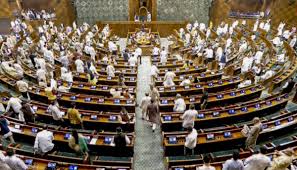
Due to the proportionate increase in population, seats in Parliament and Legislative Assemblies should be increased by 50 percent. This would increase the number of Lok Sabha seats to 850 and increase the number of women representatives elected. However, the three-day special session of Parliament convened to address this amendment resulted in intense controversy and politicking between the ruling party and the opposition.
The opposition stated that they have agreed to women’s political reservations since 2023. You can implement it today based on the current number of members in Parliament and Legislative Assemblies, but the constitutional amendment is a political maneuver. It doesn’t take into account the political balance of Dalits, Other Backward Classes, and South India. Therefore, we cannot support this trio of bills. However, we immediately agree on women’s reservations. PM Modi and Home Minister Amit Shah made important presentations on women’s equality and the need for women’s reservations, stating that they have suffered great injustice. This bill cannot be delayed any further. However, the opposition argued that this bill is being used to further political interests, and that the ruling party wants to ensure victory by implementing its own delimitation before the elections. The entire opposition gathered.
A division vote was demanded, and the constitutional amendment received 298 votes in favor and 230 against. A two-thirds majority was required for a constitutional amendment, so the proposal was defeated due to a lack of the required votes. With the amendment defeated, the other two proposals lost their meaning. However, the ruling party and the opposition have found a highly charged political issue, which has heated up the country’s political landscape. They are attacking each other.
The opposition claims that the ruling party, by amending the Constitution on its own, sought to serve its own interests without considering Dalits or South India, while the ruling party’s agitated protest is that the opposition, with its reactionary approach, prevented women from receiving reservations. Therefore, women should now reject it. A very good step toward equality and reservation for women, which the country should have taken long ago, remains unimplemented, and the 2023 Women’s Reservation Act is once again in limbo.
Good Evening Viewers! Catch up on the day's biggest stories with The Savera Times Evening Bulletin. Get the...

Congress leaders continued their protest outside the Jaipur Police Commissionerate on Tuesday, demanding the registration of a zero...
On the auspicious occasion of Vijayadashami, Prime Minister Narendra Modi on Tuesday called on the countrymen to unite...
A historic milestone was achieved on Tuesday in the expansion of Chhattisgarh's rail networkA historic milestone was achieved...
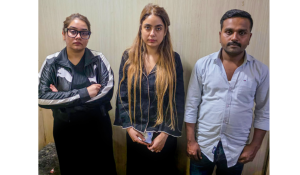
Model Shraddha Dubey, one of the main accused in the death of Lucknow businessman Shiv Sharma, has been...
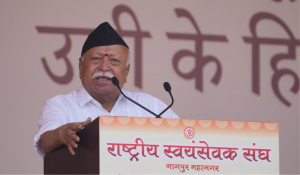
Rashtriya Swayamsevak Sangh (RSS) chief Mohan Bhagwat on Tuesday called for strengthening national unity, social harmony, indigenous practices...
Aries: The day will be auspicious...