Last Updated: October 22, 2026
Last Updated: October 22, 2026





Abhishek Vij
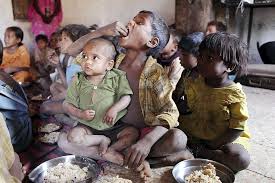
A recent report from the United Nations Food and Agriculture Organization has highlighted a serious crisis: rich countries, or their international aid agencies, have refused to finance the world’s poorest countries. India is among these countries. The crisis of environmental pollution and global warming has engulfed the world, devastating the economies of poor countries like India. Rich countries, breaking their promises, have refused to provide additional funding to combat environmental pollution. They have also provided no relief from their own tariffs for these countries’ exports and have imposed heavy tariffs on them.
As a result, third-world countries have become burdened with debt to rich countries. The fight against environmental pollution appears to be in disarray. This funding cut has done India’s poor no favors. Here, the pace of economic development has become hostage to the private elite. Another warning has come: millions of people in at least six countries have been plunged into starvation due to the withdrawal of support by wealthy nations. At least 14 million people worldwide are on the brink of starvation. These include Afghanistan, Congo, Haiti, Somalia, South Sudan, and Sudan.
Not only this, the lifelines of millions, even in India, are being cut off by hunger, disease, unemployment, corruption, and inflation. What good is an increased growth rate when bureaucracy has embraced it? Despite the call for revolution, countries like India are witnessing a glimpse of the status quo. This is why a part of India, which can be called modern or prosperous, is rapidly pursuing development, while three-quarters of India’s population is lagging behind. No matter how much one changes the definition of hunger and proclaims that people have come out of hunger, the truth remains that these countries face hunger, unemployment, and a bleak future. The extent of this is that these international forums have decided to provide 40 percent less funding. This means that if their estimated budget was $10 billion, it will now be reduced to $6.4 billion.
A strange contradiction has now emerged. On the one hand, there is a development journey, for which we need a prosperous private sector, research, artificial intelligence, and the power of the internet to continue accelerating. On the other hand, if we look at the millions of poor, what is the provision for their livelihood? Will they only get food from subsidized food grains? Guarantees of not dying of starvation have been given, but employment has not been guaranteed. We talk about the latest scientific revolution, but where is the latest educational revolution for future generations? These are some of the questions that India needs to grapple with today.
Despite economic growth, nearly half of the country’s population has fallen below the happiness index and is severely affected by inflation, corruption, and unemployment. To save the world, all countries must work together with a spirit of cooperation and generosity. But unfortunately, rich countries are failing to fulfill their responsibilities in addressing issues ranging from environmental pollution to hunger. This is why we see massive inequality in the world. When will that ideal be fulfilled, when equality, rather than inequality, prevails in the world?
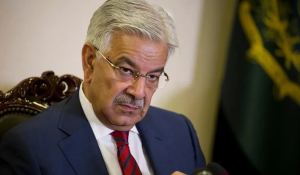
Pakistan's Defense Minister Khawaja Asif has questioned alleged plans by senior government officials to permanently settle abroad. He...
The Baloch Liberation Army (BLA) has claimed responsibility for carrying out 34 operations between October 9 and 20...
Russian President Vladimir Putin said on Wednesday that Russia's first tanker carrying 40,000 tons of diesel fuel will...

Ten people were killed and 44 others injured in a horrific road accident in Pakistan's Punjab province. The...

North Korean leader Kim Jong-un's influential sister, Kim Yo-jong, and a military marshal inspected fortification work along the...

New Delhi: US Secretary of State Marco Rubio has assured India that America’s relations with any country in...

Aries: The day will be auspicious...