Last Updated: October 17, 2026
Last Updated: October 17, 2026





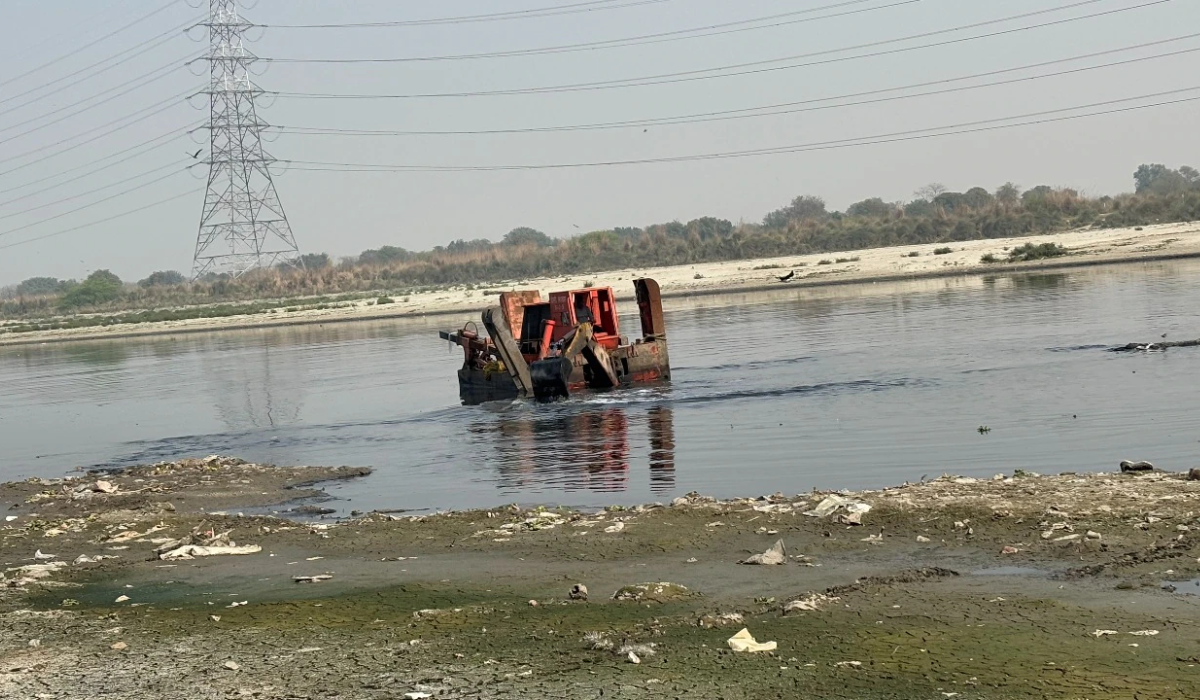
Chandigarh: The government has taken significant steps to clean the Yamuna River in Haryana. In this regard, Chief Secretary Anurag Rastogi directed the formation of separate committees headed by divisional commissioners to monitor the 11 major drains flowing into the Yamuna during a review meeting.
These committees will also include representatives from the relevant departments. The committees will meet every 15 days and submit their reports to the Chairman of the Haryana State Pollution Control Board.
Large amounts of sewage flowing daily from drains
The meeting was informed that approximately 1632 MLD of wastewater reaches the Yamuna daily through these drains. Approximately 1000 MLD of this water is being treated. Regular monitoring of water quality in all drains is also being conducted to reduce pollution levels.
Emphasis on Increasing Sewage Treatment Capacity
The state government is working on several projects to increase sewage treatment capacity in the Yamuna catchment area. Currently, Haryana has 91 operational sewage treatment plants (STPs), with a total capacity of 1,543 MLD. Additionally, three STPs with a capacity of 88 MLD are under construction, targeted for completion by March 2027.
Nine STPs with a capacity of 227 MLD are being upgraded, and nine new STPs with a capacity of 510 MLD are also proposed.
Action Plan Prepared for 11 Major Drains
The meeting also reviewed the action plans prepared for various drains. These include Dhanaura Escape, Drain No. 2, Drain No. 6, Mungeshpur Drain, KCB Drain, Drain No. 8, Leg-1, Leg-2, Leg-3, Budhiya Nala, and Gaunchi Drain. Sewer tapping is being carried out to prevent untreated water from these drains from flowing into the Yamuna.
Furthermore, the establishment of a 77 MLD STP in Yamunanagar, a proposed 60 MLD STP in Rohtak, and a proposed 100 MLD STP in Gurugram will help further reduce pollution in the future.
Rain brought down Haryana's average maximum temperature by 5.3 degrees Celsius on October 15. More showers are forecast...

A former sarpanch allegedly shot his 26-year-old son, Murari, in Taloda village of Jind district amid a dispute...

An administrative team and police returned without taking possession of a house in Panipat after the homeowner allegedly...
Punjab AGTF and Haryana STF arrested Gurlal Singh in connection with Ajmeet Singh’s September 11 murder in Naushera...

Pinky Yadav, daughter of former Haryana BJP district president Dayaram Yadav, has been reverted from Junior Engineer to...

SFI leader Amit Pilana from Rohtak alleged that police used batons, dragged protesters and mistreated women during the...

Aries: The day will be auspicious...