Last Updated: November 9, 2026
Last Updated: November 9, 2026





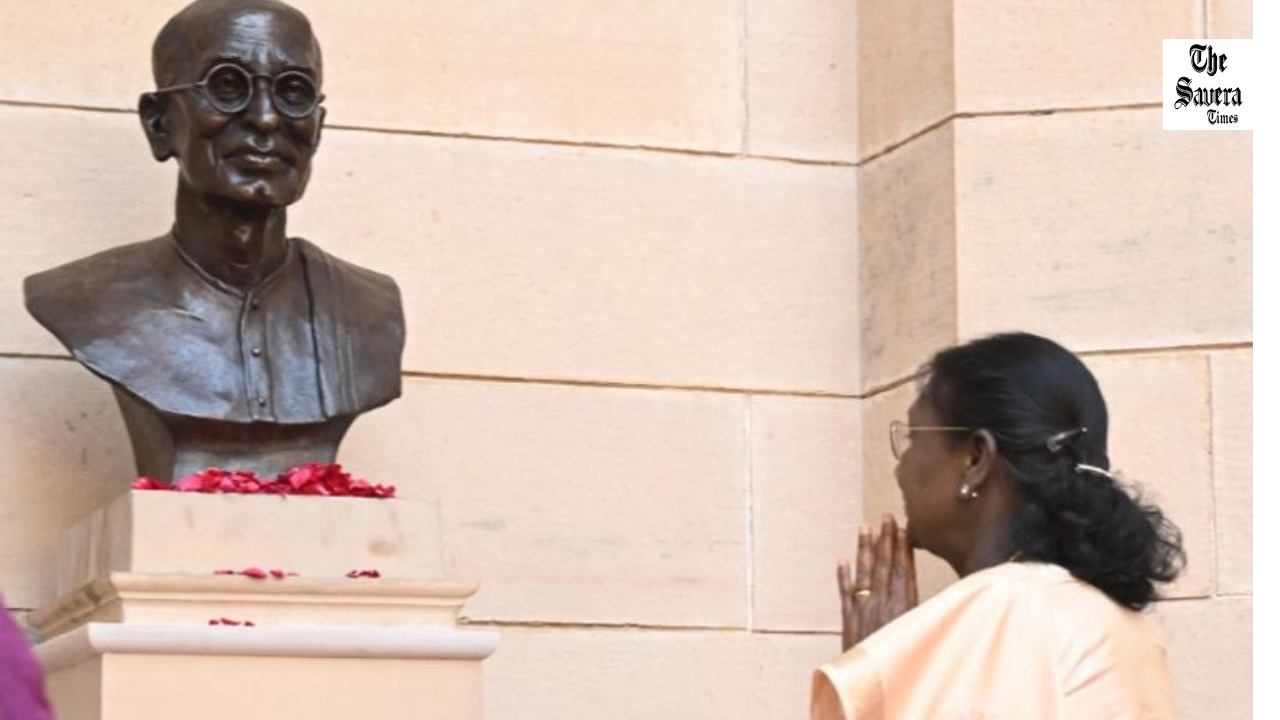
In a symbolic move underscoring India’s ongoing effort to move away from colonial legacies, President Droupadi Murmu on February 23, 2026, unveiled the bust of Chakravarti Rajagopalachari, the first and only Indian Governor-General of independent India, at Rashtrapati Bhavan in New Delhi. The sculpture replaces the bust of Edwin Lutyens, the British architect who designed many iconic structures in the national capital including Rashtrapati Bhavan.
The new bust has been installed at the Grand Open Staircase near the Ashok Mandap in the President’s official residence, reflecting a deliberate choice to honour Indian leadership and heritage at a site historically associated with colonial architecture. The change was marked by formal ceremonies held under the aegis of “Rajaji Utsav”, a festival celebrating Rajagopalachari’s legacy.
According to a statement issued by the President’s Secretariat, the decision is part of a larger cultural initiative to “shed the vestiges of a colonial mindset” and highlight India’s rich heritage, traditions and contributions of national leaders who devoted their lives to the country. The unveiling is seen as a continuation of efforts to replace colonial symbols with Indian icons that embody independence, service and national pride.
President Murmu’s announcement reaffirmed the importance of repositioning historical narratives in public spaces; an initiative aligned with previous steps taken at Rashtrapati Bhavan including replacing portraits of British era aides-de-camp with portraits of India’s Param Vir Chakra awardees and updating archival texts with literature from India’s classical languages.
The day also marked the start of Rajaji Utsav, a series of events to commemorate Rajagopalachari affectionately called “Rajaji” whose public service spanned critical roles in India’s transition from colonial rule to republic. Born on December 10, 1878, in Tamil Nadu, he rose to prominence as a freedom fighter, close associate of key leaders of the independence movement, and later as a statesman deeply respected for his prudence and integrity.
The unveiling ceremony was attended by key dignitaries including Vice-President C.P. Radhakrishnan, Union Ministers such as Jagat Prakash Nadda, Dr. Subrahmanyam Jaishankar, Dharmendra Pradhan, Gajendra Singh Shekhawat, Dr. L. Murugan, and members of Rajagopalachari’s family. Their presence underscored the event’s significance as both a cultural milestone and a tribute to an eminent Indian leader.
Edwin Lutyens, a British architect, is known for designing many of New Delhi’s iconic structures including Rashtrapati Bhavan itself during the colonial era. His work shaped much of the city’s-built environment in the early 20th century. While his architectural contribution remains historically significant, the decision to replace his bust reflects a shift towards honouring Indian leadership and heritage in spaces of national prominence.
Prime Minister Narendra Modi had announced the plan in his recent ‘Mann Ki Baat’ address, saying that India is consciously moving away from symbols of colonialism and embracing its civilizational identity. He framed the replacement as part of the broader commitment to move beyond a “slave mentality” and reinforce the country’s own cultural legacy.
The move has sparked conversations across political and cultural circles. Supporters have lauded the gesture as appropriate recognition of Indian leadership, while critics caution against erasing historical figures whose contributions form part of the nation’s architectural heritage. Despite differing opinions, the initiative clearly reflects a larger trend of re-examining colonial-era symbols and celebrating leaders from India’s independence era.
An exhibition on Rajagopalachari’s life and contributions has also been planned during the Rajaji Utsav, scheduled from February 24 to March 1, 2026, offering visitors and citizens a chance to engage more deeply with his legacy.
Five people were killed and 16 others injured in a major accident in Jharkhand's Hazaribagh district after a...
At least 10 people with firecracker-related eye injuries were admitted to Hyderabad's Sarojini Devi Eye Hospital, with eight...
Six members of a family died after a fire engulfed their house-cum-grocery store in Yedshi village of Maharashtra’s...
President Droupadi Murmu is set to honour India's cleanest cities at the 10th Swachh Survekshan Awards 2025-26. The...
The BJP has shortlisted 209 candidates for the 2027 Uttar Pradesh Assembly elections and sent their names to...
Union Home Minister Amit Shah will attend inaugurations and foundation stone laying ceremonies for several development projects in...
Aries: The day will be auspicious...