Last Updated: October 7, 2026
Last Updated: October 7, 2026





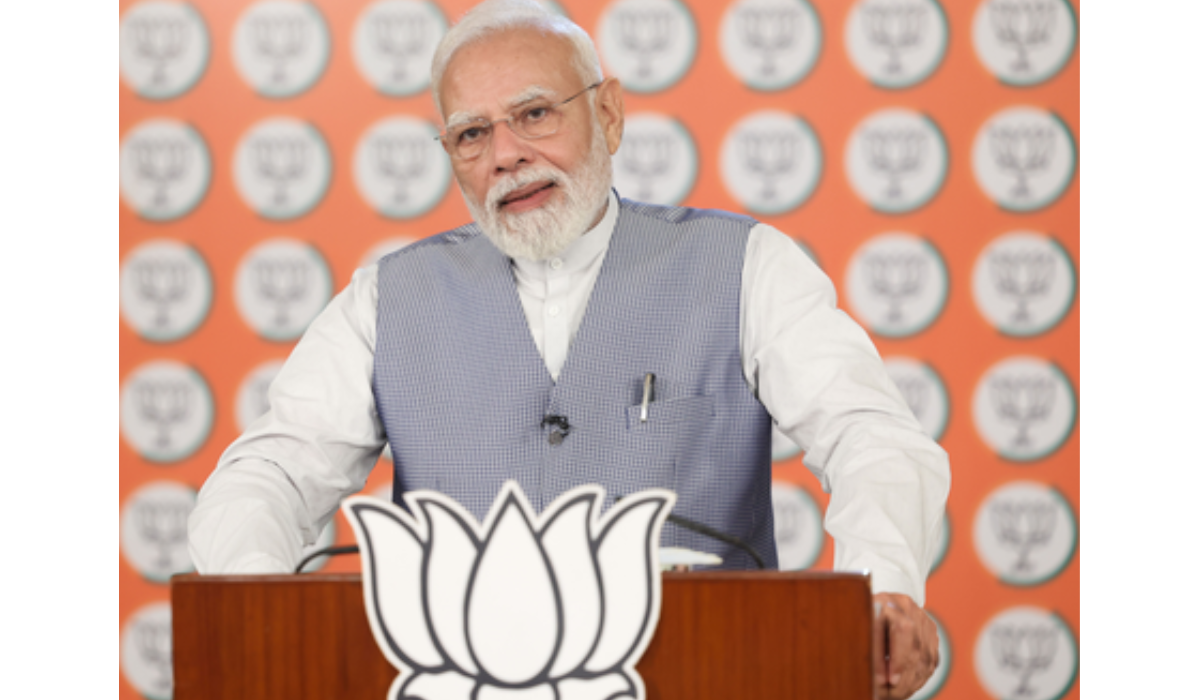
On October 7, 2026, Narendra Modi completes 25 years as the head of a government. This journey in public life began in 2001 when he took the oath as the Chief Minister of Gujarat and expanded to the national level upon assuming office as the Prime Minister of India in 2014. This milestone is significant not merely for its duration, but because it marks a period during which India has witnessed sweeping transformations across economic, technological, infrastructural, and social sectors. This quarter-century milestone in public life offers an opportunity to look beyond individual events or political achievements and understand the profound changes that have taken place in the country. Since 2014, the Modi government has adopted an approach focused on large-scale implementation, technology, infrastructure, financial inclusion, manufacturing, social welfare, and India’s growing participation in the global economy. While supporters characterize this period as an era of rapid nation-building, critics and independent analysts have raised questions regarding implementation, institutional processes, and the distribution of economic benefits. Therefore, to comprehend this entire period, it is essential to consider both the measurable changes and the discourses surrounding them. One of the defining features of this period has been the expansion of ‘Digital Public Infrastructure.’ Launched in 2015, the Digital India program helped create an ecosystem enabling the large-scale operation of identity systems, banking, mobile connectivity, and public services. By 2026, India possessed over 1.44 billion Aadhaar identities, 577.1 million Jan Dhan accounts, and a rapidly expanding network of digital services. The Unified Payments Interface (UPI) has emerged as one of the most visible symbols of this transformation. UPI transactions surged from approximately 2 crore annually in FY 2016-17 to over 24,162 crore in FY 2025-26. The value of transactions reached nearly ₹314 lakh crore in FY 2025-26, alongside the international expansion of UPI. Its significance extends beyond mere convenience; digital payments have enabled small businesses, street vendors, consumers, and entrepreneurs to participate more easily in the formal financial system. Digital transformation has also reshaped the relationship between citizens and the government. Platforms such as DigiLocker, UMANG, Common Service Centres, and BharatNet have expanded access to government and essential services. By 2026, over 2.21 lakh Gram Panchayats were ready to be served under BharatNet, while more than five lakh Common Service Centres across the country were providing digital services. ‘Infrastructure’ has also been a key pillar during this period. Over the past 12 years, India has accelerated investment in roads, railways, airports, ports, waterways, housing, energy, and urban transport. According to government data, public capital expenditure rose from approximately ₹2 lakh crore in FY 2014-15 to ₹12.2 lakh crore in FY 2026-27. Railway electrification, metro expansion, and integrated logistics planning have progressed alongside this investment. By March 2026, 99.6 percent of the Indian railway network had been electrified, while the country’s metro network had expanded to over 1,155 kilometers. Alongside this infrastructure expansion, emphasis has also been placed on manufacturing and economic self-reliance. Efforts have been made to boost domestic manufacturing capacity, attract investment, and build capabilities across various strategic sectors—ranging from electronics and telecommunications to pharmaceuticals and defense— through initiatives like ‘Make in India’, Production-Linked Incentive (PLI) schemes, and the overarching ‘Atmanirbhar Bharat’ (Self-Reliant India) framework. The broader objective has been to transform India from primarily a large consumer market into a major producer and exporter. This period has also witnessed the expansion of social welfare through ‘technology and direct transfer’ mechanisms. Jan Dhan accounts, Aadhaar, and mobile connectivity laid the foundation for Direct Benefit Transfer (DBT), enabling government assistance to reach beneficiaries directly. Large-scale efforts have been made to meet basic household needs through schemes addressing housing, sanitation, cooking fuel, drinking water, health insurance, and food security. In a 2026 Union Cabinet statement, the government claimed that over 250 million people had escaped multidimensional poverty during this period. While such claims are significant, it is also essential to understand them in the context of the methodologies used to measure poverty and independent assessments. The COVID-19 pandemic posed one of the most extraordinary governance challenges of this period. Leveraging the CoWIN digital platform, India conducted one of the world’s largest vaccination drives. Over 2.2 billion vaccine doses were administered through this program, while digital health initiatives like eSanjeevani expanded access to telemedicine. At the same time, the pandemic exposed existing disparities in healthcare, employment, and social security, highlighting that—alongside technological prowess—institutional strength and effective last-mile service delivery are essential. Another significant dimension of the Modi era has been the effort to strengthen India’s global economic and strategic footprint. India has positioned itself as the voice of the Global South, a major technology and manufacturing economy, and a key partner in global initiatives ranging from climate action to digital public infrastructure. Its successful G20 presidency in 2023 provided a platform to place development concerns, digital inclusion, and the interests of developing economies more prominently on the international agenda. This transformation is also reflected in India’s technological ambitions. From digital payments and Aadhaar to space exploration, semiconductor manufacturing, and artificial intelligence, the policy focus has increasingly shifted towards building indigenous capabilities. From the state administration of Gujarat to the leadership of the world’s largest democracy, Narendra Modi’s public life has been intertwined with India’s transition from a largely traditional economy to one of the most digitally connected societies globally. The nation’s physical infrastructure has expanded, its digital systems have gained global recognition, and its ambitions have evolved from domestic development towards achieving global influence. The next chapter for India will be defined by how effectively these foundations translate into sustained improvements in productivity, employment, human development, and living standards. The national goal of ‘Viksit Bharat 2047’ (Developed India 2047) frames this challenge within a longterm vision. Thus, these 25 years in public life represent more than just a personal political milestone; they offer an opportunity to reflect on a transforming India—a nation that has built new highways and digital networks, expanded access to banking and welfare schemes, embraced entrepreneurship and technology, and strived for a greater role on the global stage. During Narendra Modi’s tenure as Prime Minister, Haryana has also received significant investments and development projects as part of the national growth journey, thereby strengthening the state’s role in India’s economic progress. Key projects include the Gurugram Metro, AIIMS Rewari, the Dwarka Expressway, and the expansion of railway and highway connectivity. His government has also supported new projects in the state related to health, energy, aviation, and industrial infrastructure. In 2026, Haryana became the hub for India’s first indigenous hydrogen-powered train, operating between Jind and Sonipat. Infrastructure projects worth approximately ₹14,700 crore are also associated with this. These initiatives reflect an approach focused on connectivity, investment, technology, and opportunities for the people of Haryana. The significance of this 25-year journey in Narendra Modi’s public life ultimately lies in the scale of the journey itself and the magnitude of the aspirations it has generated. The next benchmark for this journey will be how effectively today’s institutions, infrastructure, and technological capabilities can be transformed into opportunities, prosperity, and a better standard of living for India’s 1.4 billion citizens— and how the life of every single citizen can be integrated into the realization of the resolve for a developed India by 2047.
Chandigarh: The Punjab Vigilance Bureau (VB) during its ongoing drive against corruption in the state, the Punjab Vigilance...
Islamabad: A child was killed and four other people injured as rains continue to wreak havoc in Mardan...
New Delhi: Leader of Opposition in the Lok Sabha Rahul Gandhi on Wednesday took a jibe after an...
Kyiv: Ukrainian President Volodymyr Zelensky said on Wednesday that the Russian army destroyed a residential building in Chernihiv...

Washington: The United States is keeping in place two sets of trade actions against China over technology transfer,...

New Delhi: A portion of a multi-storied building collapsed in north Delhi’s Seemapuri area on Wednesday, with many...
Aries: The day will be auspicious...