Last Updated: October 15, 2026
Last Updated: October 15, 2026





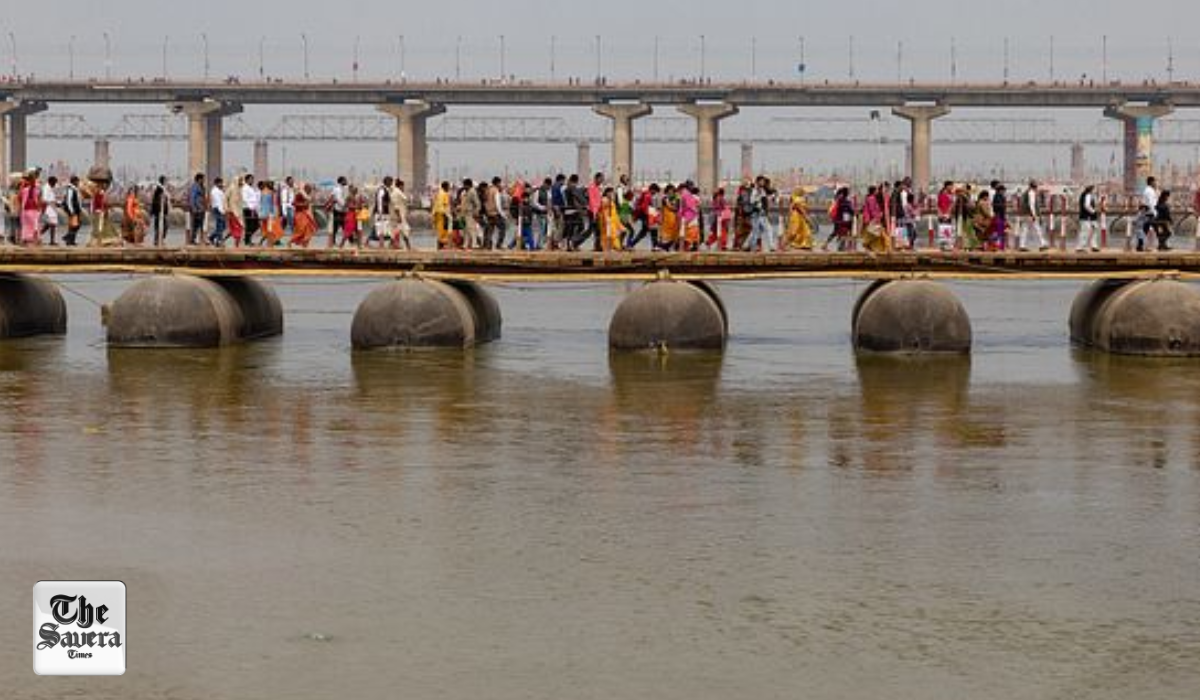
Over the past few years, Punjab and Haryana have been at loggerheads before the courts regarding the Sutlej-Yamuna Link (SYL) Canal. Punjab contends that the situation has changed drastically since the time this agreement was originally reached. In Punjab, the groundwater level has been steadily depleting.
Since the agricultural crop cycle in Punjab has not changed, and farming methods remain traditional, there is now a severe shortage of water for irrigation. Consequently, in the current scenario, Punjab cannot accept the old method of water allocation.
In light of these circumstances, Punjab demands a re-determination of river water allocation. While the meetings held between Punjab and Haryana in this regard are reported to have taken place in a cordial atmosphere, the Chief Minister of Punjab put forward a clear suggestion: since the abrogation of the Indus Waters Treaty has left us with surplus water from the Jhelum and Chenab rivers, why not allocate that water to the needy states of Punjab, Haryana, and Rajasthan? He argued that there is no utility in repeatedly raising the issue of the Sutlej-Yamuna Link Canal.
Furthermore, a dispute regarding the sharing of water from the Ravi and Beas rivers among Punjab, Haryana, and Rajasthan has also been ongoing for a considerable period. The Tribunal headed by Justice Vineet Saran (Retd.) has also drawn attention to the diminishing water availability in Punjab, the scarcity of canal water in the border regions, and the problem of polluted water flowing in from Pakistan.
The members of the Tribunal were apprised that the water entering the Sutlej from the Kasur region of Pakistan is contaminated. Pakistan’s leather industry is concentrated in Kasur; polluted water from this area flows into Punjab, thereby degrading the quality of our water resources.
Our agriculture, livestock sector, and local population are adversely affected by this. Therefore, the Tribunal must also address this grave issue. The singular point that is being repeatedly placed before the judicial commissions or water tribunals is this: the current availability of water is insufficient to even meet the state’s own requirements; under such circumstances, from where is Punjab expected to provide surplus water? The allocation of river water must be determined afresh. In this regard, the Water Resources Department should arrange for the Tribunal to visit these sites and observe the prevailing conditions.
The Tribunal has, in fact, already inspected the Harike Headworks, the Bannewala Headworks in Ferozepur, and the Hussainiwala region. Officials have provided the Tribunal with detailed information regarding the current water flow in the Ravi and Beas rivers, the availability of water in the canals, and its utilization within the state.
It would be advisable to now also review the total water inflow—or, conversely, the adequacy of the drainage and distribution systems— in light of the changed circumstances. Punjab asserts that the scarcity of canal water in its border regions is steadily intensifying. Farmers are unable to access sufficient water for irrigation, a situation that is adversely impacting agricultural activities.
Four decades have elapsed since the data currently being relied upon was originally compiled. According to those existing records, the combined water availability in the Ravi and Beas rivers stood at 17.17 MAF. However, by 2021 alone, this availability had already dwindled to 13 MAF.
With another five years having passed since then, the availability has likely diminished even further.
Consequently, it is evident that previous surveys, assessments, or judicial verdicts cannot be applied to the current reality. Therefore, there is an urgent need to re-evaluate and present a revised framework for the water allocation of Punjab’s rivers—one that is firmly grounded in present-day realities; failure to do so will merely allow this issue to fester, continuing to sow discord among neighboring states.
Singapore: Two Singapore-registered container vessels were reportedly struck by unknown projectiles while transiting the Strait of Hormuz on...
Shimla: The Himachal Pradesh government has constituted a four-member commission to examine the reorganisation of administrative units in...
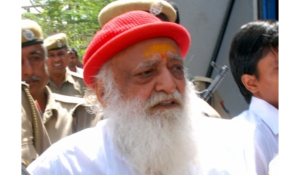
New Delhi: The Supreme Court on Wednesday listed for November 17 the appeal filed by self-styled godman Asaram...
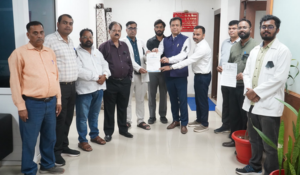
Ranchi: Doctors in Jharkhand launched a protest on Wednesday over a slew of demands concerning their safety and...
Greater Noida: Police and Anti-Narcotics Team in Uttar Pradesh’s Greater Noida have seized ‘ganja’ worth Rs 1 crore...

New Delhi: The Enforcement Directorate (ED) has attached assets worth Rs 2,032.81 crore belonging to Reliance Power Ltd...