


For the past few years, there has been a vigorous campaign urging farmers not to burn crop stubble in their fields. To tackle this issue, the government has instituted strict penalties for those who burn stubble, while offering financial incentives to those who adopt alternative methods. Punjab is frequently cited among the states where stubble burning occurs; it is often blamed for the pollution, suffocating air, and unbearable weather conditions experienced as far away as Delhi. However, reports from Punjab indicate that the current Aam Aadmi Party government has launched a significant campaign to dissuade farmers from this practice. Statistics confirm a reduction in the percentage of stubble burning. The challenge remains that, despite these promising figures, some farmers continue to burn stubble. The practice of burning crop residues in fields continues—directly or indirectly—alongside the paddy harvest. While Punjab and Haryana are often accused of being responsible for stubble burning and the resulting smog, there is little movement towards rational agricultural reform in this agrarian nation. Farmers often find the easiest path is to simply burn the remaining crop residue and sow the next crop immediately. This convenient method is so appealing that farmers in other major agricultural states also prefer it. Data from the current season reveals that Madhya Pradesh has topped the list for stubble burning for the second consecutive year. Punjab ranks second, followed by Uttar Pradesh in third place. The reasons cited include shifting farming patterns—particularly in Madhya Pradesh— unpredictable weather, and a move by farmers away from Kharif crops like soybean and black gram (urad) towards paddy cultivation, resulting in an increased area dedicated to paddy. As bad habits tend to spread rapidly from one region to another, incidents of stubble burning are on the rise in these states as well. Statistics indicate that between September 1 and September 30 of last year, 33,028 incidents of stubble burning were recorded across six states. It is worth noting that since some farmers burn stubble at night, not all incidents are captured. Due to the low number of citations, the nature of the fines imposed, and the tendency for legal decisions to be delayed, the harmful practice of stubble burning continues to plague agriculture.
Problem of Stubble Burning Persists
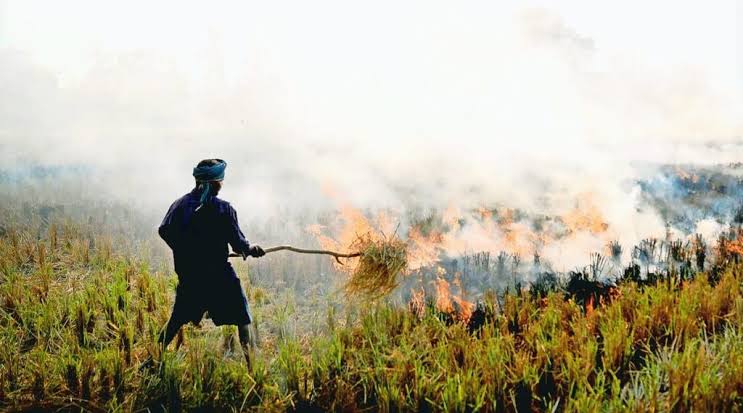
Problem of Stubble Burning Persists