Last Updated: October 15, 2026
Last Updated: October 15, 2026





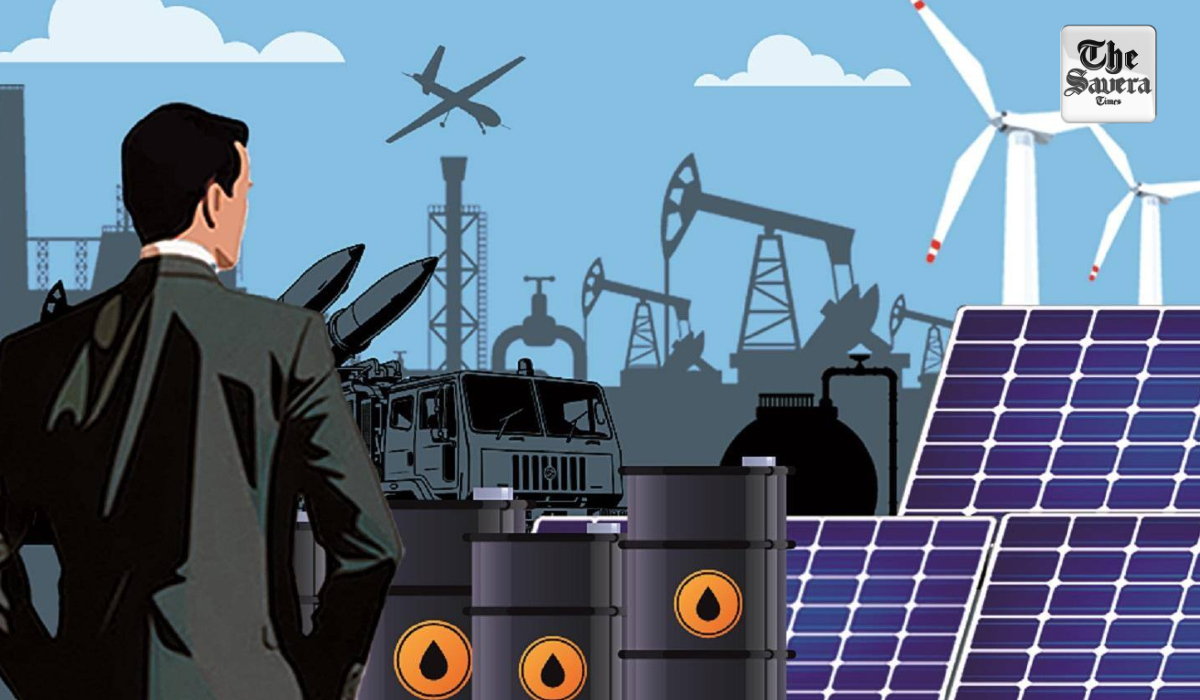
While most regions of the country, including the states of North India, face power shortages during the summer season, this year’s prolonged summer season has resulted in a decline in power generation amid peak demand. Punjab also purchases power from other states during the summer and returns it to those states in the winter. Currently, power demand in Punjab has reached a peak. In Punjab, one unit each at the Talwandi Sabo and Goindwal thermal plants has been shut down. Talwandi Sabo Thermal Power Plant’s 660 MW unit number three has been shut down due to a boiler tube leak. Goindwal Thermal Power Plant’s 270 MW unit number two has been shut down due to a technical fault. Ropar Thermal Power Plant’s 210 MW unit number five and Lehra Mohabbat Thermal Power Plant’s units number one and three are already shut down. The total power generation of 1600 MW from these five units has been affected. It is difficult for the situation to improve at least till tomorrow, 6th September. On the other hand, the demand for electricity has reached its peak at this time. This Thursday, the maximum power demand in Punjab was 16485 MW, whereas in 2025, the demand for electricity till the same day was 7687 MW. However, a year before that, in 2024, this demand was 13,759 MW. This means that the demand for electricity is at its peak this year. At present, the state is able to provide 4871 MW of power from its own sources. Therefore, more than 11,121 MW of power has to be overdrawn as compared to the scheduled supply from the Northern Grid. Another difficulty is that due to lack of water in the dams, hydel production has also stopped. Three units of Ranjit Sagar Dam are shut down. Hydel production has been disrupted due to low water level in major dams. As a result, four-hour power cuts are being imposed in industries. Every year, Punjab’s industries and agriculture have to face power cuts despite government incentives. Of course, the alternative to this is solar power. The government has launched several new schemes to encourage solar power generation. These include a policy of providing substantial subsidies, but such changes are slow to occur in a traditional society. One reason for this is the tendency for people to let things be as they are. Secondly, there is a lack of new technical mechanics in this new field. This is why solar power has not yet become a replacement for other sources of power generation.
Varanasi: Uttar Pradesh Chief Minister Yogi Adityanath, on a two-day visit to Varanasi, honoured sanitation workers from the...

New Delhi: India’s pharmaceutical sector performed exceptionally well in September 2026, recording the highest monthly growth in the...

Prime Minister Narendra Modi on Thursday inaugurated and dedicated to the nation five major development projects worth approximately...
New Delhi: The Supreme Court on Thursday issued notice to the Election Commission of India (ECI) on a...
Supreme Court: Person Converting from Hinduism to Islam Cannot Claim Backward-Class Muslim Status

Higher reaches of Jammu and Kashmir received the season’s first snowfall, covering Doda, Gurez Valley and Pir Ki...
Aries: The day will be auspicious...