Last Updated: October 8, 2026
Last Updated: October 8, 2026





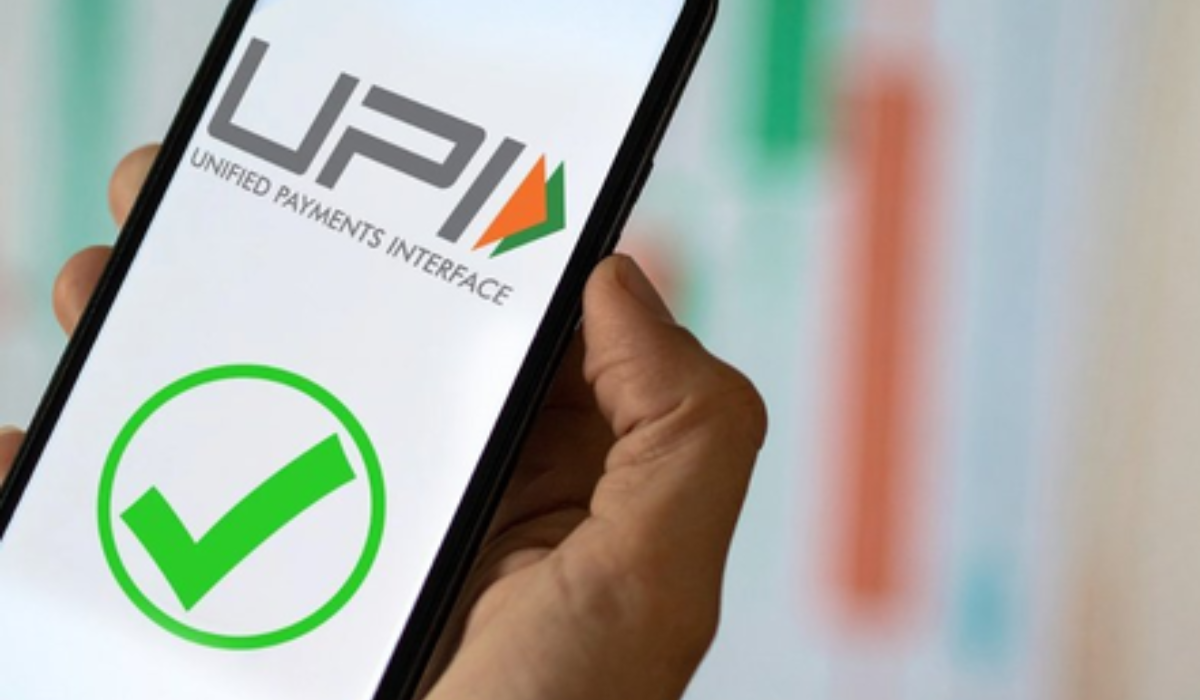
The proposed introduction of a 0.4% Merchant Discount Rate (MDR) on certain UPI transactions above Rs 2,000 has led to concerns that UPI payments could become more expensive for ordinary users. However, the proposal is narrower than a universal charge on UPI transactions. Most everyday UPI payments, particularly low-value merchant payments and personto-person (P2P) transfers, would continue to remain outside the MDR framework. The key point is that MDR is a charge within the merchant payment ecosystem, and not a transaction fee imposed directly on the UPI user. Under the proposed framework, the 0.4% MDR would apply only to specified merchant transactions above Rs 2,000. A merchant transaction of Rs 2,000 or less would remain outside this framework. Similarly, sending money to another individual through UPI would not attract the MDR. Whether someone transfers Rs 5,000, Rs 50,000 or any other amount to another person, the P2P transaction would continue to remain free. According to the Ministry of Finance, payments up to Rs 2,000 and transactions covered under the zero-MDR framework would remain free, leaving approximately 96% of P2M (person-to-merchant) transactions unaffected. This is significant because the average P2M UPI transaction is only around Rs 577. In other words, the typical UPI payment made to a merchant is substantially below the proposed Rs 2,000 threshold. For transactions that fall within the specified category above Rs 2,000, the calculation is straightforward. At an MDR of 0.4%, a Rs 3,000 merchant payment would correspond to Rs 12 in MDR. A Rs 5,000 payment would result in Rs 20, while a Rs 10,000 payment would correspond to Rs 40. The MDR is also not an additional amount that the customer is separately asked to pay at the time of making the payment. It is deducted from the amount received by the merchant and distributed among participants in the payment ecosystem. It is therefore different from a tax or a government charge. Neither the Government nor NPCI collects the MDR as a tax. There are also safeguards and different rates for specific categories of transactions. Once a transaction reaches Rs 75,000, the MDR would be capped at Rs 300 instead of increasing proportionately beyond that level. Small merchants would also continue to benefit from zero MDR under the specified P2PM category if they receive up to ₹1 lakh per month through UPI QR. This means the framework does not treat all merchants and all transaction values in the same manner. Certain sectors would have a separate flat-rate structure. Transactions above Rs 2,000 in areas such as railways, telecom, insurance, fuel and agricultural inputs would attract a flat Rs 5 MDR instead of the standard 0.4% rate. Similarly, specified payments involving mutual funds, securities, stockbrokers and dealers would attract an MDR of 0.02%, subject to a maximum of Rs 300. The broader issue behind the proposed change is the cost of maintaining and expanding the UPI payment ecosystem. UPI has grown rapidly, but keeping a large-scale digital payment infrastructure operational involves costs across banks, payment service providers and other participants. The government has already provided financial support to sustain low-value digital payments. In March 2025, for instance, the government approved a Rs 1,500 crore incentive scheme for lowvalue UPI P2M transactions. This background is important when looking at the proposed MDR. The change should not be understood as a universal fee on UPI. Everyday lowvalue merchant payments up to Rs 2,000, P2P transfers and transactions covered by the zeroMDR framework would remain outside the proposed charge. For users, the practical distinction is therefore between P2P and P2M transactions, transaction value, and the category of merchant or service involved. For most routine UPI payments-buying groceries, paying for small purchases or transferring money to family and friends-the proposed MDR would not create a direct charge. The debate around MDR is ultimately about how India finances and sustains its digital payments infrastructure while keeping UPI accessible. The proposed framework attempts to introduce charges in specified parts of the merchant-payment ecosystem without turning UPI itself into a universally paid service.
New Delhi: Prime Minister Narendra Modi welcomed policymakers, maritime leaders, and experts from around the world to the...
New Delhi: The outlook for onion availability has strengthened considerably with robust market arrivals and the commencement of...
New Delhi: The Delhi High Court on Wednesday permitted a senior director of Vivo Mobile India to travel...
New Delhi: INDIA bloc leaders, including Leader of Opposition in the Lok Sabha Rahul Gandhi and Congress MP...
Varanasi: Uttar Pradesh Chief Minister Yogi Adityanath on Wednesday said that the state has undergone a major transformation...
Chandigarh: The Punjab Vigilance Bureau (VB) during its ongoing drive against corruption in the state, the Punjab Vigilance...
Aries: The day will be auspicious...