Last Updated: November 21, 2026
Last Updated: November 21, 2026





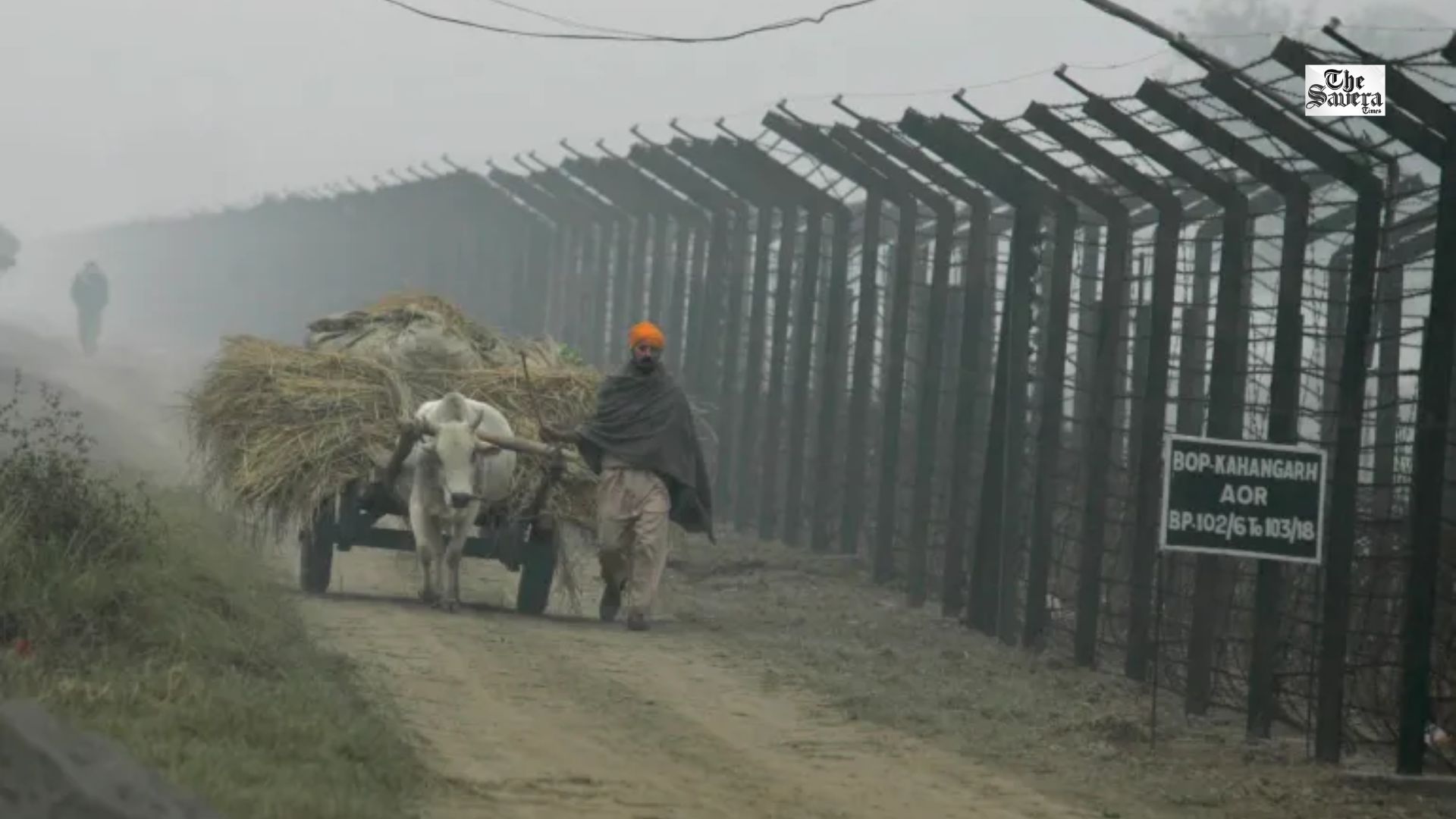
India’s border policy must go beyond fencing and surveillance. The people living along Punjab’s frontier need better infrastructure, economic opportunities and a meaningful stake in securing the country. Punjab’s international border with Pakistan is not merely a geographical boundary separating two countries.
It is a region where national security concerns directly shape the everyday lives of people. For thousands of families living in the border districts, cross-border tensions, restrictions on agricultural activity, drug trafficking and limited economic opportunities are part of their lived experience.
The challenge before the government is therefore twofold: to secure the international border against increasingly sophisticated threats and, at the same time, ensure that the people living along it are not left behind in the country’s development journey. This is particularly important for Punjab, which shares an approximately 553-km international border with Pakistan across six districts—Pathankot, Gurdaspur, Amritsar, Tarn Taran, Ferozepur and Fazilka.
These districts have immense strategic importance, but many of their villages continue to face developmental disadvantages arising from their location. A changing security challenge The nature of threats along Punjab’s border has changed considerably. While infiltration and conventional cross-border activities remain concerns, the increasing use of drones to transport heroin, weapons and ammunition has created a new and difficult challenge for security agencies.
Drone-based smuggling allows consignments to be dropped inside Indian territory without smugglers physically crossing the border. It also points to the involvement of organised networks operating across the border and within the country. The Ministry of Home Affairs informed Parliament that 292 drones had been seized or recovered along the India-Pakistan border during 2025. The emergence of this method of smuggling has made border surveillance considerably more challenging and requires continuous improvements in detection technology and coordination between security agencies.
The heroin seizure figures underline Punjab’s particular vulnerability. According to the Narcotics Control Bureau’s Annual Report for 2025, 2,086 kg of heroin was seized in Punjab during the year, accounting for approximately 58.5 per cent of the 3,567 kg seized across the country. This is a more meaningful indicator of the cross-border narcotics challenge than aggregate figures combining different categories of drugs. The figure represents seizures across Punjab by enforcement agencies and should not be interpreted as heroin recovered exclusively along the international border.
The concern extends beyond the quantity recovered. The money generated through trafficking sustains organised criminal networks and can support other unlawful activities. The response must therefore focus not only on intercepting consignments but also on identifying the people, financial channels and local networks that facilitate the trade.
The developmental cost of living along the border Security restrictions have a direct bearing on the lives of border residents, particularly farmers. In several stretches, the security fence is located inside Indian territory, leaving agricultural land between the fence and the international boundary. Farmers cultivating these fields have to pass through designated gates, undergo security checks and work within timings prescribed by the Border Security Force.
Approximately 21,600 acres of agricultural land belonging to farmers in 220 villages across the six border districts lies beyond the fence. Access is subject to security arrangements. During sowing and harvesting seasons, delays and restricted timings can affect agricultural operations, the use of machinery and the availability of labour.
The problem is not limited to farming. Many border villages face inadequate road connectivity, limited healthcare facilities, poor access to higher education and a shortage of employment opportunities. The absence of sufficient economic activity encourages younger residents to move towards larger towns and cities. There is also a larger strategic dimension. Border residents are not merely beneficiaries of government welfare programmes. Their continued presence, participation and familiarity with local conditions are valuable for the security of the region.
Development and national security must therefore be viewed as complementary objectives. The Centre’s initiatives: A shift towards comprehensive border development Recognising the special needs of border communities, the Government of India has undertaken several initiatives over the years. The most significant recent intervention is the Vibrant Villages Programme-II (VVP-II).
Approved by the Union Cabinet on April 2, 2025, VVP-II has an outlay of ₹6,839 crore up to the financial year 2028-29. It covers 1,954 selected villages in 334 blocks along international land borders in 17 States and Union Territories, including Punjab. It is a Central Sector Scheme, with 100 per cent funding from the Union Government.
The programme aims to improve living conditions and create sustainable livelihood opportunities in strategically located border villages. Its focus areas include roads, electricity, telecommunications, healthcare, education, skill development, tourism and local economic activities. An important feature is the preparation of village-level development plans according to local requirements. The programme also encourages cooperatives, selfhelp groups and farmer-producer organisations to create employment and strengthen the rural economy.
The government has also approved a High-Powered Committee under the Cabinet Secretary to facilitate changes in the guidelines of existing government schemes wherever required for effective implementation in border villages. This is significant because many developmental projects in these areas require coordination between different ministries and departments. For Punjab, VVP-II offers an opportunity to address long-standing developmental gaps through a coordinated approach rather than isolated infrastructure projects. Another important initiative has been the Border Area Development Programme (BADP).
Implemented in villages and towns within 10 km of the international border, it has supported roads, bridges, schools, healthcare facilities, drinking water, sanitation, agriculture and livelihoodrelated infrastructure.
According to the Ministry of Home Affairs, 39,248 projects had been approved under BADP across participating border States and Union Territories, including Punjab, since 2004-05. Of these, 3,273 projects related to livelihood opportunities, including tourism infrastructure, market facilities and skill development. However, BADP is now in its sunset phase, with funds being provided for committed liabilities. VVP-II is consequently emerging as the principal new framework for the development of selected border villages.
On the security front, the Border Infrastructure and Management Scheme supports fencing, border roads, floodlighting, Border Out Posts and other infrastructure required for effective border management. The government has also strengthened surveillance arrangements and introduced technological measures to counter drone-based smuggling. The institutional response to narcotics trafficking has also been strengthened through the Narcotics Control Bureau, the four-tier NarcoCoordination Centre mechanism and coordination between the BSF, Punjab Police and other enforcement agencies.
The Nasha Mukt Bharat Abhiyaan provides a complementary framework for awareness, prevention and rehabilitation. What needs to be done for Punjab These initiatives provide an important foundation, but their success will depend on how effectively they address Punjab’s particular circumstances. First, the Vibrant Villages Programme should be translated into a clearly defined Punjabspecific development plan.
The needs of villages in Pathankot and Gurdaspur are different from those of the predominantly agricultural communities in Tarn Taran, Ferozepur and Fazilka. Local requirements should determine the nature and priority of projects. The government should also publish districtwise details of selected villages, sanctioned projects, funds released and implementation timelines. Second, the difficulties faced by farmers cultivating land beyond the security fence require urgent attention. The Centre’s initiative in April 2026 to examine the possibility of shifting the fence closer to the international boundary is an important development. The Ministry of Home Affairs has asked the district administrations to undertake surveys of the affected areas. Any proposal must, of course, be examined carefully from the security, technical and land-record perspectives. But the objective should be to reduce unnecessary hardship for farmers while maintaining effective border security.
Third, development must generate employment rather than remain confined to the construction of infrastructure. Agro-processing, food storage, dairy farming, fisheries, horticulture and small-scale industries can provide opportunities beyond traditional agriculture. Local cooperatives and farmer organisations should receive support to establish sustainable economic activities. Credit facilities, market access and assistance in setting up small enterprises are equally important. Fourth, better educational institutions, vocational training facilities, healthcare centres and digital connectivity are essential to retain the younger population. There is a need to establish skilldevelopment centres that equip young people for employment in modern industries and services.
Tourism around historically significant locations such as Hussainiwala, Attari and Dera Baba Nanak can also be developed, wherever security and access conditions permit. Finally, the local population must remain an active partner in border security. Better coordination between village representatives, local police, district administrations and the BSF can strengthen the flow of information and help identify suspicious activities at an early stage. Equally important is the need to combine action against drug trafficking with effective treatment and rehabilitation facilities for those affected by substance abuse.
Development is an investment in national security India’s border policy must be judged not only by the strength of its fencing, surveillance systems and security deployments, but also by the conditions in which people living along the frontier are able to lead their lives. Punjab’s border communities have made significant sacrifices during wars, periods of tension and continuing security challenges. They should not have to bear the additional burden of economic neglect and inadequate public infrastructure. The Vibrant Villages Programme-II provides an opportunity to address this imbalance. Its success will depend on timely implementation, adequate attention to Punjab’s specific requirements and visible improvements in the lives of ordinary residents. A prosperous border village is not just a development achievement. It is also a source of stability, confidence and strength for the country. The strongest defence of a border is not created by security forces alone; it is also built by the people who live there, their economic well-being and their confidence in the future
Dibrugarh: Jailed Khadoor Sahib MP and Waris Punjab De Chief Amritpal Singh was flown from Assam’s Dibrugarh to...
Chandigarh has announced its Municipal Corporation election schedule. Voting will take place on December 23 across 35 wards,...
The Enforcement Directorate has issued a summons to Rajya Sabha MP Satnam Singh Sandhu to clarify financial transactions...

Baba Gurinder Singh Dhillon met Punjab Congress chief Pargat Singh at his Jalandhar residence on Friday morning. The...

Akali Dal (Waris Punjab De) MLAs have appealed to Prime Minister Narendra Modi to reopen the Sri Kartarpur...

Gangster Goldy Brar has become Canada's most-wanted fugitive, with a reward of up to 250,000 Canadian dollars for...

Aries: The day will be auspicious...