Last Updated: October 22, 2026
Last Updated: October 22, 2026






Chandigarh (Arshdeep Kaur): Gulab Chand Kataria, a seasoned politician with almost five decades of experience, has played influential roles across Rajasthan, Assam, and now Punjab and Chandigarh. Currently serving as the Governor of Punjab, he has been deeply involved in the state’s administration, governance, and public policy initiatives. Known for his extensive political and administrative experience, Kataria has been at the forefront of addressing regional challenges, including law and order, development, and public welfare.
In this exclusive interview with Dainik Savera, he reflects on his long political journey, sharing insights from his tenure in multiple states and his approach to governance in Punjab. The discussion also explores his perspectives on contemporary political developments, the evolving responsibilities of state leadership, and his vision for strengthening administration and public engagement. Readers will gain a nuanced understanding of a veteran leader navigating complex regional and political dynamics.

Q: Sir, it has been a year since you took charge as Punjab Governor. You must have spent around 250 out of 365 days on the ground and make it a point to be present at events when invited, sharing in people’s joys and sorrows. How do you assess your first year in office?
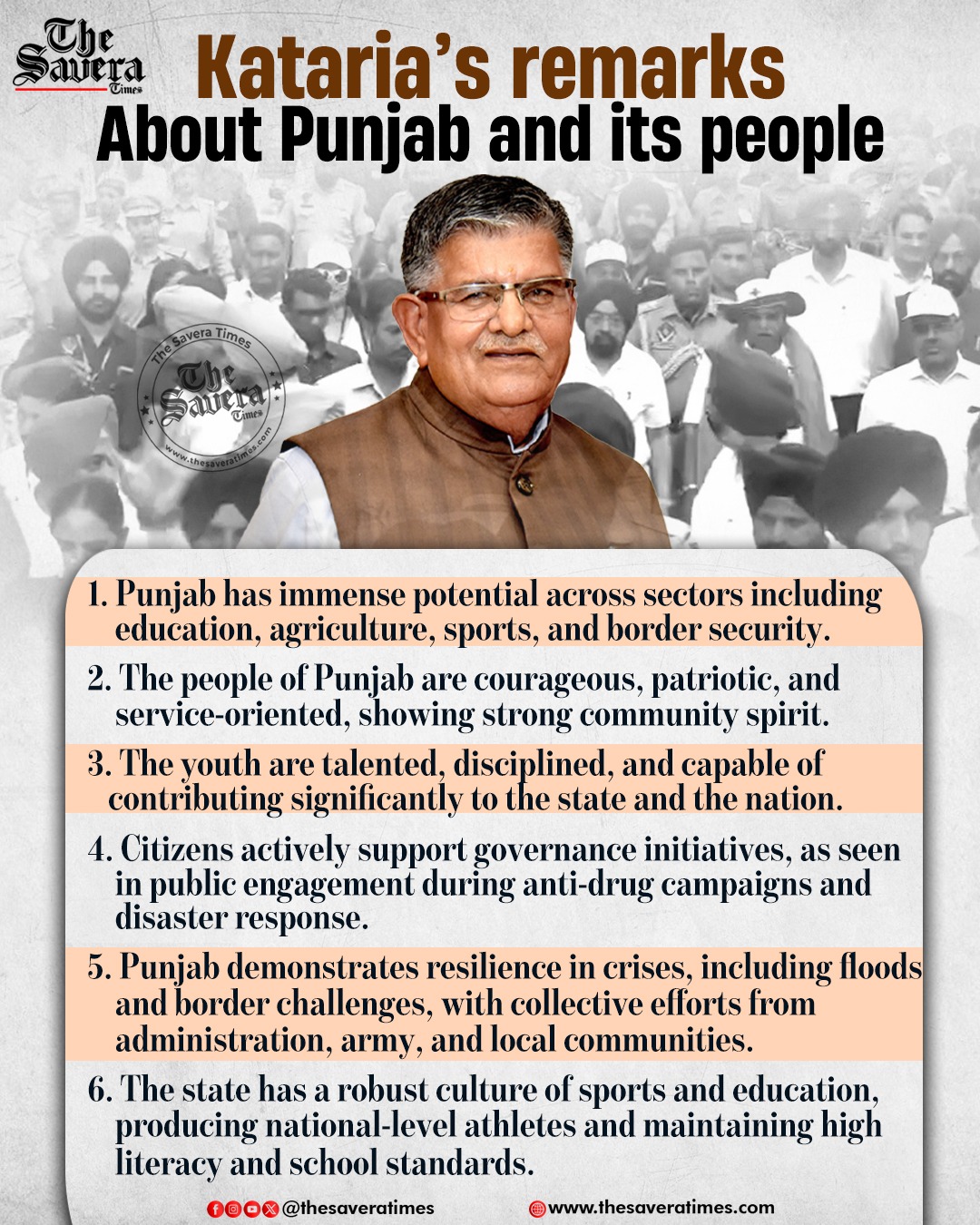
A: I have remained close to the people from the start. I have spent about 45 years in politics and most information comes to me from the public. The more connected you are with people, the better you understand your work and their problems. In the one year and two months since I took charge, I have tried to study Punjab closely. My predecessor established more than 1,500 village committees and linked communities across villages. I have met many of those committees, held talks with the BSF and civil administration, and seen the scale of the challenge. Public support and cooperation with the BSF have been encouraging. Drug abuse is a major challenge, especially in border areas where trafficking from Pakistan causes harm. The army has helped by deploying anti-drug equipment. The central government has provided support and the Punjab government allocated Rs 10 crore for this work. Many organisations and the administration are active and several arrests have been made. Still, success requires ordinary citizens to join the effort, and that is not easy. Flood response showed strong coordination. Administration, army and local people assisted victims.
Despite large floods, deaths were limited to 51. This reflected collective rescue efforts, unlike some places where sudden floods cause higher casualties. Education standards in Punjab and Chandigarh remain high. Agriculture faces groundwater concerns, though recent floods have helped recharge water tables. The prolonged farmers movement discouraged investors and created a development challenge, but the government is working to attract investment. Punjab retains large potential. The state supplies much of the nation’s food, and a strong military tradition exists along the border. Drugs have severely damaged border youth. Medical facilities, both government and private, are good. Sports culture is robust. Many national-level hockey players come from Punjab. To control drug abuse, every child must be connected to sports and constructive activities so their time is spent positively.
Q: So, to sum up, you see Punjab as a state with strong patriotism, service spirit, and courage, but facing a serious drug problem. You believe connecting youth to sports and a public movement is necessary alongside government efforts. Do you think the government’s current initiatives are working effectively?
A: Yes, the government is performing well at its level and the efforts are moving in the right direction. Large-scale traffickers are often escaping, while those involved in drug sales to support themselves or their families are receiving harsher punishment. I believe enforcement should focus on reaching the major traffickers and their networks, using assistance when needed, without causing undue harm to families of minor offenders. Targeting the main operators and taking action against them is the way to move forward effectively.

Q : Bulldozers are being used to demolish houses. Do you consider these demolitions justified?
A: This is the first time bulldozer action has been used in Punjab. The approach was first implemented by Yogi Adityanath and later adopted by other states. Punjab has now applied it in drug-related cases, seizing properties and taking action against offenders. The measures are correct, and some major traffickers have been caught, but a long and extensive network still exists. Pakistan has, over the years, tried to weaken Punjab through these channels.
Q: The opposition claims the Punjab government is targeting small-time drug peddlers while letting major traffickers go unpunished. How do you respond to this?
A: That is a common perception, and it exists everywhere. However, I believe the government has taken several new steps in the past four months. The number of people caught is a separate matter, but the direction is correct. If they continue without bias, this fight can be won. Such illegal operations thrive only with support from police or government. If both departments are committed to preventing drugs in Punjab, I believe this network could be dismantled within six months.
Q: So, do you feel that the Punjab government currently lacks the will and determination to tackle this issue?
A: I believe so far the administration is primarily engaged in this effort, but ordinary citizens are not yet fully involved. The campaign will succeed only when people at the grassroots join and all stakeholders work in the same direction. This requires bottom-up participation and sustained community engagement.
Q: During your anti-drug padayatra in the border areas, what feedback did you receive from the people?
A: People wholeheartedly joined me during the anti-drug padayatra. I felt that such a large problem could not be solved sitting in an office; it required going among the public. The response, especially from women, was very encouraging, as their participation ensured the movement progressed effectively. Over seven to eight days, I traveled village to village, meeting people. Students and children also joined, and many residents actively participated. Support came from both state Chief Ministers of Punjab and Haryana, as well as senior army officers. Overall, the public engagement and coordination made the initiative very successful.
Q: You are from Rajasthan and have held senior posts, including state home minister. Opium cultivation exists in parts of Rajasthan, and some argue Punjab should permit it to reduce synthetic drug use among youth. What is your view?
A: Opium cultivation is a specialized task. Even in Rajasthan, where it is grown under strict regulations, it has not led to widespread addiction. The central government has established stringent rules to prevent misuse. However, I believe introducing it in Punjab is not a simple matter. It is a highly sensitive issue that requires consideration at both national and international levels.
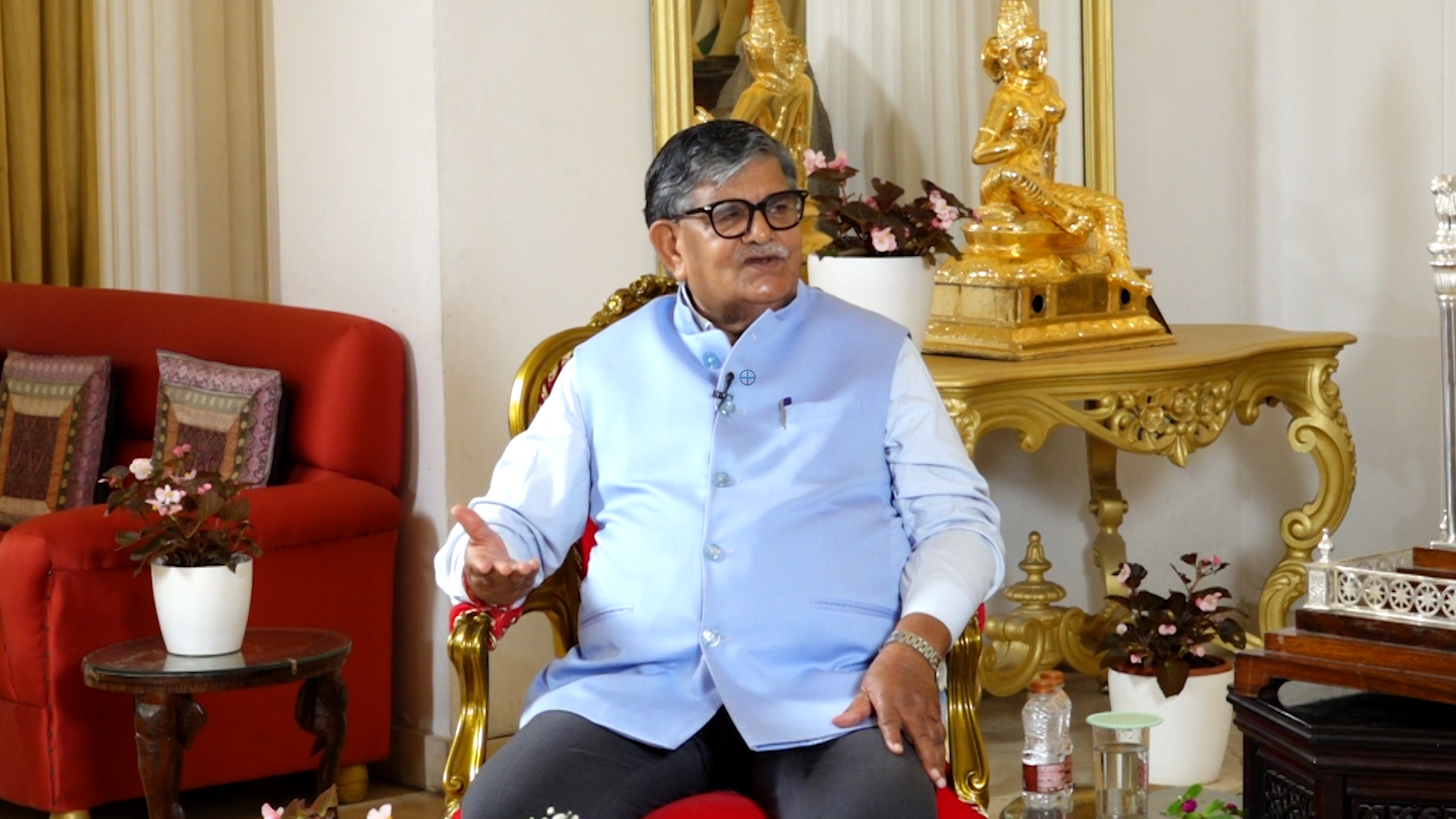
Q: Some experts have suggested that allowing Opium cultivation in Punjab could help protect the state’s youth from synthetic drugs. What is your view on this?
A: I believe opium itself is not highly harmful, but the real problem is that many who are already addicted find it very difficult to quit. The biggest concern for people is protecting their children from drugs. This is a challenging task, but with public awareness and community engagement, it can be addressed effectively.
Q: After coming to Punjab, what is your assessment of Pakistan’s actions, especially regarding its attempts to weaken the state?
A: I believe the consignments dumped here are extremely valuable, worth crores. Pakistan likely cannot carry out this on its own given its weak financial condition. I think Pakistan is trying to weaken India through drug trafficking. India’s youth are among the largest and most vigorous in the world, so it would be difficult to defeat India in a direct war. As a result, Pakistan resorts to these methods to try to weaken us.
Q: Do you think the Khalistan movement is gaining momentum in Punjab?
A: Earlier, the movement had significant strength, but in recent years it has been brought under control. Some remnants still exist, though they are weakened. Punjab has immense potential if law and order improve. We have all necessary resources; the key is to remain strict and focus on maintaining law and order, which should be our top priority.
Q: Earlier, you mentioned that the farmers’ movement discouraged investors from coming to Punjab. Do you see law and order as a major factor affecting investment in the state?
A: If roads remain blocked for long periods, traffic cannot flow and investors are unlikely to come, causing economic loss. Now, after some stability, development has started to pick up.
Q: How significant a challenge is law and order for Punjab?
A: For any nation, law and order is the most important factor; where peace and stability exist, everything functions smoothly. Punjab has also seen significant improvements and must continue in this direction. Our youth are extremely talented and full of potential. Wherever we go, India makes its presence felt, even in space. We have started manufacturing our own weapons and are moving towards a self-reliant India. The country is progressing rapidly. Currently, India is the fourth-largest economy and is likely to reach third place soon. Operation Sindoor demonstrated to the world that India can compete on equal terms globally.
Q: The opposition says law and order in Punjab is worsening and is questioning the state government. How do you view this?
A: I believe many gangs still operate in Punjab, with some being run from inside prisons. Progress has been made in controlling them to an extent, but several elements continue to spread unrest and require action. This problem needs sustained effort and close cooperation between the state and central governments.
Q: You visited flood-hit areas in Punjab and saw widespread displacement. How do you assess the situation, and what do you consider the main causes?
A: There are three main rivers in Punjab, which caused high water levels this year. One key issue I observed was the lack of regulation on the Kunj River from Jammu and Kashmir, which contributed to severe flooding. A dam could be constructed on this river, which would provide significant benefits. Proper water management and timely alerts are essential for everyone to prevent such disasters.
Member Parliament Gurmeet Singh Meet Hayer today said that in a monumental milestone for the state’s sporting history,...

The Punjab government has suspended DSP Harjinder Singh Gill and drug inspector Naresh Kumar in connection with the...
To honour the valiant police personnel who laid down their lives while fighting militants and criminals for the...

Punjab government employees are observing a two-day mass casual leave protest on October 21 and 22. The agitation...
Punjab Police have arrested seven people in a suspected drug, arms and explosives smuggling case in Amritsar. A...

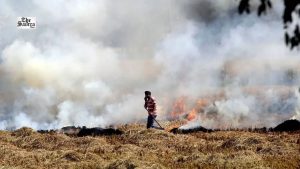
Punjab has reported 404 stubble-burning incidents, with Tarn Taran and Amritsar accounting for the highest numbers. Authorities have...
Aries: The day will be auspicious...