Last Updated: October 21, 2026
Last Updated: October 21, 2026





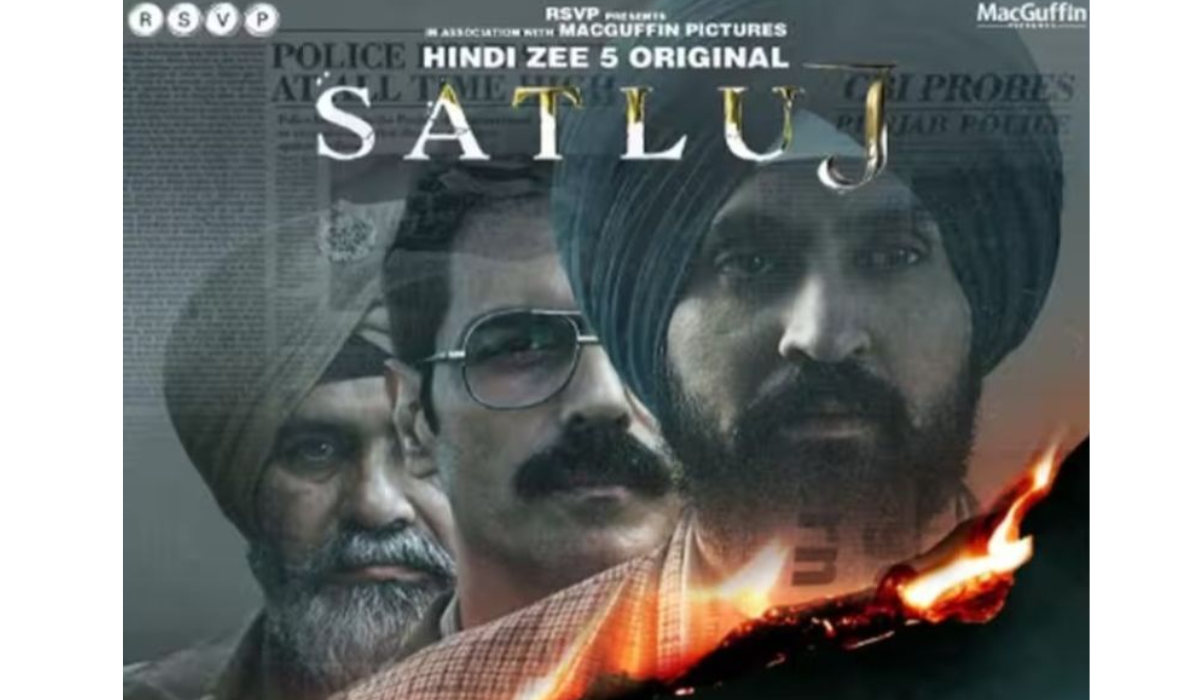
The controversy surrounding Satluj, the film inspired by the life of human rights. activist Jaswant Singh Khalra, has become far larger than the film itself.
It has reopened old wounds, revived familiar political fault lines and once again forced Punjab to relitigate one of the darkest chapters in its history That, in itself, is not unhealthy. Democracies should be able to revisit painful histories. What is unfortunate is that the debate has rapidly descended into a competition of victimhood, where every side appears determined to
remember only its own dead. That is a dangerous place for Punjab to return to
No honest student of history can deny Jaswant Singh Khalra’s courage. His investigation into illegal cremations and disappearances challenged the excesses of a state fighting a brutal insurgency. His own abduction and murder by Punjab Police officers was eventually established in court, leading to convictions. A constitutional democracy cannot permit the disappearance of citizens in the name of national security. The rule of law exists precisely for moments when governments believe extraordinary measures are justified
Yet it is equally dishonest to discuss the Punjab of the 1980s and early 1990s as though state excesses were the only story.
The Punjab insurgency was among independent India’s bloodiest internal conflicts. Depending upon the dataset and classification used, the conflict claimed well over 20,000 lives. Widely cited compilations indicate that around 11,700 civilians were killed by militant organisations, ganisations while more than 1,700 police and security personnel also lost their lives. Nearly 8,000 militants were killed during counter-insurgency operations. Official annual reports of the Union Ministry of Home Affairs underline the scale of the violence. In 1990 alone, the ministry recorded 2,467 terrorism-related deaths, including 493 security personnel. The following year witnessed more than 2,000 militants killed in encounters and another 474 security personnel
losing their lives. The numbers, however, tell only part of the story.
Behind every statistic lay a shattered family.
The victims included Hindu traders, Sikh farmers, migrant labourers from Bihar and Uttar Pradesh, bus drivers, railway employees, teachers, journalists, village sarpanches, political
workers, police constables, Army personnel and ordinary passengers who happened to board the wrong bus or train.
One of the enduring myths surrounding Punjab’s militancy is that violence was directed at only one community. The historical record says otherwise. While Hindus were deliberately targeted in numerous communal massacres designed to trigger migration and polarisation, a substantial majority of civilians killed by militants were themselves Sikhs. They were moderate Akalis, Congress workers, communists, village leaders, policemen, religious figures, alleged informers and ordinary villagers who refused to submit to armed diktat.
Militant violence spared neither faith nor ideology.
Punjab witnessed massacres whose horror deserves to be remembered with the same seriousness as any human rights abuse committed by the state. In July 1987, gunmen hijacked a Haryana Roadways bus near Lalru and killed 38 passengers. In June 1991, militants attacked two passenger trains near Ludhiana, killing around 80 people. Six months later, another train near Sohian became the site of yet another mass slaughter, leaving nearly 50 passengers dead. Earlier bus massacres at Dhilwan, Muktsar and Hoshiarpur followed
a chillingly similar script: passengers were separated by identity before being executed. Entire villages lived under fear, while extortion, assassinations and targeted killings became part of daily life.
CHI PROBES
SATLUJ
HONEY TREHAN CREWVAL HONEY TREHAN ABHISHEK CHAUBEY
The assassinations of DIG A.S. Atwal on the steps of the Golden Temple, Sant Harchand Singh Longowal after the Punjab Accord, and later Chief Minister Beant Singh illustrate another uncomfortable truth. Militancy consumed many of the very Sikhs who sought either constitutional politics or the restoration of law and order.
Remembering these victims does not diminish Jaswant Singh Khalra. Nor does acknowledging Khalra diminish the suffering inflicted by militants.
The present controversy, unfortunately, is moving in exactly the opposite direction. One political camp invokes Khalra as though the insurgency consisted solely of illegal police actions. Another responds by questioning every allegation of disappearance and reducing Khalra’s work to disputed numbers. Neither approach serves history.
Indeed, the current argument over whether 25,000 disappearances can be fully substantiated misses the larger moral point. Individual figures remain contested, and different institutions have documented different categories of disappearances and illegal cremations. Courts have recognised unlawful killings and illegal cremations in specific districts. Khalra’s own estimates extended beyond what official investigations ultimately verified Serious historians should distinguish between documented evidence, judicial findings and broader activist claims. But reducing an entire human rights
debate to a numerical argument is intellectually impoverished.
The same standard should apply to casualty figures attributed to militant violence. Politicians occasionally throw around inflated numbers for partisan effect. Historical integrity demands restraint from every side.
Punjab deserves better than competitive arithmetic.
The deeper tragedy is that an entire generation, born after the insurgency, is now learning about those years through social media clips, political speeches and cinematic narratives rather than through careful history. Films inevitably compress complexity Politicians inevitably simplify it further. Together they create moral binaries that never existed on the ground.
The Punjab of those years was neither a simple story of state repression nor a simple story of terrorism. It was a society trapped between ruthless militants willing to murder civilians and a security apparatus that, at times, abandoned constitutional limits in pursuit of victory. Both realities
can be true simultaneously. Recognising one does not require denying the other.
That balance is not moral equivalence. Democracies rightly hold the state to a higher legal standard because it acts in the name of the Constitution. But the obligation to scrutinise state power should never become an excuse to erase the suffering inflicted by those who wielded the gun outside the law. Likewise, remembering victims of terrorism should never become a licence to justify custodial killings or disappearances.
Punjab’s greatest achievement is not that one side won the argument over history. It is that Punjab itself survived
The state rebuilt its economy, restored democratic politics and rejected a return to widespread violence. Today’s young Punjabis are more likely to discuss migration, employment, education and drugs than separatism. That is progress born of painful experience.
The responsibility of this generation is not to forget the past, but to remember it honestly.
Amature society commemorates all its victims, honours those who defended human rights, mourns those murdered by terrorism, acknowledges the mistakes of the state and refuses to allow politicians to weaponise memory for present-day electoral battles.
Punjab has spent four decades paying the price of absolutism. It should not now become a prisoner of selective remembrance.
A new revelation has emerged in the case of the firing on Bollywood actor Tiger Shroff's car. Initial...
Renowned comedian Bharti Singh and her husband, writer-producer Harsh Limbachiyaa, shared their thoughts on the significance of Dussehra.

Mumbai: Mumbai Police have recovered five empty bullet shells and two live cartridges from the site of the...
Kota: The three suspects held in connection with the firing incident involving Bollywood actor Tiger Shroff in Mumbai...
Mumbai: Veteran star Poonam Dhillon has expressed shock over the firing incident involving actor Tiger Shroff. The actress,...

Police investigations have revealed several important revelations regarding the three accused arrested in the shooting case involving Bollywood...
Aries: The day will be auspicious...