Last Updated: October 16, 2026
Last Updated: October 16, 2026





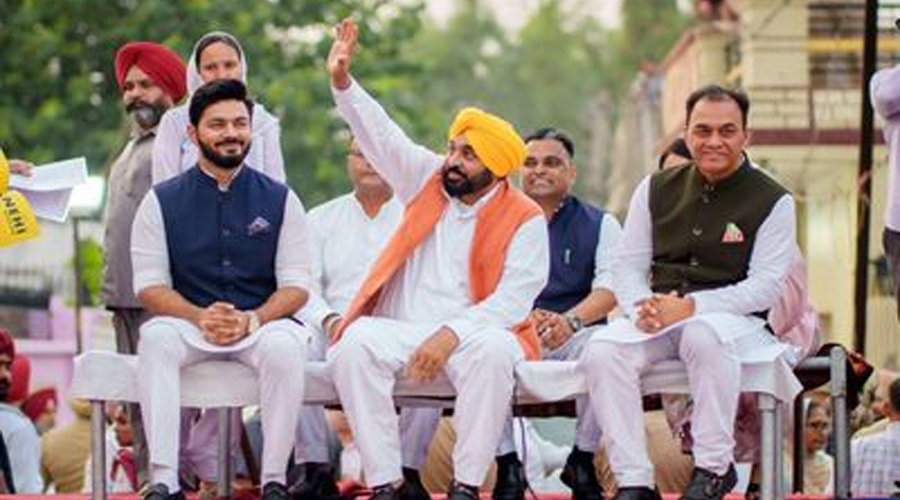
The Punjab government has decided to establish welfare boards at the district and assembly constituency levels across the state. The move will create more than 38,000 positions, including chairpersons, office bearers, and members.
The decision comes after the formation of 21 state-level welfare boards for different communities and social groups. Under the new plan, similar boards will now be set up at the district and constituency levels. However, these posts will not come with any salary, allowances, office space, or separate staff. The appointed members will function at the discretion of the government.
Punjab has 117 assembly constituencies, and each of the 21 welfare boards will have representation at the constituency level. Every board will consist of a chairperson, a senior vice-chairperson, a vice-chairperson, and 10 members, making a total of 13 positions per board.
The same structure will be followed at the district level. Once all the boards are constituted, the total number of office bearers and members is expected to reach around 38,220. This includes approximately 2,940 chairpersons. The combined number of senior vice-chairpersons and vice-chairpersons will be around 8,820.
After receiving the required approval from the Governor, the Department of Social Justice, Empowerment and Minorities issued a notification regarding the formation of these boards. The boards will provide ground-level feedback and information on the implementation of welfare schemes.
The Punjab government will make the nominations, while Deputy Commissioners will issue appointment letters. The government will also have the authority to remove any office bearer or member at any time without prior notice.
These welfare boards are being created for various communities, including Rai Sikh, Rajput, Bairagi, Brahmin, Vimukt Jati, Prajapat, Saini, Ramgarhia, Swarnakar, Christian, Muslim, Sufi communities, Kannaujia, Aggarwal, Kamboj, Khatri-Arora, Bazigar-Tapriwas groups, and Gurjar communities, among others.
The government has clarified that there will be no financial burden on the state exchequer in the form of salaries or allowances for these posts. The boards will function without separate offices or dedicated staff.
Charanjit Singh Channi travelled in a tipper truck to a riverbank site at night as part of Mission...
Manjit Singh Bedi, 64, has been returned to the United States after being arrested in India. He faces...
Punjab Chief Minister Bhagwant Mann dedicated 154 new Aam Aadmi Clinics to the public in Hoshiarpur, expanding access...
Shiromani Rangreta Dal Punjab President Sardar Dharmendra Singh has accused the Congress of having an anti-Dalit mindset, alleging...

Ludhiana, Punjab: Tensions erupted in Ludhiana city’s Old Sabzi Mandi, Karabara Road area on Thursday afternoon when angry...
The Punjab Police's Anti-Gangster Task Force (AGTF) has arrested Gurlal Singh in a joint operation with the Haryana...

Aries: The day will be auspicious...