Last Updated: September 27, 2026
Last Updated: September 27, 2026





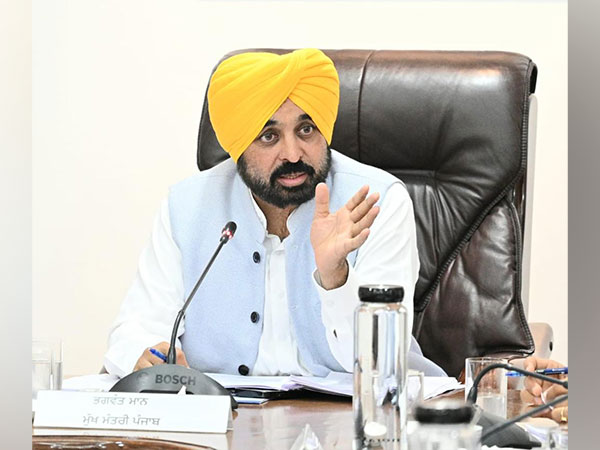
Flaws and weaknesses are never addressed. The biggest flaw in Indian agriculture is that its whether it’s the lack of warehouses for storing crops in the market or the adoption of scientific methods of paddy cultivation that require less water. In this category, the problem of crop residue, or stubble, remains in Punjab’s fields after the paddy harvest.
Campaigns to change stubble management have been ongoing for centuries. The AAP government in Punjab is also at the forefront of this campaign, encouraging farmers not to burn stubble and managing it properly. Last year, it was announced that farmers burned less stubble than in previous years.
But for a long time, the story has remained the same every year: the paddy crop is harvested, the stubble remains in the fields, and farmers set it on fire to prepare for sowing the next crop. Scientists say that burning stubble causes environmental pollution, suffocation, and respiratory diseases. It is also said that burying the stubble in the fields instead of burning it increases agricultural productivity, but farmers are often reluctant to adopt this option and consider it easier to burn the stubble to sow the next crop.
The Punjab government has launched a new, visionary campaign to permanently address this problem. First, 16,000 machines have been purchased for stubble management, and a subsidy of Rs 183 crore has been released, which will be distributed as incentives to farmers who do not burn stubble. Additionally, crop diversification has been announced on 1.3 lakh hectares, meaning that when other crops are sown instead of paddy, stubble will automatically decrease. Two other schemes have also been introduced to encourage stubble management so that farmers do not prioritize stubble burning.
The first decision is that all new and old distilleries in Punjab will now be equipped with straw-based boilers, using only straw as fuel. The second decision is that straw will now be used for fodder as well, not just by burning it. It is estimated that these schemes will utilize 2 to 4 lakh tons of straw in Punjab, encouraging farmers to earn money by selling it.
Parneet Sachdev Chairman of Real Estate Regulatory Authority and a leading author Arthashastra The Special Intensive Revision (SIR)...

BSF and ANTF arrested two alleged smugglers and recovered 19.820 kg heroin concealed in 20 packets inside a...

A Punjab Police Inspector posted with Counter Intelligence was arrested in Ferozepur after police recovered 3.350 kg heroin,...

Navpreet Singh, husband of SAD Sarpanch Kulwinder Kaur, was shot dead outside his home in Tarn Taran. Police...

Punjab stands at a crucial stage, with several decisions concerning the state drawing attention at both the state...

Chandigarh court has vacated the interim restraint against retired judge Ranjit Singh in the defamation case filed by...

Aries: The day will be auspicious...