Last Updated: October 21, 2026
Last Updated: October 21, 2026





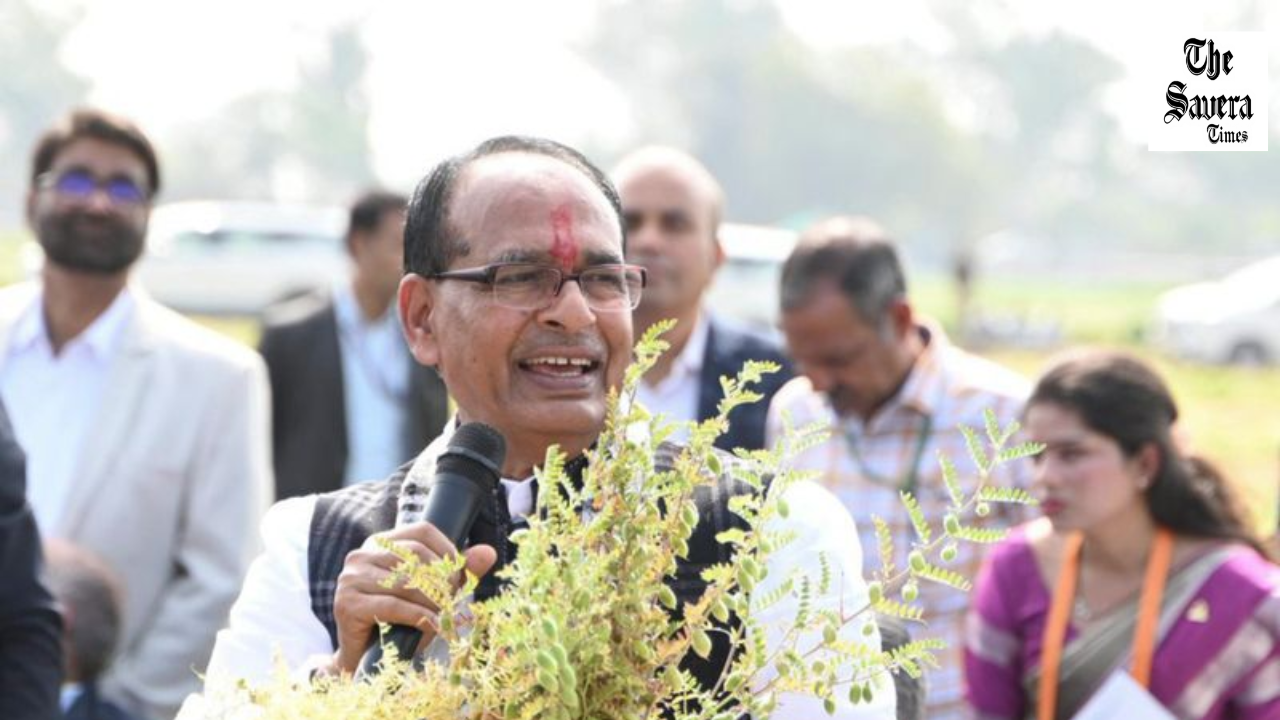
Union Agriculture and Farmers’ Welfare Minister Shivraj Singh Chouhan told the Rajya Sabha that farm fires in Punjab and Haryana contribute just about 5 per cent to the winter smog in the Delhi‑NCR region, according to scientific studies cited by the government. He emphasized that while crop residue burning does affect air quality, it is not the primary source of the smog that engulfs the national capital every year.
Chouhan made the remarks during the Question Hour, countering narratives that singularly blame farmers for Delhi’s seasonal pollution problem. He pointed out that industrial emissions, vehicular pollution, dust, and other local sources play a larger role in deteriorating air quality.
While acknowledging the environmental harm caused by stubble burning, the minister highlighted several government initiatives aimed at reducing the practice. Under the Crop Residue Management (CRM) Scheme, the Centre provides 50 per cent subsidies on machinery and up to 80 per cent support for custom hiring centres for farmers in Punjab, Haryana, western Uttar Pradesh, and Madhya Pradesh. Over 3.5 lakh machines have been distributed so far to encourage alternatives to burning.
Chouhan said that Haryana’s model which includes incentives for in‑situ and ex‑situ crop residue management, crop diversification, and rewards for non‑burning panchayats has been cited as a best practice. He also noted that paddy stubble is being repurposed into pellets, biomass, thermal power fuel, and bio‑CNG, creating value rather than pollution.
The minister’s comments drew reactions from political leaders. Jairam Ramesh, a senior Congress spokesperson, welcomed the statement and urged an end to the “vilification of farmers” for air pollution in the capital. Ramesh stressed that farmers should not be singularly blamed for smog when data shows a relatively small contribution from stubble burning.
Opposition members noted that despite occasional focus on stubble burning during winter, broader solutions targeting industrial emissions, traffic pollution, and urban waste burning are essential to meaningfully improve air quality in Delhi‑NCR.
Experts and studies have in recent years highlighted that while farm fires can spike pollution under certain conditions especially when winds carry smoke toward the capital their overall annual contribution varies and often depends on weather patterns and other emission sources. Government figures and research suggest that contributions from vehicles, industries, and construction dust consistently play significant roles in Delhi’s air quality challenges.
The minister also underscored that post‑harvest infrastructure, like warehouses, cold storage, and processing centres established through the Agriculture Infrastructure Fund, helps reduce wastage and incentive for burning crop residue.
Punjab Chief Minister Bhagwant Mann was allegedly detained for three hours at Delhi airport upon his return from...

Good Evening Viewers! Catch up on the day's biggest stories with The Savera Times Evening Bulletin. Get the...

Congress leaders continued their protest outside the Jaipur Police Commissionerate on Tuesday, demanding the registration of a zero...
On the auspicious occasion of Vijayadashami, Prime Minister Narendra Modi on Tuesday called on the countrymen to unite...
A historic milestone was achieved on Tuesday in the expansion of Chhattisgarh's rail networkA historic milestone was achieved...

Model Shraddha Dubey, one of the main accused in the death of Lucknow businessman Shiv Sharma, has been...

Aries: The day will be auspicious...