Last Updated: October 20, 2026
Last Updated: October 20, 2026





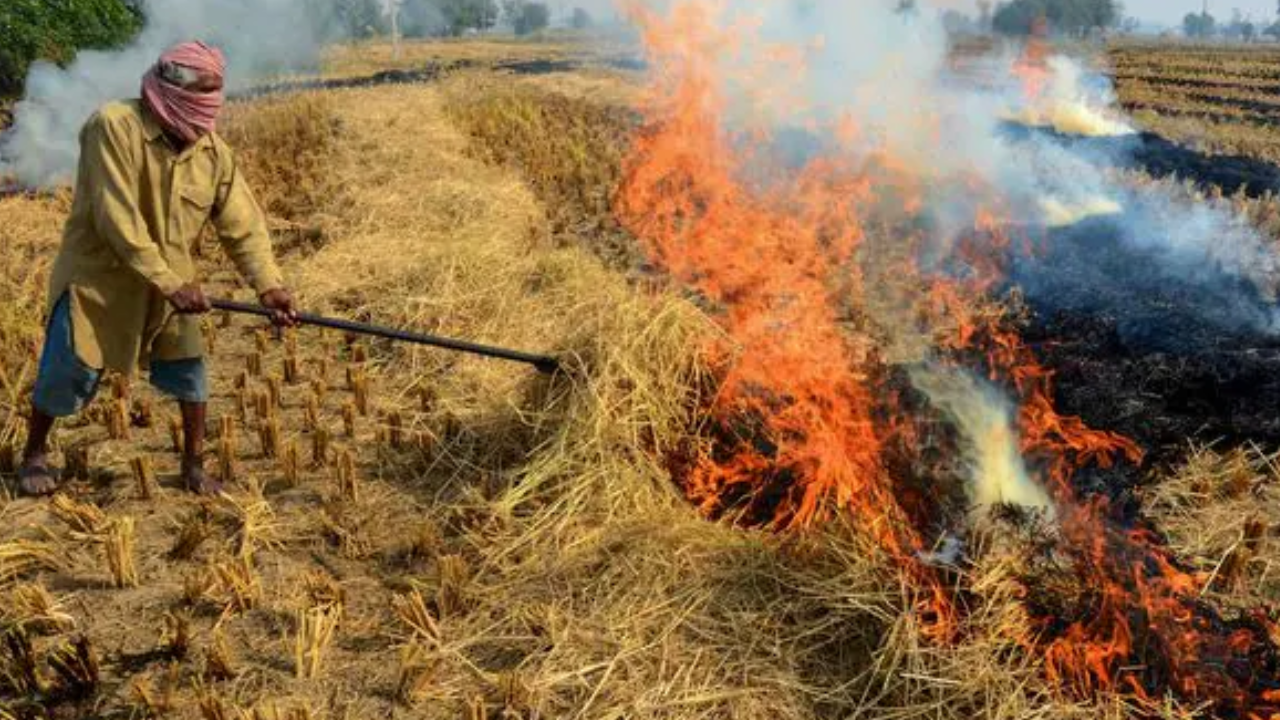
Chandigarh: The 2025 floods in Punjab and Haryana acted as an “unplanned intervention”, reducing rice crop residue fires by up to 77 per cent, according to a recent analysis, leading to a 15.5 per cent drop in Delhi’s average PM2.5 levels compared to the same period in 2024.
Floods Disrupt Agricultural Residue Burning
The analysis, based on data from the Central Pollution Control Board (CPCB) and NASA, showed that widespread flooding delayed harvests, waterlogged fields, and reduced dry residue availability, making it physically impossible for many farmers to conduct stubble burning.
“The 77.5 per cent reduction in stubble burning this month is directly attributable to the massive floods in Punjab and Haryana,” a researcher told IANS, requesting anonymity.
Impact on Delhi Air Quality
Despite the reduction in farm fires, Delhi’s PM2.5 levels remained above 50 µg/m³, reflecting a significant background load from traffic, industry, and dust re-suspension.
The researcher noted:
“Reducing farm fires alone yields immediate benefits, but sustained air quality gains require multi-sectoral emission control beyond agriculture.”
Daily correlations between stubble burning and PM2.5 weakened in 2025 as non-agricultural sources dominated residual pollution levels.
Statistics on Stubble Burning
Punjab: Stubble burning cases fell from 392 (Oct 1–12, 2024) to 105 (Oct 1–12, 2025) – a 73.2% reduction.
Haryana: Cases dropped from 387 to 70 – an 81.9% fall.
Delhi PM2.5: Average fell from 60.79 µg/m³ in 2024 to 51.48 µg/m³ in 2025, a 15.5% reduction.
Punjab’s Amritsar district reported 68 cases, followed by Tarn Taran with 47 incidents. Haryana recorded a 97% decline in stubble burning between Sept 15–Oct 13, attributed to strict enforcement against offenders.
Broader Pollution Context
Experts highlighted that besides crop residue burning, Delhi’s winter pollution also arises from vehicle exhaust, factory emissions, and dust, which accumulate due to slower winds after the monsoon and cold Himalayan winds.
Agricultural specialists noted that farmers often burn leftover paddy straw to quickly clear fields for the next crop, instead of using traditional hand-clearing methods or sustainable millet cultivation options.
Natural Experiment Highlights Policy Implications
The floods provided a unique lens to understand the link between stubble burning in upwind states and air quality in the National Capital Region (NCR).
“Fewer fires led to cleaner air, even without major policy or enforcement changes,” the researcher said, emphasizing the importance of structural, multi-sectoral interventions to achieve long-term air quality improvement.
CHANDIGARH: In a major relief to the common man, Chief Minister Bhagwant Singh Mann on Wednesday directed officers...

CHANDIGARH: On World Lung Cancer Day, the Bhagwant Mann Government has underlined a simple but important message: no...

Higher education today extends far beyond classroom teaching. Universities are expected to create knowledge, promote innovation, develop ethical...
Chandigarh: The Central Bureau of Investigation (CBI) conducted searches at six premises in connection with the ongoing investigation...

Nalini Malik, the former Chief Financial Officer (CFO) arrested in the ₹116.84 crore Chandigarh Smart City Limited scam,...

Chandigarh is set to observe its weekly “No Vehicle Day” for government officials and employees today, as part...

Aries: The day will be auspicious...