Last Updated: October 17, 2026
Last Updated: October 17, 2026





Punjab — the land of five rivers — has always stood tall as a symbol of strength, resilience, and pride. Known as India’s “sword arm” for its remarkable contribution to the armed forces, the state provides over 89,000 soldiers, making up nearly 7.7% of the Indian Army despite representing just 2.3% of the nation’s population. The same valor that drives its soldiers also fuels Punjab’s passion for sports, where discipline, courage, and community pride have created a legacy that continues to inspire generations.
With its deep-rooted Sikh heritage emphasizing physical fitness and mental grit, Punjab has given India an extraordinary number of athletes who have excelled across disciplines — from hockey and cricket to kabaddi, wrestling, and athletics. The state’s sporting DNA runs deep, cultivated in its villages, schools, and akharas, where games are not merely recreation but a way of life.
Few states have contributed as richly to Indian cricket as Punjab. The region has produced champions whose performances have shaped the nation’s most glorious moments on the field. The “Turbanator” Harbhajan Singh, with over 400 Test wickets, remains one of India’s greatest spinners. Yuvraj Singh, the flamboyant all-rounder from Chandigarh, etched his name in cricketing history by smashing six sixes in an over during the 2007 T20 World Cup and by being India’s hero in the 2011 World Cup triumph. His triumphant comeback after battling cancer stands as a testament to Punjabi resilience.
From Bishan Singh Bedi’s classical spin artistry to Kapil Dev’s world-beating all-round brilliance, the Punjabi spirit has always animated India’s cricketing story. Today, stars like Shubman Gill, one of the most elegant young batsmen in world cricket, and Arshdeep Singh, a rising T20 pace sensation, carry that tradition forward. The success of the Punjab Kings in the IPL and the state’s 1992-93 Ranji Trophy victory underscore its consistent cricketing pedigree.
Women’s cricket, too, has been enriched by Punjab’s talent. Harmanpreet Kaur from Moga, India’s T20 captain, stunned the world with her record-breaking 171 not out in the 2017 World Cup semifinal, a knock that transformed women’s cricket in India. Her leadership and flair embody the courage and power Punjabi women bring to sport.
If cricket captures India’s imagination, hockey captures Punjab’s soul. The state has long been the beating heart of Indian hockey, contributing players to nearly every Olympic team and forming the backbone of India’s eight gold, one silver, and four bronze Olympic medals.
Balbir Singh Sr., the legendary forward and triple Olympic gold medalist (1948–1956), remains one of the greatest goal-scorers the game has ever seen. His hat-trick in the 1952 Helsinki final is still a record. Villages like Sansarpur and Mithapur have earned the title “nurseries of hockey,” producing captains such as Ajitpal Singh, who led India to the 1975 World Cup victory, and Pargat Singh, known for his fierce defensive skill.
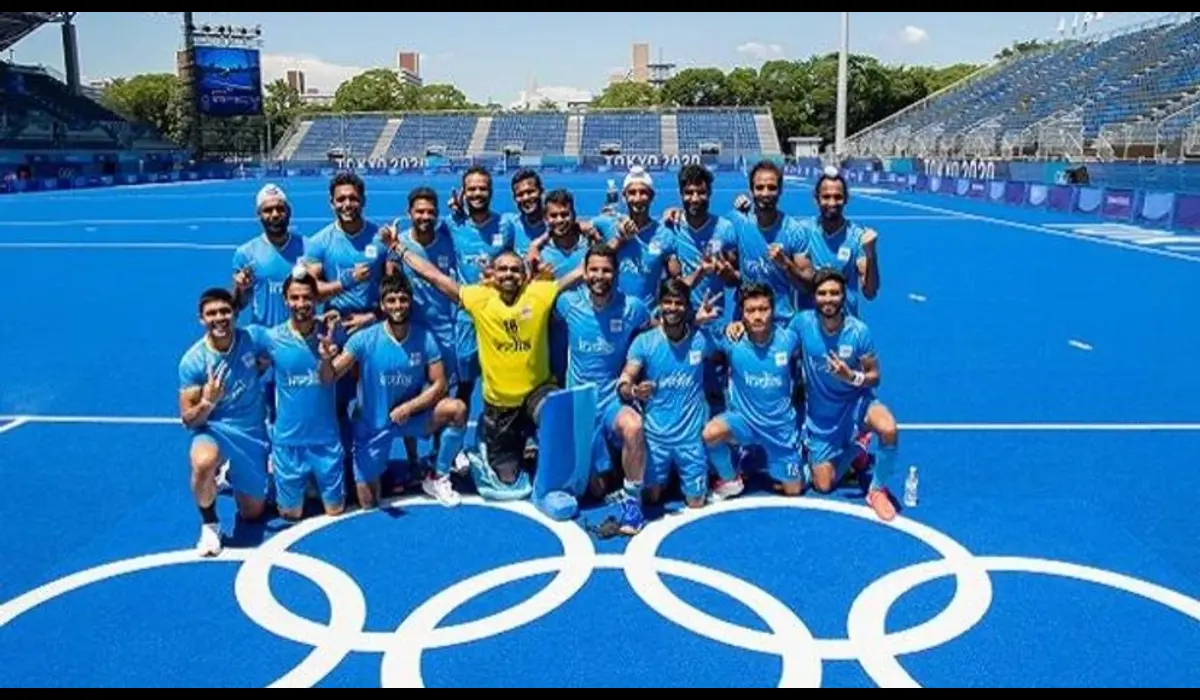
In modern times, Manpreet Singh captained the men’s team to the historic Tokyo 2020 Olympic bronze, ending a 41-year medal drought, while Harmanpreet Singh continued the legacy by leading India to another bronze at Paris 2024. Remarkably, nearly half of the Indian men’s team in Paris hailed from Punjab, including stars like Jarmanpreet, Mandeep, and Gurjant Singh. Women, too, have risen — Gurjit Kaur, with her drag-flicking precision, has become one of the best defenders in world hockey.
Punjab’s villages remain dotted with astroturf fields and academies that nurture young talent, ensuring hockey remains a living tradition — not just a memory of past glories.
When it comes to raw power and grassroots identity, kabaddi and wrestling define Punjab’s rural soul. Kabaddi, the state sport, is celebrated across villages and towns, its circle-style version drawing huge crowds during fairs and festivals. Since 2010, Punjab has successfully hosted multiple Kabaddi World Cups, bringing global recognition to the traditional game.
The state’s kabaddi stars, including Anup Kumar and Sandeep Singh (who transitioned from hockey to kabaddi), have dominated professional leagues. Meanwhile, the Pro Kabaddi League has turned local heroes into national icons.
In wrestling, Punjab’s contribution is legendary. From the indomitable Gama Pehlwan, the “Lion of Punjab” who never lost a bout, to Dara Singh, who transitioned from the akhara to the silver screen, Punjab’s wrestlers symbolize grit and discipline. Akharas across the state continue to produce top freestyle wrestlers who excel in the Asian Games and Commonwealth events. The region’s training culture — a blend of physical rigor and moral discipline — remains unmatched.
Punjab’s impact on athletics and shooting has been equally profound. Milkha Singh, the “Flying Sikh,” overcame the trauma of Partition to become one of India’s most iconic athletes. His near-podium finish at the 1960 Rome Olympics inspired generations to chase excellence despite adversity.
Another trailblazer, Abhinav Bindra from Chandigarh, brought India its first-ever individual Olympic gold in shooting at the 2008 Beijing Games. Shot-putter Tajinderpal Singh Toor, an Asian record holder, and javelin star Gurmeet Kaur continue Punjab’s proud athletic lineage. Boxing too has seen champions like Vijender Singh, who clinched an Olympic bronze and inspired a new era of Indian boxing.
Schemes such as Khedan Watan Punjab Diyan and the prestigious Maharaja Ranjit Singh Award celebrate these achievements while encouraging young athletes to pursue sports professionally.
What sets Punjab apart is not just talent but culture. Fitness is ingrained in everyday life — from early morning workouts in rural akharas to spirited games in city grounds. The infrastructure, from Mohali’s PCA Stadium to village-level sports academies, provides a solid foundation for emerging stars.
Punjab’s athletes often punch above their weight, representing India in numbers far greater than the state’s population share. Behind each medal lies the story of resilience, community pride, and a culture that celebrates physical and moral strength alike.
As new icons like Nehal Wadhera rise and veterans continue to inspire, Punjab’s sporting story remains one of relentless pursuit and national pride. From the hockey turf to the cricket crease, from the kabaddi ring to the athletics track, Punjab’s sons and daughters keep proving that the state’s heartbeat will always sync with the spirit of Indian sports.
New Delhi: The Union Ministry of Home Affairs (MHA) has sought detailed reports from the Punjab government on...
The killing of Bikramjit Singh in Gurdaspur, two days after anti-drug activist Parvinder Singh Jhota was shot dead...
Union Home Minister Amit Shah has questioned Punjab’s law and order situation over drugs, gangsterism and the murder...
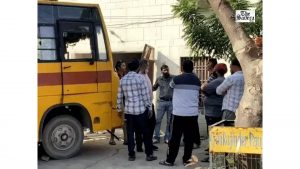
A Tips School bus crashed into a house in Jalandhar's Sodhal Industrial Area on Friday morning. One child...
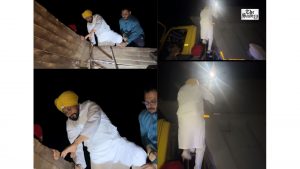
Charanjit Singh Channi travelled in a tipper truck to a riverbank site at night as part of Mission...
Punjab is rapidly establishing itself as a key industrial hub in the country. According to the Punjab government...
Aries: The day will be auspicious...