Last Updated: September 16, 2026
Last Updated: September 16, 2026





Written By Sheena Sandhu
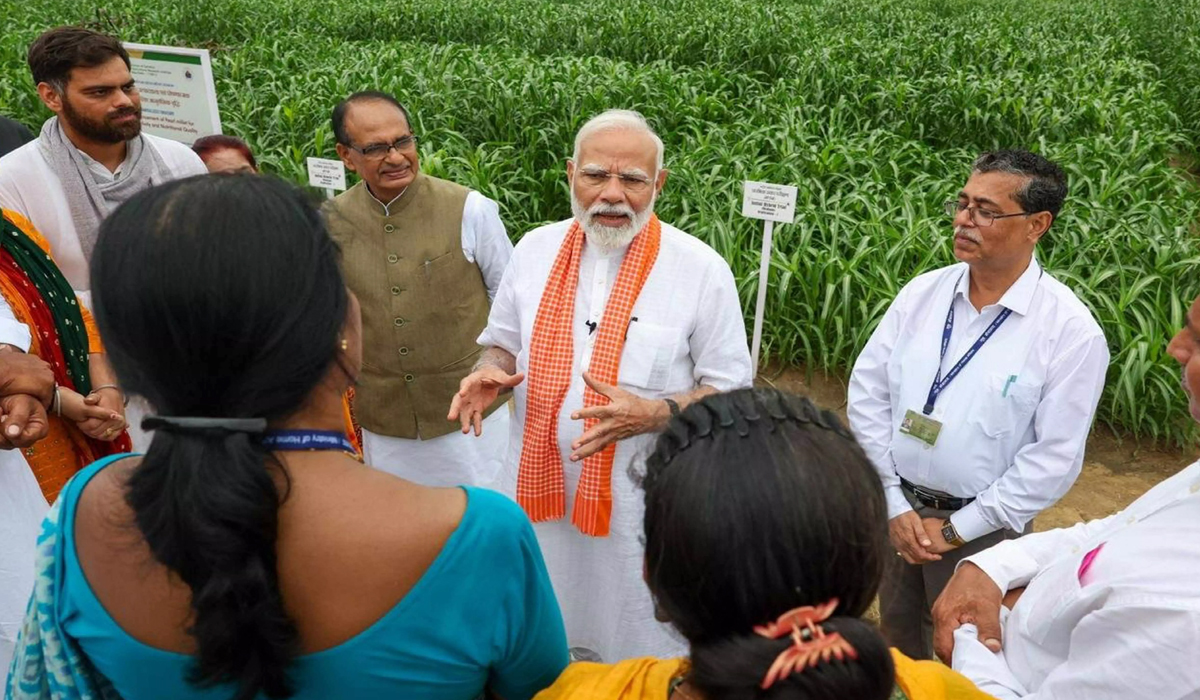
India has faced sustained pressure from the United States to reduce import duties on a wide array of agricultural goods, including grains, oilseeds, dairy, poultry, fruits, nuts, and ethanol-based products. New Delhi has resisted, arguing that exposing a largely smallholder-based farm economy to competition from heavily capitalized and subsidized foreign agribusiness would depress farmgate prices, undermine livelihoods, and threaten food security. Prime Minister Narendra Modi has stated that India will not compromise on the interests of farmers, livestock rearers, and fishers, even at political cost.
What the U.S. is asking for— and why India is resisting
The push has been to cut India’s average applied tariffs on agricultural imports to much lower levels, aiming for parity with partners. India’s resistance stems from the risk that small and marginal farmers cannot withstand price undercutting by large-scale, subsidy-backed producers.
Requested openings reportedly cover dairy, poultry, corn, soybeans, wheat, rice, ethanol and its byproducts, apples, almonds, citrus, pecans, grapes, canned fruit, chocolates, cookies, and frozen fries, along with pressure to allow entry of genetically modified produce such as maize, soy, canola, and cotton.
India has been especially cautious on dairy, corn, soybeans, and wheat, while selectively considering fruits and nuts. Dairy remains culturally and economically sensitive, and India does not allow cultivation of GM food crops.
Crops and products are most vulnerable if tariffs are lowered. Lowering duties would transmit international price cycles—and foreign subsidies—more directly into Indian mandi prices, making several domestic value chains vulnerable:
Wheat: Greater access for imports during low global price cycles could undercut domestic procurement and MSP operations, pressuring farm incomes in key growing states. Rice: While India is a major exporter, non-basmati segments serving domestic markets could face price pressure in downcycles if imports increase.
Corn (maize): Wider tariffs cuts could depress prices for feed and industrial maize, affecting farmers in major producing belts. Soybeans and soy products: Highly competitive imports, often GM-derived, could impact soybean growers and margins for domestic processors.
Edible oils and oilseeds: Increased access to imported soy/ canola oils can suppress demand for domestically crushed oilseeds, affecting mustard, groundnut, and other growers via price parity effects.
Cotton: Cheaper lint or seed imports can hit farmgate prices, even as India is a top cotton grower. Dairy: Cheaper skim milk powder, whey, cheese, and butterfat would affect millions of small dairy households integrated through cooperatives.
Poultry: Large-scale foreign poultry could depress broiler and egg prices, impacting smallholder integrator ecosystems and feed demand linkages. Fruits and nuts: Broad cuts risk displacing hill and orchard economies such as apples during supply gluts, even if selective easing has occurred in the past.
Ethanol and DDGS: Wider access could alter feed market economics and pressure domestic maize growers, with cascading effects on crop choices. Processed foods (frozen fries, chocolates, canned fruit): Value-added foreign products can displace local processors and contract-farming linkages, affecting growers tied to those chains. India’s tariff flexibility acts as a buffer against sudden global price shocks; permanent cuts would erode that shock absorber.
Animal husbandry: Why dairy and poultry protections matter Dairy: Dominated by smallholders and cooperatives, the sector could see depressed procurement prices and destabilized cooperative margins if low-tariff imports surge, with implications for women’s incomes and rural cash flows.
Poultry: Scale efficiencies abroad could undercut Indian integrator and contract models, reducing returns to smallholder growers and affecting domestic maize/soy feed supply chains. These sectors are pivotal for rural diversification, employment, and nutrition, with extensive cold chain, processing, and service linkages.
Fisheries: Protecting artisanal and coastal livelihoods. Tariff exposure for fish and fish products could hurt small scale marine and inland fishers if cheaper imported products displace domestic catch or processed fish.
The government has bracketed fishers with farmers and dairy producers in its red lines, signaling sensitivity to coastal and riverine livelihoods. Environmental and biosafety considerations GM entry pressure: Requests to open channels for GM maize, soy, canola, and cotton collide with India’s cautious approach to GM food crops and ongoing biosafety debates.
Land-use and input pressures: Price suppression from imports can push farmers toward intensification or shifts to more input-heavy crops to maintain incomes, elevating water and chemical use. This could undermine efforts promoting crop diversification, climate-resilient varieties, millets, and natural farming.
Food security buffers: Maintaining tariff policy space supports stock management and interventions during global shocks, serving as a social environmental safeguard against crisis-driven overexploitation of local resources. Political economy and farmer support Trade talks have often stalled over agriculture, dairy, and fisheries access as India prioritizes rural livelihoods and food safety norms over tariff concessions.
The government’s stance has resonated with rural constituencies and farm bodies that have long resisted abrupt market-opening in sensitive sectors. Binding tariff cuts in a trade deal could reduce India’s ability to respond to future shocks, a concern shared by many rural stakeholders seeking income stability and policy certainty.
What “vanguard” looks like in practice
Refusing across-the-board cuts on sensitive lines while considering narrow, non-disruptive openings reflects calibrated protection. Guarding dairy access and constraining GM food entry supports millions of small producers integrated through cooperatives and self-help groups. C
omplementary policies—MSP operations, FPO expansion, value chain development, and natural farming missions—aim to keep domestic price floors viable and reduce vulnerability to dumping and volatile global cycles.
Bottom line
With pressure to lower agricultural tariffs and open sensitive lines from grains and oilseeds to dairy, ethanol, and processed foods, India’s refusal functions as a price shield for wheat, rice, maize, soy, and cotton farmers; a livelihood buffer for dairy and poultry smallholders; and a stability anchor for fishers and rural processors. Given past episodes of global price collapses and the scale-and-subsidy advantages of foreign agribusiness, this stance preserves policy space for stock management, MSP operations, and climate-resilient agrarian transitions—priorities strongly signaled by the Prime Minister and supported by farmer organizations wary of abrupt exposure to global price swings.
Trinamool Congress MP and party national general secretary Abhishek Banerjee, who is currently in the United States for...

A tense situation unfolded in Badian Kalan village of Hoshiarpur amid a protest over the alleged damage to...

Good Afternoon Viewers, stay updated with the latest national, international, Punjab, political, business, entertainment and sports news in...

In a major crackdown on narcotics and illegal arms smuggling, Punjab Police's Counter Intelligence wing in Amritsar has...
The Punjab and Haryana High Court has sought a status report from the Punjab government in connection with...

Gold and silver prices traded up to 1 per cent higher on Wednesday amid softer crude oil prices...

Aries: The day will be auspicious...