Last Updated: October 21, 2026
Last Updated: October 21, 2026





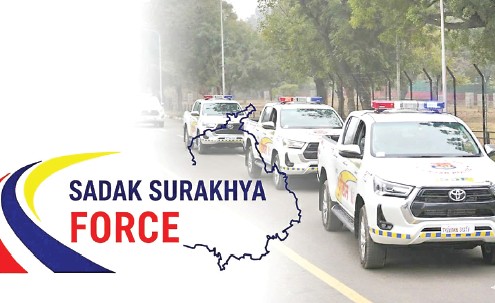
When the Punjab government launched the Sadak Surakhya Force in January 2024, it was introduced as a specialised unit to curb the state’s rising road accident numbers. Within months, the force has delivered results that have surprised even senior police officials. More than 45,000 lives have been saved due to faster response, improved road discipline and round-the-clock patrolling. What began as a new policing experiment has now evolved into one of Punjab’s most impactful public safety initiatives.
Spread across 4,100 kilometres of highways, the force is deployed at intervals of 30 kilometres, making it one of the most extensive road safety networks in the region. The mandate is simple but crucial. Reach the accident spot within minutes. Provide assistance. Stabilise the injured. Move them to hospital without delay. Prevent further damage on the road. The force has successfully brought down accident severity by acting at the most important moment, the first few minutes after a crash.
At the core of the force are 144 high-performance vehicles that include Toyota Hilux and Mahindra Scorpio models. These vehicles carry first-aid equipment, trauma kits and trained personnel. On receiving a distress call, teams generally reach accident sites within 5 to 7 minutes, a response time that can mean the difference between life and death. This efficiency is supported by a coordinated system of communication between police control rooms, highway units and district teams.
A distinctive feature of the force is the presence of women personnel. Nearly 28 percent of the SSF staff are women who are actively involved in patrolling duties, emergency response, crime detection and public assistance. Their presence on highways has improved the sense of security for women travellers, students and families commuting at night. The teams have also handled incidents beyond road accidents. They have stopped drug trafficking attempts, intercepted suspicious vehicles and assisted in cases of vehicle theft. Their role has expanded into a wider public safety framework.
The SSF has also helped prevent suicides. Officials report that at least 12 individuals attempting self-harm near bridges, canal banks and highway stretches were rescued and given immediate assistance. This aspect of their work, though less visible, reflects the force’s social impact and its ability to intervene in critical situations.
One of the most significant achievements of the SSF has been the protection of schoolchildren. According to police officials, not a single school-going child has died in a road accident in areas that fall under the SSF’s jurisdiction. For a state that has struggled with heavy traffic and vulnerable pedestrians, this record is considered historic. Police officers involved in the initiative say the force has rebuilt public trust by maintaining discipline on major routes and by responding with compassion during emergencies.
Technology plays a central role in the functioning of the SSF. Each unit is equipped with speed guns to curb overspeeding, body cameras to ensure transparency during enforcement, and e-challan systems that help record violations instantly. Artificial intelligence tools have been introduced to analyse accident hotspots, monitor lane discipline and identify risky driving patterns. This data-driven approach allows the force to deploy teams more strategically and anticipate problems before they escalate.
The effectiveness of the force was visible during the recent floods in Punjab. SSF personnel were among the first responders in several affected areas. They shifted stranded families, moved vehicles blocked by waterlogging and supported district administrations in relief operations. Their presence helped maintain order on heavily damaged roads and prevented secondary accidents caused by flooding.
Senior Punjab Police officials say the force has done more than reduce accident numbers. It has created a visible, reliable and modern policing system on state highways. They describe the SSF as an example of how targeted interventions, supported by training and technology, can produce immediate and measurable results.
These efforts are part of a larger road infrastructure push by the state government. Chief Minister Bhagwant Singh Mann has approved a project worth Rs 4,150.42 crore to upgrade 19,491.56 kilometres of rural roads. This initiative is expected to improve movement of goods, encourage agricultural trade and strengthen rural connectivity. Better roads are not only expected to support transportation but also help reduce accidents in rural belts.
Another initiative worth Rs 91.83 crore focuses on road safety enhancements. This includes white lane markings, zebra crossings, warning signs and reflective boards. These elements improve visibility for commuters and make roads safer for pedestrians, especially at night. According to officials, these changes will assist the SSF’s work and create safer road environments across the state.
The combined impact of quicker emergency response, upgraded infrastructure and improved enforcement is gradually reshaping Punjab’s transport landscape. Road safety experts say that accident prevention requires a multi-layered approach that addresses behaviour, infrastructure and emergency response at the same time. Punjab’s model appears to be moving in that direction.
For now, the Sadak Surakhya Force stands out as a rare example of a government initiative delivering results within its first year. With thousands of lives saved and a stronger sense of safety on highways, it is being viewed as a model that other states may study. The challenge ahead will be maintaining this momentum, scaling the force as traffic volumes grow and ensuring that the technology and equipment remain modern and effective.
In a state where road accidents have long been a major concern, the SSF has shown that focused planning and timely action can bring significant change. For many families who have received help at the most critical hour, the force has already made all the difference.
Punjab government employees are observing a two-day mass casual leave protest on October 21 and 22. The agitation...

Punjab Police have arrested seven people in a suspected drug, arms and explosives smuggling case in Amritsar. A...

Punjab has reported 404 stubble-burning incidents, with Tarn Taran and Amritsar accounting for the highest numbers. Authorities have...
The CBI has taken over the investigation into anti-drug activist Parvinder Singh Jhota’s killing in Mansa and registered...

Punjab Chief Minister Bhagwant Mann was allegedly detained for three hours at Delhi airport upon his return from...

The Punjab Vigilance Bureau (VB) during its ongoing drive against corruption in the state, has apprehended Inspector Gulshan...
Aries: The day will be auspicious...