Last Updated: October 21, 2026
Last Updated: October 21, 2026





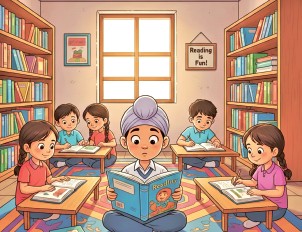
Libraries across Punjab are undergoing a quiet but significant transformation, reshaping reading habits in villages, towns and schools. The state government’s focused push to create new reading spaces and revive old ones has begun to change how communities, especially young people, access books and learning resources. What was once seen as a fading culture is now regaining public interest, with libraries emerging as active community hubs.
A major part of this revival has come through mohalla libraries. These small neighbourhood reading rooms are being set up across assembly constituencies with a target of up to six per constituency. Many of these facilities are located in rural belts where access to books was once limited. At present, 114 rural libraries are functional and many more are under construction. These spaces provide basic reading material, help students prepare for exams and create an environment where reading becomes part of everyday life.
School libraries form another important pillar of Punjab’s renewed reading culture. Funds have been allocated across government schools so that even young students in primary classes can begin developing reading habits early. Primary schools have been given five thousand rupees, middle schools thirteen thousand and senior secondary schools fifteen thousand to strengthen their library collections. These funds are modest, but they allow schools to restock essential reading material and ensure that each institution maintains a dedicated space for books.
District libraries represent the largest and most impactful part of this transformation. The Sangrur District Library stands out as an example of how a neglected space can be turned into a centre of learning. Before its renovation, the library was in poor condition, with locked rooms and unused sections. With a facelift costing a little over one crore rupees, the space was modernised and reopened to the public in June 2023. The changes have had a visible impact. Lifetime membership has grown by more than sixty percent. The seating capacity has increased from only seventy to two hundred and thirty five, allowing students and readers from across the district to use it daily.
The improved infrastructure has played a major role. The library now has a large air-conditioned hall, free WiFi, CCTV surveillance and a computer section. RO water facilities and a landscaped green area have also been added. Built on more than three acres, the library is open seven days a week from eight in the morning until nine at night. It houses around sixty five thousand books, including thousands added recently for students preparing for competitive examinations. The canteen run by an NGO has also become a popular spot for readers who spend long hours studying.
Visitors say the transformation has changed their routines. Students like Jagdeep Singh from Ladda village reach the library daily because of the clean, calm environment. Others, such as Gurpreet Singh from Bhawanigarh, travel nearly twenty kilometres for the library’s strong collection of competitive exam books. Many say that simply seeing hundreds of others study around them encourages discipline and motivation. Local residents note that Sangrur has slowly gained a reputation for its reading culture, something rarely seen in other regions.
The Sangrur model is being echoed in other districts as well. Abohar now has a modern library built at a cost of more than three crore rupees with a seating capacity of one hundred and thirty. It is fully air-conditioned and designed to provide a focused reading environment for students and professionals. The Roopnagar District Library has also undergone a major transformation, drawing praise from local authorities and users. Ferozepur’s library is witnessing a similar push to upgrade infrastructure and expand reading facilities.
The combined effect of these changes is reshaping public attitudes toward reading. Communities that once had limited access to books now have well-organised spaces with modern amenities. Students preparing for competitive examinations find libraries more reliable than studying at home. Elderly residents use these spaces to read newspapers and magazines. Parents increasingly bring young children to inculcate reading habits early. In rural areas, where digital access remains uneven, libraries have become essential platforms for learning.
Punjab’s library initiatives show that when public spaces are revived with thoughtful planning, they can create lasting social impact. The state’s current approach includes small neighbourhood reading rooms, strengthened school libraries and upgraded district facilities. Together, these changes are building a wider reading culture. The results are visible in higher footfall, improved academic outcomes and growing community engagement.
If this momentum continues, Punjab may see a revival of reading habits across generations. The state’s libraries, once fading into neglect, are becoming dynamic centres of learning and community interaction, reflecting a renewed commitment to education and public access to knowledge.
Member Parliament Gurmeet Singh Meet Hayer today said that in a monumental milestone for the state’s sporting history,...

The Punjab government has suspended DSP Harjinder Singh Gill and drug inspector Naresh Kumar in connection with the...

To honour the valiant police personnel who laid down their lives while fighting militants and criminals for the...
Punjab government employees are observing a two-day mass casual leave protest on October 21 and 22. The agitation...

Punjab Police have arrested seven people in a suspected drug, arms and explosives smuggling case in Amritsar. A...

Punjab has reported 404 stubble-burning incidents, with Tarn Taran and Amritsar accounting for the highest numbers. Authorities have...

Aries: The day will be auspicious...