Last Updated: October 21, 2026
Last Updated: October 21, 2026





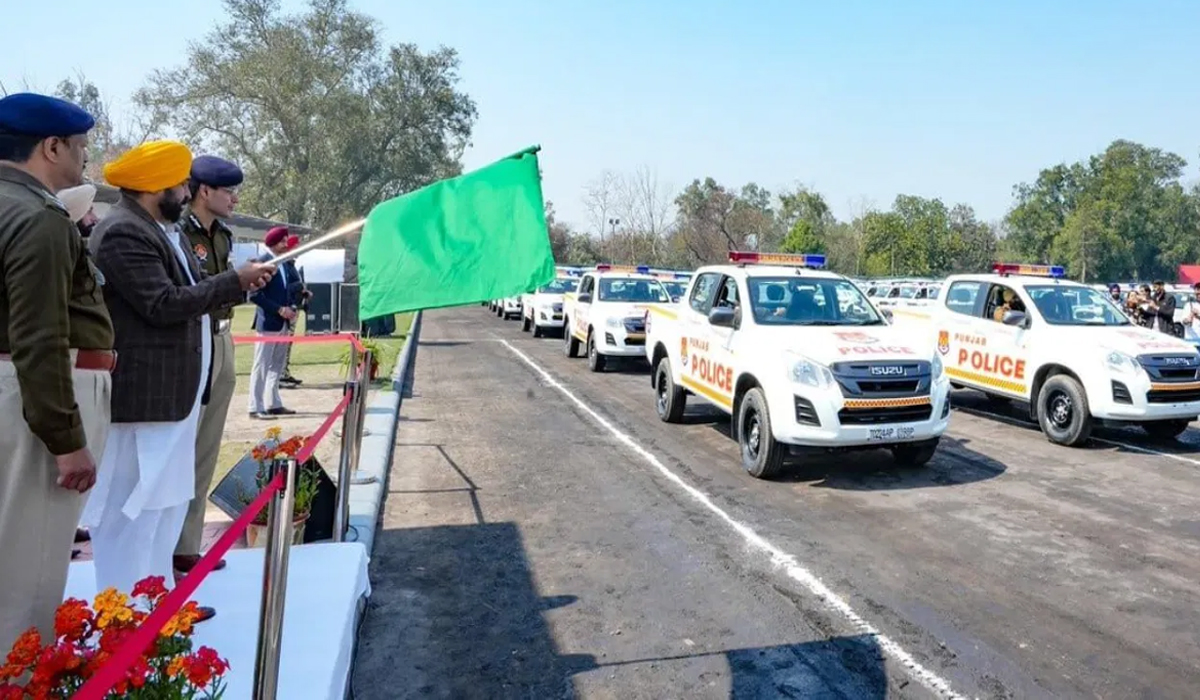
Punjab Police is giving a technology-driven push to road safety through its Sadak Surakhya Force, a dedicated highway patrol aimed at reducing road fatalities and providing faster assistance to accident victims.
From February 2024 to January 2026, SSF personnel attended 43,983 road accidents and assisted 47,386 people. Of these, 19,973 victims received first aid at the spot, while 27,413 injured persons were shifted to hospitals for further treatment.
Dedicated Force Focused Solely on Road Safety
The SSF was launched by Chief Minister Bhagwant Singh Mann on January 27, 2024, in Jalandhar, against the backdrop of Punjab’s high road accident fatality rate.
The force has more than 1,600 specially trained personnel and 144 high-tech vehicles, with women accounting for nearly 28% of its strength. Teams are deployed at roughly 30-km intervals across thousands of kilometres of important highways and roads.
Unlike regular police units, SSF personnel are not routinely diverted for general law-and-order duties, allowing them to concentrate on traffic enforcement, emergency response and victim assistance.
‘Platinum 10 Minutes’ at the Centre of Response
The SSF operates around the ‘platinum 10 minutes’ principle, aiming to reach accident victims within six to eight minutes and provide immediate medical assistance.
Its vehicles are equipped with speed guns, breathalysers, e-challan devices, dash cameras and first-aid kits. Officials say the average accident response time has been brought below seven minutes on the covered road network.
Road Fatalities Decline on SSF-Manned Corridors
Punjab DGP Gaurav Yadav said specialised training and rapid intervention have contributed to a significant fall in fatalities on SSF-patrolled stretches.
According to figures cited by him, deaths on specific SSF-manned corridors declined from 1,955 in 2023 to 1,016 in 2024, a reduction of around 48%.
AI, Drones and Satellite Data to Shape Future
Punjab Police is now working towards a broader Vision SSF-2047, which seeks to integrate artificial intelligence, drones, satellite imagery and geospatial technology into road safety and policing.
The system is expected to assist with real-time incident mapping, congestion prediction, disaster management and risk assessment. Police are also exploring satellite communication and potential integration with nano or microsatellite technology.
Phase II to Expand SSF Coverage
Under Phase II, SSF coverage is planned to increase from approximately 5,500 km to 6,000 km of state roads.
The wider strategy includes the Intelligent Transport Management System, ANPR-based enforcement, predictive analytics and IoT-enabled monitoring.
Punjab’s road safety framework also follows the 7E model-Engineering, Enforcement, Education, Electronics, Emergency Care, Engagement and Evaluation.
From Enforcement to Life-Saving Service
Officials say the SSF model represents a shift from conventional traffic enforcement towards a service-oriented approach focused on saving lives.
Beyond accidents, SSF teams have assisted vulnerable road users, helped prevent suicides, recovered contraband and stolen vehicles, and supported women, tourists and schoolchildren.
With specialised personnel, faster emergency response and increasing use of advanced technology, Punjab Police aims to build an integrated road safety system and position the state as India’s road safety hub.
Punjab Chief Minister Bhagwant Mann was allegedly detained for three hours at Delhi airport upon his return from...

The Punjab Vigilance Bureau (VB) during its ongoing drive against corruption in the state, has apprehended Inspector Gulshan...
Chief Minister Bhagwant Mann may soon hold a press conference or release a video message amid Union Home...
Punjab Cabinet Minister Aman Arora welcomed Union Home Minister Amit Shah's visit to Punjab on Tuesday. However, he...
Gurdaspur: Union Home Minister Amit Shah on Tuesday met with the families of those who spoke out against...

Mansa: A shocking incident was reported from Mansa in Punjab on Tuesday morning, where a Punjab Police head constable...