Last Updated: October 15, 2026
Last Updated: October 15, 2026





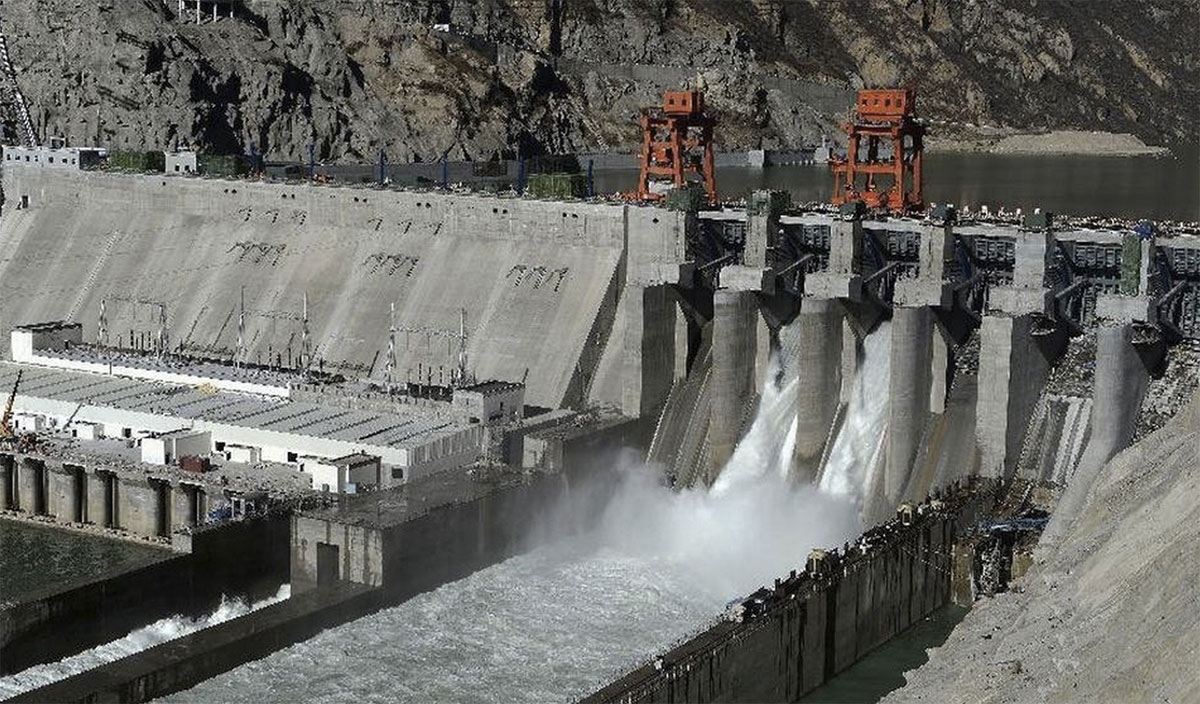
China’s mega hydropower project on the Yarlung Tsangpo River in Tibet has brought renewed scrutiny to the sustainability of large-scale infrastructure in the ecologically fragile and seismically active Himalayan region. Farther east, Beijing began construction in July 2025 on the lower Yarlung Tsangpo hydropower cascade near Medog, dubbed the “project of the century.” With an estimated cost of around 1.2 trillion yuan, the project is expected to generate roughly three times the power produced by the Three Gorges Dam. The river plunges nearly 2,000 metres through a short, seismically active gorge before flowing into India as the Siang in Arunachal Pradesh and eventually the Brahmaputra in Assam. Whatever one’s view of the geopolitics, the sustainability question is narrower and harder: What does it mean to pin the energy future of a continent to tunnels and powerhouses in one of the least stable mountain syntaxis on Earth, upstream of tens of millions of people, at the same moment that permafrost, glaciers and monsoon extremes are all moving in the wrong direction? A 2022 paper in Nature Geoscience put the problem in the language engineers prefer. Warming is destabilizing rock and ice across High Mountain Asia. Sediment loads are rising. Reservoirs silt. Dams designed for a 20th-century rain flood can be overtopped by a 21st-century iceand-rock cascade. Two-thirds of Himalayan hydropower projects, the authors noted, sit on potential outburst-flood pathways. That was four years and several wrecked plants ago. Nepal’s disaster authority has so far recorded nearly 1400 deaths with over 5,000 people still missing in the aftermath of the devastating floods along the Nepal-China border on August 26. Hundreds of foreign pilgrims, trekkers and over 600 children are among those unaccounted for in two districts of the Himalayan nation. Chinese authorities have also confirmed several deaths and reported hundreds missing in Gyirong County, where rescue teams were still searching underground powerhouses. This is not a natural disaster in the old sense. It is a compound event: a warming cryosphere, a young mountain chain, and a development model that treats the world’s highest range as a construction site on the plains. The Himalayas perform a vital function no dam can replicate, storing winter water as ice and releasing it in spring. It helps sustain the monsoon and prevents vast quantities of soil from being washed into the Bay of Bengal within a single season, with nearly two billion people living with the consequences. If the range is developed as a corridor of concrete and blasting powder, the bill will not be itemized as ‘climate’. It will arrive as it did on August 26: suddenly, from upstream, and faster than anyone can run. The question the latest flood asks is not whether the mountains are fragile. They have always been fragile. The question is why we keep staking lives and capital on the pretense that they are not. On August 26, a glacier tore loose above the Nepal-Tibet border and sent a wall of ice, rock and water crashing down the Bhote Koshi valley. Within days, Nepal had counted over 1300 people dead and thousands still missing. China, governing the villages on the other side of the same disaster, had counted only a handful. That gap is not a footnote, it is the story. It shows, in the starkest terms possible, how the infrastructure Beijing calls “green development” in Tibet and the information control it exercises over the same territory are two faces of a single strategy, build fast, say little and let the silence do the rest of the work. China presents the Tibetan Autonomous Region as a worldclass clean-energy frontier, hydropower dams on the Yarlung Tsangpo, solar farms spreading across Shigatse and Gar County and ultra-high-voltage lines carrying power east. India’s Takshashila Institution has tracked several gigawatts of new renewable capacity added since 2013, with sharp jumps of 700 megawatts in 2023, 860 in 2024 and an estimated 2,600 in 2025. But the same geospatial mapping that recorded this growth also found solar sites sitting near airport infrastructure and in Gar County, within three kilometres of an antenna array associated with signals monitoring. A Washingtonbased CSIS study calls the resulting pattern a “gray-zone infrastructure strategy” of dams, roads, rail and digital systems that build coercive leverage over India and Nepal without a single shot being fired.
US President Donald Trump has renewed his suggestion that Canada become the 51st American state, criticising Canadian tariffs...

US President Donald Trump has predicted that the war with Iran will end very soon and energy prices...

An Illinois teenager has been charged over an alleged plot to carry out a mass shooting at a...

The India-BrazilSouth Africa Maritime Exercise (IBSAMAR) remains an important platform for strengthening naval interoperability, maritime security cooperation and...

Pakistan, which signed the Mecca Joint Defence Agreement (called the Mecca Pact) with Saudi Arabia and Turkey, is...

An investigation cited by the Africa Defense Forum alleges that China’s ICBC lent hundreds of millions of dollars...

Aries: The day will be auspicious...