Last Updated: October 21, 2026
Last Updated: October 21, 2026





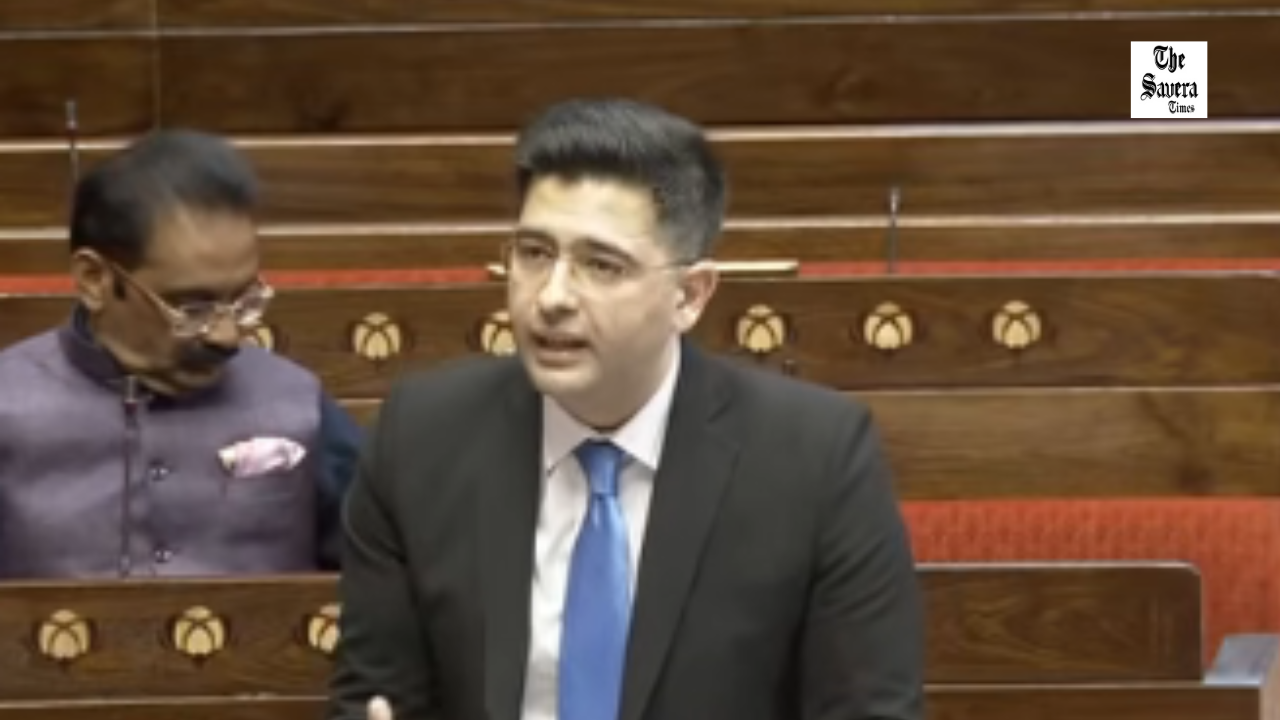
AAP MP Raghav Chadha on Monday delivered a detailed and measured speech in Parliament on the Union Budget 2026-27, titled “The Good, the Bad, and the Way Forward.” Breaking away from the usual pattern of either full-throated praise from the Treasury benches or sharp criticism from the Opposition, Chadha said his intent was to offer objective analysis and constructive suggestions to the Union government and the Hon’ble Finance Minister.
Today, I delivered a speech on the Union Budget 2026-27 titled the good, the bad, and the way forward.
Speeches on Union Budget are either applause from the Treasury benches or outrage from the Opposition. Today, I tried to take an objective view and offer constructive criticism…
— Raghav Chadha (@raghav_chadha) February 9, 2026
He emphasised that Parliament must go beyond political binaries and focus on policies that genuinely strengthen India’s economy and improve citizens’ lives.
Raghav Chadha acknowledged several positive aspects of the Budget, particularly steps aimed at boosting economic growth and supporting infrastructure development. He highlighted the government’s continued focus on capital expenditure by states, which he said is crucial for job creation, long-term productivity and regional development.
He also welcomed discussions around modernising land records, suggesting that the use of blockchain technology could bring transparency, reduce disputes and unlock economic value tied up in land ownership issues.
Turning to financial markets, Chadha raised concerns over the Securities Transaction Tax (STT), arguing that high transaction costs discourage participation and reduce market efficiency. He made a strong case for zero long-term capital gains tax on equity investments, stating that this would encourage long-term savings, deepen capital markets and support India’s startup and innovation ecosystem.
He also touched upon the need for a stable and predictable tax regime, stressing that frequent changes create uncertainty for both domestic and foreign investors.
A major part of Chadha’s critique focused on the middle class, which he said continues to face rising costs without adequate tax relief. He urged the government to revise income tax slab rates, arguing that inflation has eroded real incomes while tax thresholds have not kept pace.
According to him, meaningful relief to the middle class would not only ease household finances but also boost consumption, driving broader economic growth.
Raghav Chadha flagged what he described as a public health funding gap, pointing out that healthcare spending remains insufficient relative to India’s population and needs. He called for higher budgetary allocation to strengthen public hospitals, primary healthcare and preventive care, especially in underserved regions.
He warned that underinvestment in health has long-term economic costs, including reduced productivity and higher out-of-pocket expenses for citizens.
In a forward-looking proposal, Chadha argued for legalising and regulating virtual digital assets such as cryptocurrencies instead of pushing them into grey markets. He said a clear legal framework could help India harness innovation, attract investment and generate tax revenue, while also protecting investors.
Concluding his speech, Chadha said the Union Budget 2026-27 must evolve into a document that balances fiscal responsibility with social equity and future-ready reforms. He reiterated that his criticism was not political opposition for its own sake, but an effort to contribute meaningfully to national policymaking.
He urged the government to engage with constructive ideas across party lines to ensure inclusive and sustainable growth.
A fire in a hut in Nonapar village of Deoria district claimed three lives, including those of a...
Amit Shah paid tribute to police personnel who died in the line of duty at the National Police...
Reduced water levels at Har Ki Pauri and other Haridwar ghats have inconvenienced pilgrims during the Upper Ganga...

Six people returning from a Dussehra Mela were seriously injured when a car hit them on National Highway...

A bus travelling from Pachiound to Ramnagar fell into a gorge at Gulli Gula in Udhampur district. Nine...
Start your day with The Savera Morning Brief, bringing you the latest news from India and around the...

Aries: The day will be auspicious...