Last Updated: October 21, 2026
Last Updated: October 21, 2026





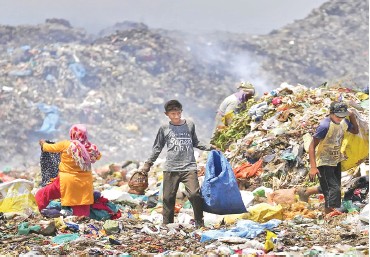
Every morning, before most of the country wakes up, a silent workforce begins its day. They walk through streets, garbage dumps, markets and landfills, collecting what society throws away — plastic bottles, paper, cardboard, glass, metal scraps and other reusable material. These invisible workers are India’s ragpickers. For decades they have played an essential yet largely unacknowledged role in keeping our cities clean. Without uniforms, recognition, rights or social protection, they form the backbone of our informal waste-management system. The time has come for India to recognise, respect and empower them.
India generates more than 1.5 lakh tonnes of solid waste every day, and urbanisation is pushing this number up further. Municipalities and sanitation authorities struggle to handle this mounting waste burden. Yet a large portion of recyclable material never reaches landfills because ragpickers collect, sort and divert it into recycling chains. According to environmental organisations, ragpickers save almost 20% of recyclable waste from ending up in dumping grounds, significantly reducing pressure on civic waste systems. This unpaid contribution not only keeps cities cleaner but also reduces carbon footprint and protects the environment.
Despite doing work that is crucial to ecological sustainability, ragpickers receive neither dignity nor basic safety protections. Many of them are children, single mothers, abandoned elderly or migrants who have no alternative livelihood. They work with bare hands in hazardous conditions — sifting through rotting food, broken glass, sharp metal and toxic medical waste. They face constant risk of infections, respiratory diseases, and physical injuries. Yet, their earnings remain brutally low. A full day’s labour often brings them less than rs150, far below any acceptable standard of fair wages.
It is heartbreaking that a section of society performing one of the most necessary environmental services is treated as though they are part of the waste they collect. Many are shooed away from residential areas, harassed by security guards or police, or insulted by people who refuse to acknowledge their humanity. Ragpickers’ presence in public spaces is tolerated only because their labour benefits society, not because their dignity matters. This mindset must change.
The conversation around waste management in India is rapidly modernising. Cities are talking about decentralised waste systems, segregation at source, material recovery facilities and circular economy principles. Yet the most efficient part of the system today — the informal recycling workforce — remains neglected. If the country truly intends to build a sustainable waste-management model, ragpickers must be placed at the centre of it, not ignored at its margins.
Several Indian cities have shown what is possible when ragpickers are treated with respect. In Pune, waste-picker cooperatives have been formally integrated into the municipal system. Women working in waste collection there have ID cards, bank accounts and uniforms. Their earnings have increased, and their work is now socially recognised. In Indore, ragpickers were organised into groups and trained to run segregation and recycling units. In Bengaluru and Hyderabad too, citizen-driven initiatives have enabled ragpickers to become formal waste collectors and sorting supervisors.
These successful models prove that ragpickers do not need charity — they need fair opportunities. Providing health coverage, gloves, boots, masks and tetanus vaccinations is not generosity; it is responsibility. Giving them access to banking, education for their children and housing assistance is not welfare; it is justice.
The economic case for respecting and formalising ragpickers is also strong. By recovering recyclable material, they feed industries that depend on scrap — plastic processors, paper mills, glass manufacturers, and metal smelters. If ragpickers stop working for even a week, recycling factories across the country would suffer scarcity of raw material and prices would rise sharply. It is difficult to imagine a functioning recycling sector without them.At a time when the world is focusing on climate responsibility, ragpickers stand on the frontlines of environmental protection. Every kilogram of plastic or metal they recover reduces the need for virgin production, which in turn cuts carbon emissions. Every bottle they separate from the waste stream prevents pollution of rivers, forests and oceans. Every piece of cardboard they rescue saves trees. In short, ragpickers are climate warriors.
Yet, unlike most environmental workers worldwide, they continue to operate in anonymity. It is not enough to celebrate them once a year on World Environment Day or during Swachh Bharat campaigns. Their contribution must be recognised in policy, law and everyday social conduct. India should integrate ragpickers into municipal solid-waste systems, guarantee minimum wages for their services, provide medical cover, ensure safe equipment, create schools for their children and promote cooperatives that allow them to negotiate better rates for recyclables.
State Bank of India has confirmed that 3,897 customer records containing personal information were found on the dark...

A fire in a hut in Nonapar village of Deoria district claimed three lives, including those of a...

Amit Shah paid tribute to police personnel who died in the line of duty at the National Police...

Reduced water levels at Har Ki Pauri and other Haridwar ghats have inconvenienced pilgrims during the Upper Ganga...

Six people returning from a Dussehra Mela were seriously injured when a car hit them on National Highway...

Two people were killed and ten injured after a passenger bus met with an accident at Gala Pachound...

Aries: The day will be auspicious...