Last Updated: October 23, 2026
Last Updated: October 23, 2026





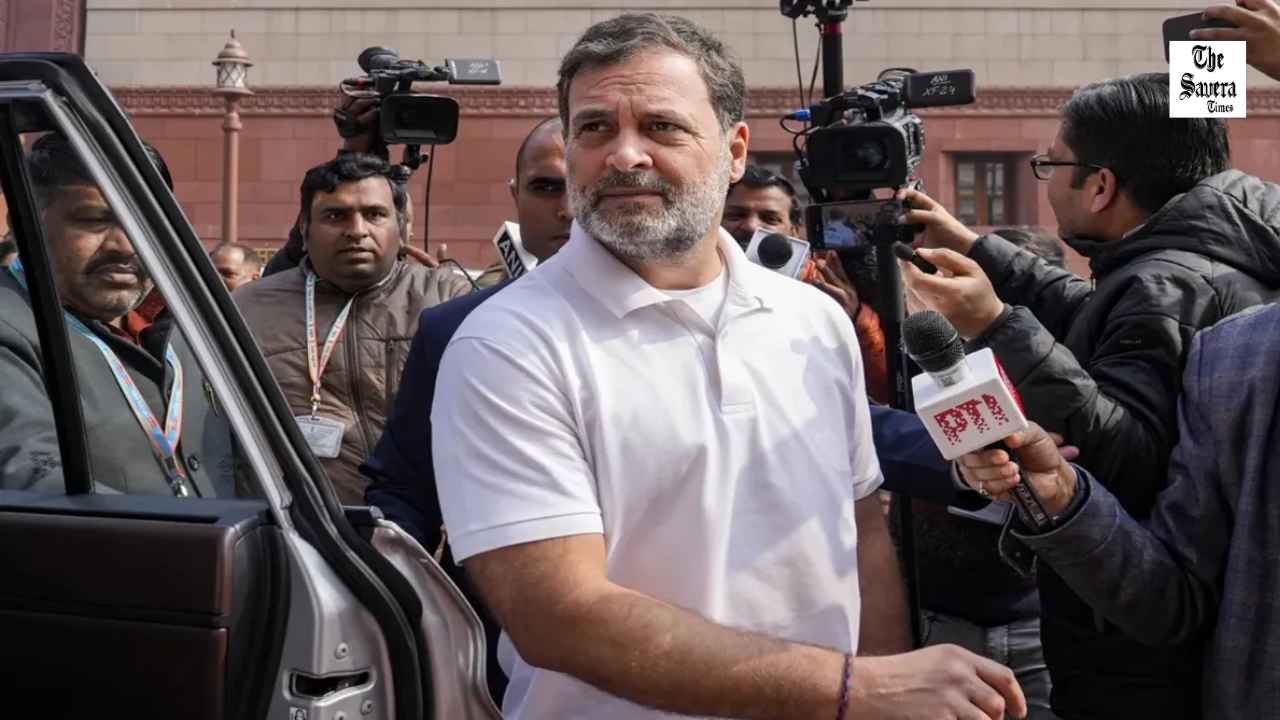
New Delhi: Leader of Opposition in the Lok Sabha Rahul Gandhi on Tuesday accused Prime Minister Narendra Modi of yielding to pressure from U.S. President Donald Trump in signing the recently announced India‑US trade deal, even as the issue drew sharp attention inside and outside Parliament. Gandhi made the remarks after proceedings in the Lok Sabha where the trade pact and its political implications became a focal point of debate.
The trade deal, unveiled on Monday night following discussions between the two leaders, cuts reciprocal tariffs on Indian goods entering the U.S. to 18 per cent a major concession from earlier punitive levels in a bid to resolve longstanding trade tensions between the two countries.
Speaking to reporters outside Parliament, Rahul Gandhi claimed that PM Modi “signed the deal under immense pressure from Donald Trump” and suggested that the agreement came at a cost to India’s interests. He asserted that the prime minister was “compromised” and implied that the deal could damage Modi’s political image, which Gandhi says was carefully crafted over years.
Gandhi also charged that the prime minister acted under duress “after months of negotiations,” suggesting that Modi was left with limited options amid the standoff over tariffs and oil sourcing. He claimed Modi’s leadership could not withstand the diplomatic pressure and warned that the pact could “burst the political image bubble built at great expense.”
The India‑US trade agreement has drawn mixed political reactions across the Indian political spectrum. While the government has highlighted the pact as a breakthrough that provides major tariff relief for Indian exporters and strengthens bilateral ties, opposition leaders like Rahul Gandhi have criticised the terms and the process leading to the deal.
Inside Parliament, the trade deal was discussed during sessions on the Motion of Thanks on the President’s Address, where Gandhi and other opposition figures sought to hold the government accountable for the negotiations and outcomes.
As announced by the U.S. President, the trade deal substantially lower tariffs for Indian exports — a move widely welcomed by many industries and export sectors. Previously, punitive tariffs of up to 50 per cent were in effect, tied to differences over India’s historic purchase of discounted Russian crude.
Prime Minister Modi responded to the announcement by expressing thanks to the U.S. President, describing the reduction in tariffs as beneficial for “Made in India” products and reflecting deepening ties between the two largest democracies.
Beyond the criticism of pressure, Gandhi also questioned broader economic and strategic implications of the deal, arguing that the government was not transparent enough and that India may have conceded too much. His remarks echoed longstanding opposition narratives about foreign policy and trade particularly around trade concessions and energy sourcing conditions.
This political pushback comes at a time when Parliament is engaged in budget session debates, and the trade pact has become intertwined with wider discussions on economic performance, diplomacy, and national sovereignty.
While opposition criticism persists, government leaders have defended the trade deal as a strategic success. They argue that lower reciprocal tariffs will significantly benefit Indian exporters and help strengthen economic ties with the United States. Several industry groups have welcomed the clarity brought about by the tariff reduction, noting its potential to boost sectors such as textiles, engineering, and agriculture.
As political debate continues, the trade deal is likely to remain a topic of contention in both economic and political discussions, with both supporters and critics outlining contrasting visions of India’s global trade strategy.
A powerful explosion erupted after firecrackers stored in a house in Alampur village, Siwan district, Bihar, on Friday

A Delhi court on Friday sent social media influencer Amir Shokeen to one-day judicial custody in connection with...
The Delhi High Court on Friday dismissed All India Students' Association (AISA) President Neha Bora's plea challenging the...
India's Ministry of External Affairs (MEA) on Friday clarified the government's position on the alleged ongoing face-off with...
Om Prakash Mathur was sworn in as the 29th Governor of Kerala at Lok Bhavan in Thiruvananthapuram on...
Good Evening Viewers! Stay updated with The Savera Times Evening Bulletin for the latest news from Punjab, India...

Aries: The day will be auspicious...