Last Updated: October 12, 2026
Last Updated: October 12, 2026





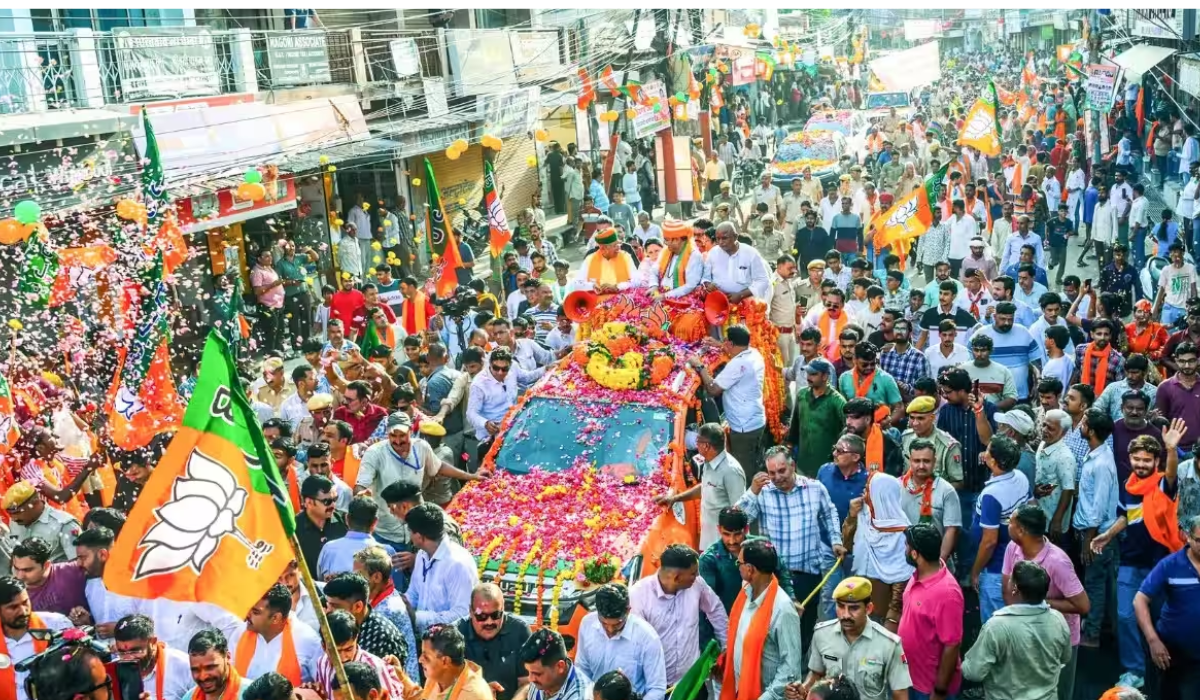
The results of Rajasthan’s 309 urban local bodies have delivered more than a verdict on municipal boards. They present a grassroots audit of the state’s political heavyweights, from Chief Minister Bhajanlal Sharma and former CM Vasundhara Raje to Congress veterans Ashok Gehlot and Sachin Pilot. The BJP emerged ahead in the overall civic contest, winning more wards and securing clear majorities in more urban local bodies. And the Congress party remained second, but within striking distance. The BJP polled 35.30%, compared with 34.36% for the Congress, a difference of just 0.94% points. That narrow vote-share gap makes the ward-level results particularly significant. For some leaders, their traditional political turf held firm. For others, their parties stumbled in their own wards or at their own polling booths. And in several cases, the results revealed an important distinction: a leader’s personal political influence does not always translate into uniform party performance across the surrounding area. With the 2028 Assembly elections still ahead, these municipal results offer an early and unusually granular report card. Chief Minister Bhajanlal Sharma can take comfort from the BJP’s performance. For the Chief Minister, the results broadly indicate that the BJP’s organisational machinery remains strong around his core political territory. The narrow overall vote-share gap, however, suggests that the BJP’s advantage cannot simply be attributed to a uniform wave across urban Rajasthan. For Minister of Youth Affairs and Sports Colonel Rajyavardhan Singh Rathore, the result was uncomfortable. The BJP lost Ward 28 of the Jhotwara constituency, with the Congress candidate emerging victorious. Forest Minister Sanjay Sharma also faced a more difficult outcome. Former Chief Minister Vasundhara Raje remains one of the most consequential political figures in Rajasthan, and the results from Jhalawar therefore carry particular weight. The BJP candidate won Ward 5 of the Jhalawar Municipal Council unopposed. Yet the larger council result was far less comfortable for the party. The Congress won 29 seats, surprising the BJP in a council where the party had previously held the board. The contrast is revealing: a BJP victory in Raje’s immediate ward coexisted with a significant Congress’ performance across the municipal council. That makes Jhalawar one of the more interesting indicators of how much of Raje’s traditional political influence continues to translate into broader BJP dominance. Deputy Chief Minister Diya Kumari voted at the booth located at the City Palace in Ward 141, where the BJP candidate won. In the Vidyadhar Nagar Assembly constituency, the BJP secured 12 of the 22 seats, with results for two seats pending. The numbers point towards a strong BJP position in the constituency, although the local-body verdict is not necessarily a direct measure of Assemblylevel voting behaviour. Rural Development Minister Dr Kirodi Lal Meena also has reason to claim a favourable result. The BJP secured an absolute majority in the Sawai Madhopur Council. Meena campaigned for two days during the election period despite being unwell. His own vote, however, is registered in a panchayat area, making the municipal result a measure of the party’s organisational performance rather than a direct test of his personal vote. Assembly Speaker Vasudev Devnani saw the BJP win his own Ward 37, including the booth where he voted. But the broader Ajmer picture was less favourable. The BJP failed to secure a majority in the Ajmer Municipal Corporation, while the Congress emerged successful. The contrast between a BJP victory in Devnani’s own ward and the absence of a clear majority for the party in the corporation underscores one of the central themes of these elections: individual strongholds do not necessarily translate into citywide control. The most revealing aspect of Rajasthan’s civic verdict may not be the number of wards won by either party. It is the mismatch between personal strongholds and wider party performance. A BJP minister can lose his own ward while the party performs strongly across the surrounding area. A former chief minister can lose his home ward while his party remains competitive across the city. A leader can retain his own booth even as his party struggles to secure a majority in the larger municipal corporation. That is the political story emerging from these results. The elections show that Rajasthan’s urban electorate is not moving in a single direction. The BJP has the numerical advantage, but Congress remains close enough in vote share to keep the contest alive. For the BJP, the challenge is to turn its seat advantage into durable political control. For Congress, the opportunity lies in converting its near-parity in votes into victories in closely fought local contests. And for Rajasthan’s political heavyweights, the message is even more immediate: A stronghold may still be a stronghold, but voters are increasingly distinguishing between the leader, the party and the local candidate. That distinction could matter enormously when Rajasthan returns to the larger political battlefield in 2028.
The Delhi Police has registered an FIR regarding the alleged disturbance at the Bangla Sahib Gurdwara in...

The Delhi Police on Monday removed Jantar Mantar from the list of officially designated protest sites. The police...

The Supreme Court on Monday clarified that it has not passed any judgment on the Election Commission's (ECI)...

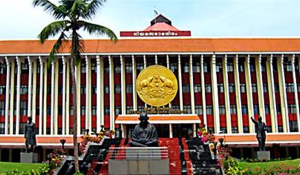
The Kerala Assembly passed a resolution demanding the removal of Chief Election Commissioner (CEC) Gyanesh Kumar from his...
Amidst heavy security and barricades by the Delhi Police, INDIA Bloc leaders began a protest march towards the...
The Reserve Bank of India (RBI)'s new measures to curb speculation in the rupee and maintain stability in...