Last Updated: October 1, 2026
Last Updated: October 1, 2026





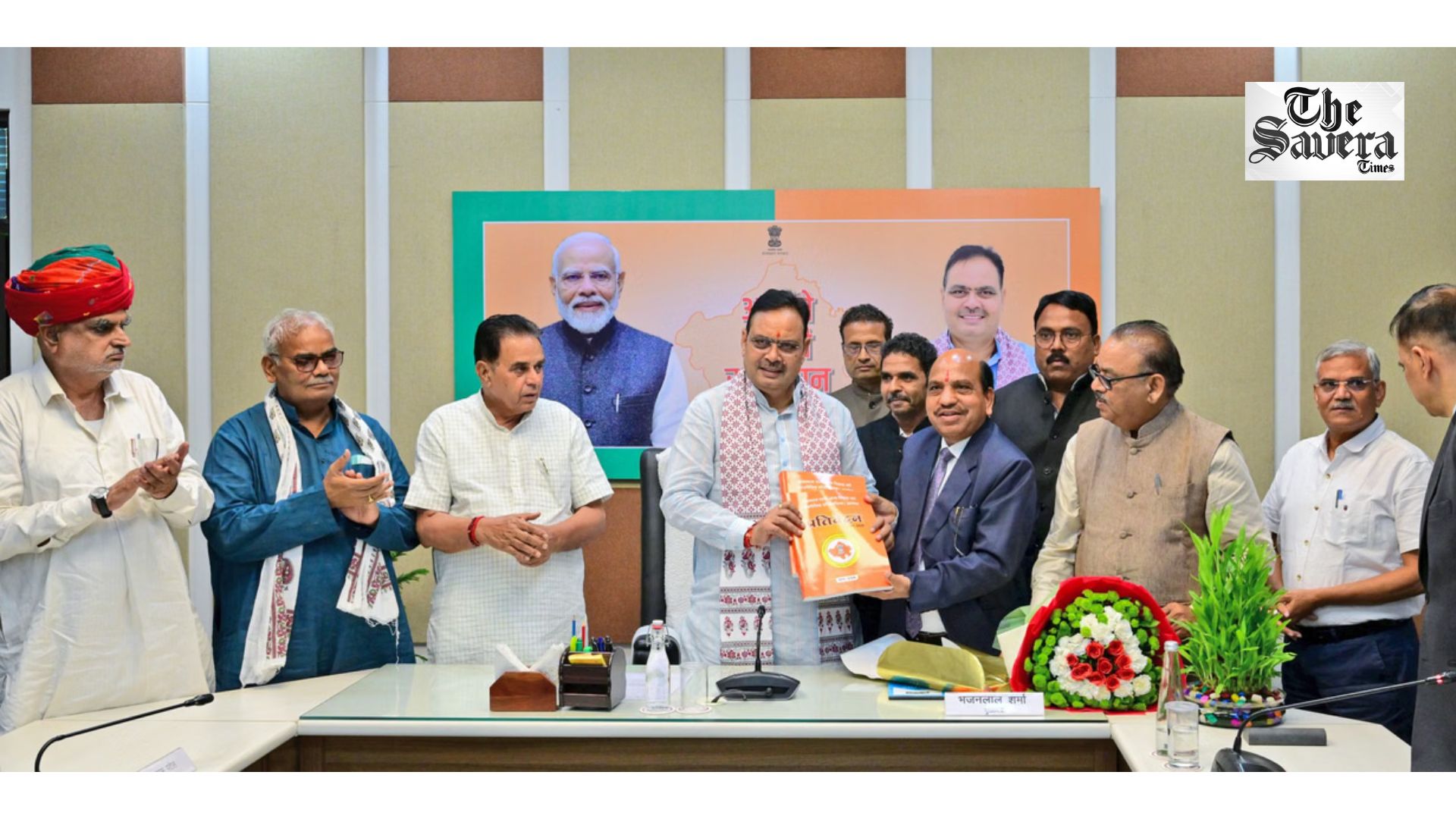
Jaipur: The Rajasthan Other Backward Classes (Political Representation) Commission has released its detailed survey report on the social, economic and political status of OBC communities in the state, ahead of the upcoming Panchayati Raj and Urban Local Body elections.
The survey, conducted under the leadership of retired Justice Madanlal Bhati, covers 92 OBC communities, including five communities classified under the Most Backward Classes (MBC) category. According to the report, the total OBC population in Rajasthan is more than 3.63 crore.
The findings provide detailed data on the population, government employment, self-employment, labour participation and political representation of various OBC communities.
Seven Communities Account for Over 55% of OBC Population
The report shows considerable variation in the population share of different OBC communities. Seven communities together account for 55.14 per cent of the total OBC population.
Jats and Jat Sikhs constitute the largest group, accounting for 20.14 per cent of the OBC population. They are followed by Gurjars at 9.11 per cent, Kumhar-Kumawats at 8.36 per cent and Mali-Saini-Baghwan communities at 7.80 per cent.
Jangid/Suthars account for 3.49 per cent, Yadavs/Ahirs for 3.22 per cent and Mevs for 3.02 per cent.
The report also provides demographic details of the OBC population. The male population stands at 1,87,50,094, or 52.23 per cent, while the female population is 1,71,05,082, accounting for 47.76 per cent. The sex ratio among the surveyed OBC population is 914 females per 1,000 males.
Jats, Gurjars, Sainis and Yadavs Dominate Government Jobs
The survey highlights significant differences in government employment among OBC communities. Rajasthan has around 3.92 lakh OBC government employees, according to the report.
Jat, Gurjar, Saini and Yadav communities together account for approximately 78 per cent of OBC government employees. In contrast, 18 OBC communities have fewer than 100 members each in government service.
The report also estimates that around 12.50 lakh people from OBC communities are engaged in self-employment.
Among major communities, Kumhar-Kumawats have around 1.24 lakh self-employed people, followed by Jats with 1.21 lakh, Mali-Sainis with 1.15 lakh and Jangids with 85,114.
The survey also records substantial participation of OBC communities in labour and daily-wage employment, with Kumhar-Kumawat and Saini communities having significant representation in this sector.
Survey May Shape OBC Reservation in Local Body Polls
The Commission’s findings are particularly important for the upcoming Panchayati Raj and Urban Local Body elections in Rajasthan. The survey was prepared in accordance with the Supreme Court’s triple-test framework for determining political reservation for OBCs.
The report is expected to provide a statistical basis for determining OBC reservation in local bodies and could have a significant impact on grassroots political representation in the state.
The findings underline the differences among OBC communities in terms of population, economic participation, government employment and political representation. The Commission has stressed the need to ensure that communities with comparatively limited social, economic and political participation are not left behind.
The survey is expected to serve as an important foundation for evidence-based policymaking and targeted interventions aimed at ensuring equitable opportunities and political representation for OBC communities in Rajasthan.
As the state prepares for the local body elections, the findings could play a key role in shaping the reservation process and strengthening inclusive representation in Panchayati Raj institutions and Urban Local Bodies.
Rajasthan ACB arrested a Railway Senior Section Engineer and two Jaipur Discom officials in a ₹10,000 bribery trap...

Jaipur: Rajasthan Police arrested three men from Madhya Pradesh in connection with the alleged recording and circulation of...
New Delhi: The Supreme Court on Tuesday directed that the results of the Rajasthan Cricket Association (RCA) elections...
Archana Sarma Rajasthan is witnessing a shift in tourism preferences in the Japanese market, with travellers showing growing...

Japanese tourists are increasingly exploring Rajasthan beyond forts and palaces, with solo travel, wildlife, rural tourism, local cuisine...
Three people, including two MBBS students, were killed after a car collided head-on with a trailer on the...

Aries: The day will be auspicious...