Last Updated: September 27, 2026
Last Updated: September 27, 2026





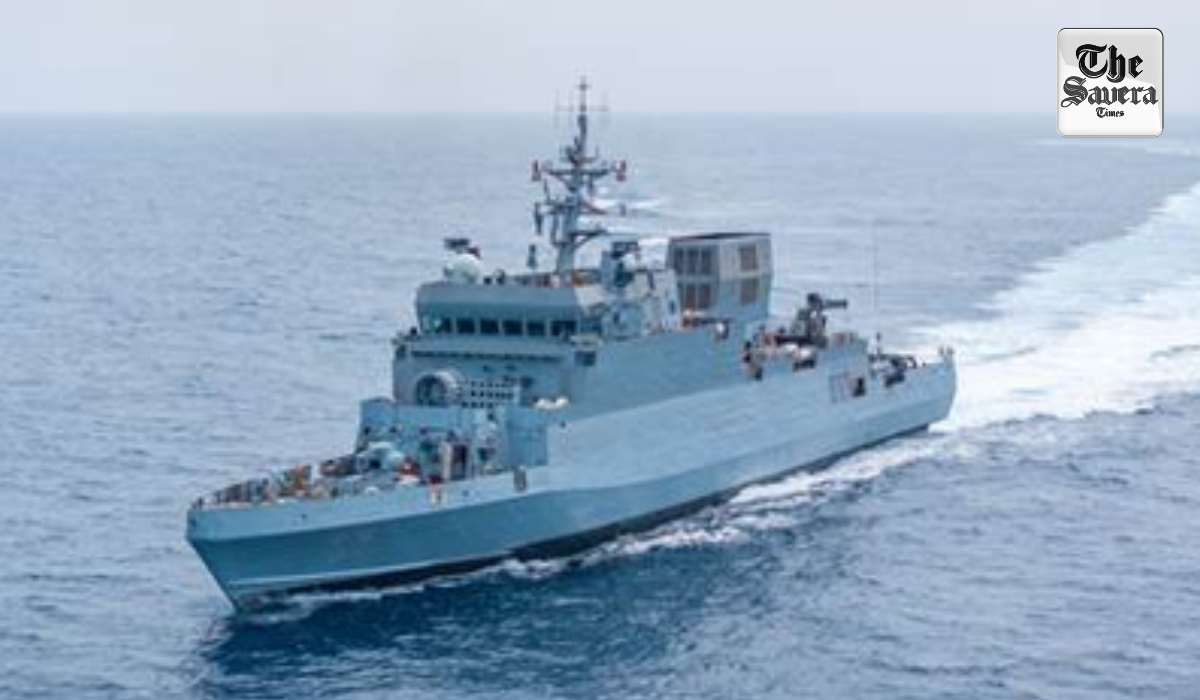
As India aims to expand its navy to more than 200 ships over the next decade to counter China’s rapidly growing naval fleet and Pakistan’s induction of advanced Chinese-built attack submarines, analysts see this month’s commissioning of the stealth frigate INS Mahendragiri and submarine hunter INS Malvan into the Indian Navy as a significant development. The two indigenously built warships underscore New Delhi’s ability to expand its naval capabilities while reducing dependence on foreign suppliers.
Mahendragiri, designed by the Indian Navy’s Warship Design Bureau and constructed by the Mazagon Dock Shipbuilders with 75 per cent indigenous content, reflects Prime Minister Narendra Modi’s push for Atmanirbhar Bharat (self-reliant India) across key industries, particularly in the critical defence sector.
The warship is the sixth to join the Nilgiri-class fleet. The seventh and final ship in the class, Vindhyagiri, is expected to join the fleet within months, while seven or eight next-generation warships under the proposed Project-17 Bravo are already in the pipeline. It noted that India’s navy currently comprises around 150 vessels, including an estimated 135 frontline combat platforms such as frigates, destroyers and submarines, while nearly 50 additional ships are under construction. Considering that composition is largely made up of indigenously supported ships, the target of a 200-ship navy by 2035 is well within reach.
Given the right impetus, India could even exceed this figure. Last year, Delhi unveiled a US$8.4 billion maritime revival package aimed at making India one of the world’s top five shipbuilding nations by 2047 marking the 100th anniversary of country’s independence. The goal of over 200 ships was ambitious but achievable. The recent achievements, including the INS Vikrant aircraft carrier, delivered in 2022; the indigenous Kalvari-class submarines; and, the 10 domestically-built destroyers.
The pipeline for domestic manufacturing has expanded to cover corvettes, frigates and patrol vessels, noting that domestic manufacturing still faced capacity constraints, a shortage of skilled workforce and supply chain bottlenecks affecting critical systems. India will likely need selective collaboration and technology transfers with foreign partners, such as France, Russia, Israel and the US for propulsion, sensors and weapons integration. Ships’ hull and systems integration could largely be done domestically, balancing self-reliance with timely delivery. Building a strong navy would be vital for India to secure its sea lanes, protect trade and maintain credible deterrence. With focused investment and pragmatic partnerships, India is well positioned to meet this goal and bolster regional stability
Delhi PWD Minister Parvesh Sahib Singh regretted slapping an AAP supporter and alleged that his family was abused...

India’s first LNG-powered train was flagged off from Sabarmati by Amit Shah and Gujarat CM Bhupendra Patel, introducing...

Raghav Chadha has welcomed TRAI’s new telecom rules providing prepaid users with more flexible recharge options, including 30-day...

Several Cockroach Janta Party volunteers have been allegedly detained by police in Assam. The pressure group claimed on...

The death of a 22-year-old student at a homestay on the outskirts of Guwahati, Assam, has raised serious...

CHANDIGARH: Senior Aam Aadmi Party (AAP) leader and Finance Minister Harpal Singh Cheema on Saturday tore into the...