Last Updated: October 21, 2026
Last Updated: October 21, 2026





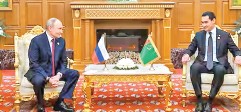
Turkmenistan, one of the world’s most closed and least understood nations, is marking 30 years of its policy of permanent neutrality with a rare international summit that brings together the leaders of Russia, Turkey and Iran. The meeting, held in the capital Ashgabat, highlights the country’s unusual place in global affairs and its deep commitment to political isolation. Despite its limited engagement with the world, Turkmenistan holds significant strategic value due to its vast natural gas reserves and its location bordering Iran, Afghanistan and the Caspian Sea.
The summit guest list features Russian President Vladimir Putin, Turkish President Recep Tayyip Erdogan and Iranian President Masoud Pezeshkian, along with other regional leaders. Their presence underlines Turkmenistan’s importance in regional energy and security discussions, even as the state maintains a tightly controlled political system.
Turkmenistan’s political landscape has been dominated by a presidential dynasty. Since independence from the Soviet Union in 1991, the country has had only three leaders. Saparmurat Niyazov, the first president, declared himself president for life and cultivated an extensive personality cult. He was known as Turkmenbashi, meaning father of the Turkmen, and ruled until his death in 2006. He was succeeded by Gurbanguly Berdymukhamedov, who reinforced the system of centralized power before passing the presidency to his son Serdar in 2022. Although Serdar holds the formal title, both father and son effectively govern together. Gurbanguly retains immense authority and is celebrated in state media as the hero-protector of the nation. He even built a new city named Arkadag, after his own title, at a cost exceeding $5 billion, and erected enormous golden statues in his honour.
Neutrality has defined Turkmenistan’s international posture. Since the United Nations recognized its permanent neutrality in 1995, the concept has been central to the country’s identity. A towering Neutrality Monument, nearly 100 metres high and topped with a golden statue of Niyazov, dominates Ashgabat’s skyline. The neutrality doctrine prevents the country from joining military alliances or deeper political unions. It also provides a justification for the government’s isolationist stance, limiting outside influence and restricting engagement with democratic institutions.
On the eve of the current summit, President Serdar Berdymukhamedov released yet another book praising neutrality, presented by the state as a gift to the Turkmen people. The country’s strongest international ties are with China, Russia, Iran and Turkey, largely driven by long-term natural gas contracts. Relations with Western nations remain minimal. Turkmenistan has one of the most restricted media environments in the world, with independent journalism and human rights scrutiny sharply limited. Amnesty International notes that international human rights groups and UN mechanisms are largely barred from operating inside the country, while Reporters Without Borders describes the flow of information as fragmented, controlled and designed solely to praise the leadership.
Turkmenistan’s natural resources shape much of its geopolitical importance. The country is believed to hold the fourth-largest natural gas reserves in the world, making it a key supplier to regional powers. Yet water scarcity presents serious challenges. Scientists warn that climate change will intensify shortages in a nation where three-quarters of the territory is covered by the Karakum desert. Cotton production remains a major sector of the economy, but its high water consumption has placed further strain on limited supplies.
One of Turkmenistan’s most unusual landmarks is the Darvaza gas crater, often called the Gateway to Hell. It has burned continuously since 1971, when Soviet geologists accidentally set it alight. Despite periodic announcements by Turkmen authorities that they intend to extinguish it, the crater continues to burn and has become a major tourist attraction. The country also faces serious methane emissions challenges and is considered the world’s largest methane emitter by the International Energy Agency.
Turkmenistan’s national identity is closely linked to its revered animal breeds. The Akhal-Teke horse and the Alabai shepherd dog are celebrated as symbols of the nation. Statues honouring both animals are widespread, and they are commemorated in state ceremonies and public holidays. Former president Gurbanguly Berdymukhamedov has even composed songs dedicated to his favourite horse, adding to the personal mythology surrounding the ruling family.
The summit in Turkmenistan brings together major regional powers, but it also highlights the country’s unique position: a resource-rich, politically isolated state governed by a powerful family dynasty that remains firmly committed to its decades-old doctrine of neutrality
A fire in a hut in Nonapar village of Deoria district claimed three lives, including those of a...
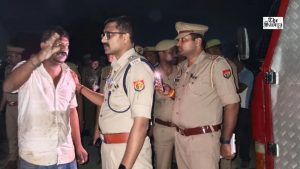
Amit Shah paid tribute to police personnel who died in the line of duty at the National Police...
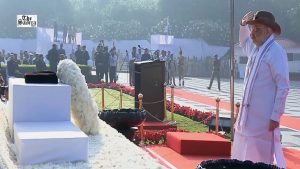
Reduced water levels at Har Ki Pauri and other Haridwar ghats have inconvenienced pilgrims during the Upper Ganga...
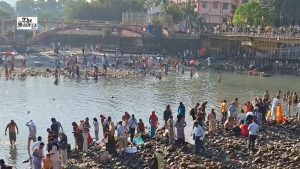
Six people returning from a Dussehra Mela were seriously injured when a car hit them on National Highway...

A bus travelling from Pachiound to Ramnagar fell into a gorge at Gulli Gula in Udhampur district. Nine...
Start your day with The Savera Morning Brief, bringing you the latest news from India and around the...

Aries: The day will be auspicious...