Last Updated: October 21, 2026
Last Updated: October 21, 2026





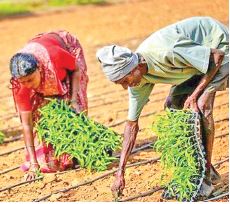
Helping the world’s small-scale farmers adapt to climate change would require $443 billion annually, according to a new analysis released ahead of COP30 in Brazil. The figure is lower than the $470 billion governments currently spend each year on agricultural subsidies that damage the environment and public health.
The study, conducted by Climate Focus for the Family Farmers for Climate Action (FFCA), highlights a vast funding gap that threatens global food security. The FFCA represents 95 million small-scale producers across Africa, Latin America, Asia, and the Pacific. Despite producing half of the world’s food calories and sustaining 2.5 billion people, these smallholders receive just 0.36 per cent of the climate finance they need to adapt to intensifying droughts, floods, and storms.
The report estimates that farmers cultivating up to 10 hectares need an average of $953 per hectare each year — roughly $2.19 a day, the price of a cup of coffee in Germany — to adopt climate-resilient practices, improve safety nets, and access digital climate tools. “This isn’t charity; it’s an investment in global food security,” said Elizabeth Nsimadala, president of the Eastern Africa Farmers Federation, which represents 25 million producers.
The findings come as adaptation finance takes centre stage at COP30, where governments will finalise indicators for the Global Goal on Adaptation and discuss a new climate-finance roadmap. Experts warn that smallholders risk being overlooked again since current tracking mechanisms do not identify how much funding reaches them.
In 2021, only $1.59 billion in climate finance went directly to smallholder farmers and rural communities worldwide. By contrast, farmers themselves spent about $368 billion — up to 40 per cent of their annual income — on measures such as irrigation, soil conservation, and crop diversification. “Investing in smallholders is not only an economic necessity but an ecological imperative,” said Thales Mendonça, an agroforestry farmer from Brazil.
The report urges governments to redirect harmful subsidies, reform global financial systems, and introduce fair taxation to mobilise the required $443 billion. This amount equals one-quarter of the combined annual revenues of the world’s 25 largest food corporations and less than one-third of developing nations’ 2023 debt-servicing costs.
Over the past three decades, climate disasters have caused $3.8 trillion in agricultural losses. The report argues that strengthening smallholder resilience could prevent further losses and safeguard key supply chains for crops such as rice, wheat, cocoa, and coffee.
The FFCA has called for the creation of a Farmers’ Resiliency and Empowerment Fund, led by farmer organisations, to deliver direct grants and low-interest loans to producers. “Governments must make it easier for family farmers to access adaptation finance,” said Esther Penunia, Secretary-General of the Asian Farmers’ Association.
As Brazil prepares to host COP30, the summit is expected to prioritise sustainable agriculture, agroecology, and family farming. “Supporting smallholders is key to tackling hunger, restoring ecosystems, and securing our food future,” Nsimadala said. “The cost of inaction will be far greater.”
Protests in Jakarta, Yogyakarta and Bandung brought students onto the streets over rising costs, forest fires and civil...

Organisations linked to Neville Roy Singham are under US congressional scrutiny over funding. Their coverage of protests in...

US President Donald Trump says Washington and New Delhi are close to a trade agreement that will differ...

Iran has ruled out transferring its enriched uranium stockpile outside the country, with security official Mohsen Rezaei reiterating...

Donald Trump has urged Volodymyr Zelensky to pursue a peace deal with Russia, warning that Ukraine could face...

Pakistan, battling insurgencies at home and tensions along multiple borders, is too overstretched to offer meaningful military support...

Aries: The day will be auspicious...