Last Updated: October 20, 2026
Last Updated: October 20, 2026





Abhishek Vij
People eagerly awaited May 4th, the crucial day for counting votes for the assembly elections in four states and one union territory. West Bengal was the most curious, wondering whether Mamata Banerjee, who had served as Chief Minister for the past three terms, would return to power or whether Modi’s magic would work this time. This time, the contest in West Bengal was a close one.
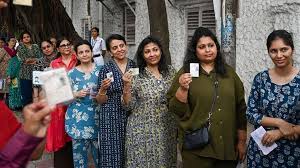
The elections were marked by a long period of accusations and counter-accusations. It was alleged that the central government had used the intensive revision of voter lists as a weapon to cut the votes of Trinamool supporters and that the elections were conducted with a heavy deployment of central forces. This assembly election saw the highest voter turnout in West Bengal’s history (over 90 percent). Nevertheless, the elections concluded peacefully. Well, the public delivered its verdict on May 4th.
Thanks to the efforts of Prime Minister Narendra Modi and Union Home Minister Amit Shah, the lotus bloomed for the first time in West Bengal. While the BJP reached 200 seats, Mamata Banerjee’s Trinamool Congress was reduced to less than 100. The public’s vote was clearly visible. Prime Minister Modi declared that the lotus had bloomed from Gangotri to Gangasagar. Meanwhile, in Assam, the main contest was between the BJP and the Congress, but the public voted for the BJP and once again expressed confidence in the leadership of Himanta Biswa Sarma. Instead of Congress’s allegations of corruption, the public gave the Hemant government a majority, surpassing the previous term. A major upset occurred in Tamil Nadu. While all exit polls predicted the return of M.K. Stalin to the 234-member assembly, Stalin’s DMK finished second, and popular actor Vijay’s TVK, contesting for the first time, emerged as the largest party.
This time, the governance of Tamil Nadu is shifting to new hands. Great news for the Congress party came from Kerala. After ten years, the Congress-led UDF (Union Democratic Front) won. The ten-year rule of the Left parties ended in Kerala, and the Congress alliance won with a landslide victory. The BJP alliance won in the Union Territory of Puducherry. In a way, the BJP had the upper hand in these assembly elections. Looking at this entire electoral landscape, one feels like saluting the maturity of the Indian electorate.
No matter how much accusations and counter-accusations are made, the Indian voter casts his vote without any hesitation. What could be more dignified than this for Indian democracy? If voters in West Bengal have given a clear majority, they have also done so in Kerala and Assam. In Tamil Nadu, the tables were turned, defying all predictions. The public casts its vote thoughtfully, despite long speeches and propaganda. It was being said that the contest in West Bengal would be a close one, but the voter turnout of over 90 percent perhaps guaranteed that this time people have come out to change the government.
The Trinamool Congress repeated the same old refrain that EVMs had been hacked, but these allegations hold no meaning now. Even such political propaganda cannot mislead the public. The assembly elections in all five states have passed the test of democracy. For this, Indian voters and the Indian democratic process deserve praise.
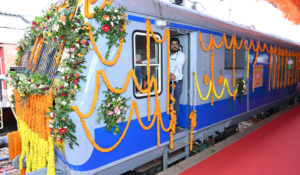
A historic milestone was achieved on Tuesday in the expansion of Chhattisgarh's rail networkA historic milestone was achieved...
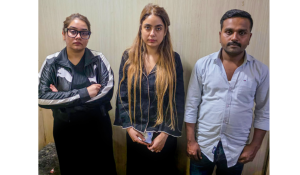
Model Shraddha Dubey, one of the main accused in the death of Lucknow businessman Shiv Sharma, has been...
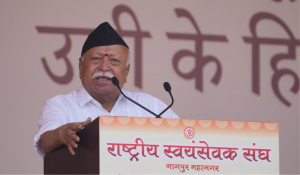
Rashtriya Swayamsevak Sangh (RSS) chief Mohan Bhagwat on Tuesday called for strengthening national unity, social harmony, indigenous practices...
Amidst comparisons of youth protests in India to political movements and regime changes in France, Nepal, and Bangladesh,...

Rashtriya Swayamsevak Sangh (RSS) chief Mohan Bhagwat appealed for maintaining social unity in his Vijayadashami address in Nagpur...
Good Afternoon Viewers! Stay updated with The Savera Times Afternoon Bulletin, bringing you the latest news from Punjab,...

Aries: The day will be auspicious...