Last Updated: October 15, 2026
Last Updated: October 15, 2026





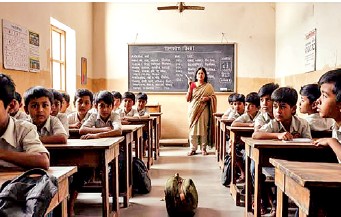
Education in India has traditionally been viewed as a linear process: schooling followed by higher education, leading to employment. This model is increasingly misaligned with the realities of a rapidly changing economy. As technology evolves and job roles transform, education is gradually being reimagined as a lifelong process rather than a one-time phase.
The pace of technological change has shortened the relevance cycle of skills. Knowledge acquired in formal education can become outdated within years, sometimes months. This has led to growing demand for continuous learning—short courses, certifications, and skill upgrades that allow individuals to remain relevant in the workforce.
Online platforms have played a major role in enabling this shift. Accessible from anywhere, they offer flexibility for working professionals, students, and those seeking career transitions. Fields such as data analysis, digital marketing, design, and technical trades have seen particularly strong demand. Learning is no longer confined to classrooms or institutional schedules.
Employers are also adjusting expectations. Many organisations now prioritise adaptability and willingness to learn over fixed qualifications. Internal training programs, mentorship models, and project-based learning are becoming more common. This reflects recognition that skills development is an ongoing process.Vocational and technical education are gaining renewed importance. As traditional academic pathways fail to absorb all learners, skill-based education offers alternative routes to employment. Integrating vocational training with formal education systems can help reduce stigma and improve outcomes.
Adult education presents another emerging focus. Workers displaced by automation or economic shifts require opportunities to reskill without restarting formal education from scratch. Flexible learning models allow mid-career professionals to adapt while maintaining livelihoods.
Despite progress, structural challenges remain. Access to quality learning varies widely across regions. Digital divides, language barriers, and affordability continue to limit participation. Ensuring that lifelong learning does not deepen inequality is a critical policy concern.
Government initiatives aimed at skill development and digital education are expanding, but coordination between education providers, industry, and policymakers remains uneven. Aligning training with real labour market needs is essential for meaningful impact.
Reframing education as lifelong learning represents a cultural shift as much as an institutional one.
Mirzapur: Uttar Pradesh Chief Minister Yogi Adityanath on Thursday accused the Samajwadi Party (SP) and the Congress of...
Congress leaders and workers in Dehradun raised slogans outside Lok Bhavan on Thursday regarding the infamous Ankita Bhandari...
New Delhi: The Delhi High Court on Thursday recorded the assuarance by Delhi Polices promise that all legal...
New Delhi: The Ministry of Defence on Thursday said it has signed contracts worth Rs 4,106 crore for...

Patna: An Excise Department constable was killed after suspected liquor smugglers and an alleged accomplice opened fire on...

New Delhi: Amid the ongoing protests, investigators have found that certain elements backed by Pakistan launched a multi-layered...
Aries: The day will be auspicious...