Last Updated: October 24, 2026
Last Updated: October 24, 2026





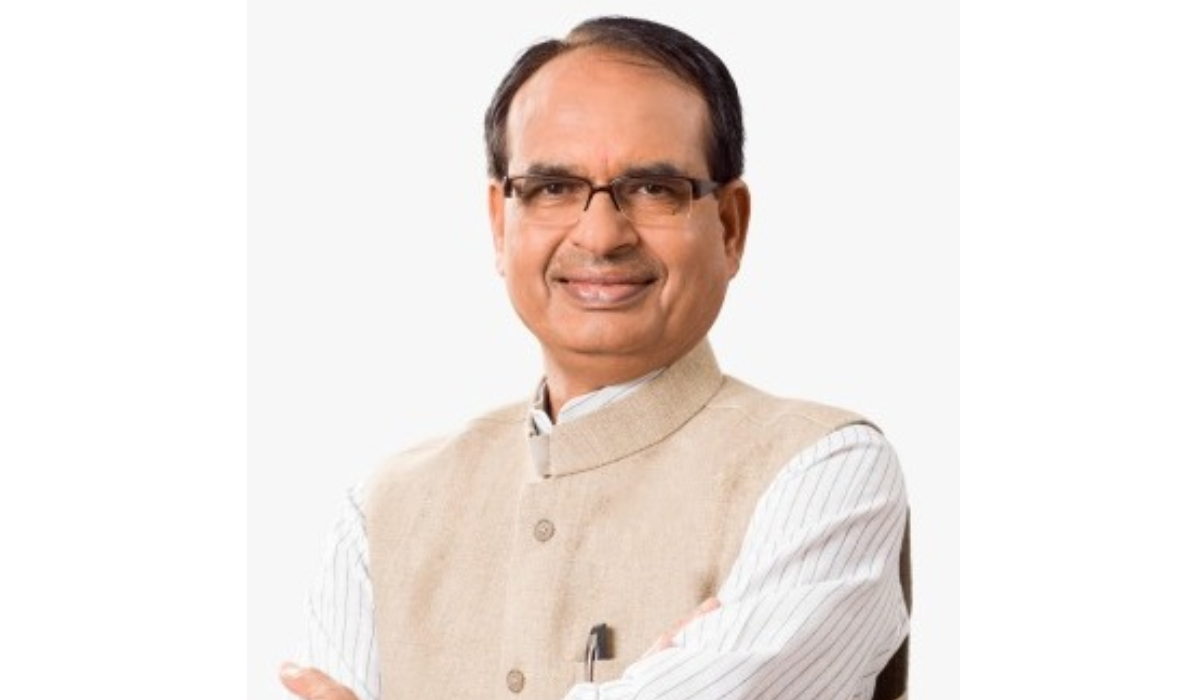
When Honorable Prime Minister a s s umed office in 2014, agriculture and farmer welfare were placed at the heart of India’s development agenda. Since 2015, this commitment has increasingly translated into a broader transformationfrom improving production and farm incomes to building an agriculture sector that is productive, resilient, technologydriven and sustainable. The Prime Minister has repeatedly emphasised that “For a Viksit Bharat, Indian agriculture must also be developed.” He has also called for India not merely to meet its own food requirements but to emerge as a global food supplier. Adding to Lal Bahadur Shastri’s call of “Jai Jawan, Jai Kisan” and Atal Bihari Vajpayee’s “Jai Vigyan”, the Prime Minister gave the nation “Jai Anusandhan”. With that phrase he placed research and innovation at the heart of India’s farm future. Those words were more than a statement of policy direction; they embodied a pragmatic vision whose wisdom and foresight were unmistakably vindicated by the evidence that emerged a decade later. From Food Security to a New Agricultural Paradigm This vision represents a decisive shift in the way we must look at Indian agriculture. The Green Revolution gave India food security. Today, our responsibility is to build the foundations of nutritional security, farmer prosperity, resource security and global competitiveness. India’s agricultural journey is one of remarkable achievement. From a country once dependent on food imports, India became self-sufficient in staple cereals within a few decades. The Green Revolution was powered by science, improved seeds, irrigation, infrastructure, institutional credit, extension and policy support. It demonstrated what can happen when scientific capability and political commitment converge around a national objective. But agriculture cannot remain frozen in the priorities of the past. The aspirations of our farmers have changed, the consumption patterns of our citizens have changed, markets have changed and the climate itself is changing. A Decade of Broad-Based Agricultural Growth The transformation underway since 2015 is therefore significant. The years 1995–96 and 2014–15 have been marked as structural breakpoints because they mark distinct phases in the evolution of Indian agriculture. The first reflects the gradual impact of economic liberalisation, greater market integration, changing consumption patterns and the slowdown in cereal productivity growth, while the second marks the emergence of a more diversified, technology-enabled and resilienceoriented agricultural system driven by irrigation expansion, digital platforms, market reforms and increasing focus on sustainability and climate adaptation. Agricultural growth, which averaged about 2.7 per cent during 1967–1995 and about 3.0 per cent during 1996–2014, accelerated to around 4.5 per cent during 20152025 (Food grains at 8.4MT/ annum, Fruits and Vegetables at 7.6MT/annum and Milk at Mt/ annum). The last two years have witnessed an exceptional increase in food grain production, with the increase recorded at 22.1MT per annum, significantly higher than that observed during the preceding years.. This achievement reflects the combined impact of stronger Centre–State coordination, effective convergence of programmes, adoption of climateresilient technologies, focused investments, and enhanced support to farmers. More importantly, this growth has become broader, drawing strength not only from cereals but also from horticulture, dairy, fisheries, poultry and other high-value activities. This is the agriculture that will power the next phase of India’s development. Building the Architecture for Farmer-Centric Growth The Government of India has already created an important architecture for this transition. The Pradhan Mantri Krishi Sinchayee Yojana is promoting efficient water use. The Soil Health Card initiative has placed soil testing and balanced nutrient management at the centre of farm decisionmaking. PM-KUSUM is linking agriculture with renewable energy. Farmer Producer Organisations are strengthening aggregation and bargaining power. e-NAM is connecting agricultural markets digitally, while the Agriculture Infrastructure Fund, PM Kisan SAMPADA Yojana and PMFME are strengthening post-harvest infrastructure and processing. These initiatives must now converge into a single farmercentric value chainfrom seed to soil,farm to market and laboratory to livelihood.Technology will be central to this transformation. Indian agricultural research has already moved beyond the traditional objective of simply increasing yields. Between 2014 and 2025, 3,236 crop varieties were released, compared with 1,540 during 2003–2014. A large proportion of recent varieties have been designed with climate resilience in mind, while biofortification is receiving greater attention. Efficient Markets and global value chains A farmer who produces efficiently must also be able to sell profitably. Agricultural markets, storage, cold chains, logistics, grading, processing and digital platforms must grow alongside production. The expansion of agricultural output and diversification into perishable commodities have created new requirements for efficient aggregation and market connectivity. Farmer collectives, cooperatives and FPOs can play a transformative role by reducing transaction costs, improving bargaining power and enabling farmers to participate in organised value chains.India must increasingly look beyond the mandi to the marketplace of the world. Our ambition should be to develop Indian agricultural products with globally recognised quality, traceability, safety and branding. The next phase must connect farmers not merely with domestic consumers but with international value chains. This will create employment, encourage rural entrepreneurship and enable a greater share of the value generated by agriculture to remain in rural India.But this transformation cannot be delivered by the Union Government alone. Agriculture is a shared national responsibility. States, local governments, research institutions, FPOs, cooperatives, private enterprises, financial institutions and civil society must work together. The future requires convergence across agriculture, water, energy, food processing, nutrition, climate, trade and rural development. (Author is Union Minister of Agriculture & Farmers Welfare, and Rural Development, Government of India.
Cockroach Janata Party leaders Saurav Das and Ashutosh Ranka have been released after the SEM Court granted them...

As the monsoon approaches and the first rains arrive, cities across India begin preparations to address the seasonal...

UDAN completes ten years in 2026. Over the past decade, it has expanded India’s regional aviation network, connecting...

A powerful explosion erupted after firecrackers stored in a house in Alampur village, Siwan district, Bihar, on Friday

A Delhi court on Friday sent social media influencer Amir Shokeen to one-day judicial custody in connection with...

The Delhi High Court on Friday dismissed All India Students' Association (AISA) President Neha Bora's plea challenging the...

Aries: The day will be auspicious...