Last Updated: October 20, 2026
Last Updated: October 20, 2026





Abhishek Vij
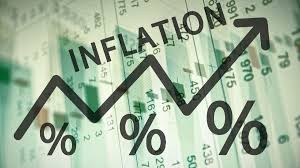
Since the devastating war between the United States, Israel, and Iran, energy supply chains around the world have been disrupted. While India has kept petrol and diesel prices in check by reducing excise duties and waiving customs duties, the government has no control over the price of LPG cylinders. Therefore, the price of domestic and commercial LPG cylinders was increased. This price increase impacted the service sector.
The service sector contributes a significant portion of India’s gross domestic income. When the unavailability of commercial gas cylinders disrupted this sector, it began to impact the prices of other commodities as well. The situation is such that inflation, which was controlled by keeping retail prices at 1.9 percent before the war, has now reached 4.6 percent. As soon as the Indian government releases petrol and diesel prices to the market after the elections in five states, the increase in petroleum prices will inevitably lead to an increase in the prices of other commodities. When inflation rises, the Reserve Bank tightens its credit policy to reduce the flow of liquid currency into the market and prevent unnecessary demand from raising prices. Recently, the Reserve Bank and the government claimed that inflation had been brought under control in the country, and hence, they were now adopting a liberal credit policy.
Under this, the repo rate was continuously reduced and brought down to 5.2 percent. But now, due to the disruption in the supply chain during the current war, business uncertainty has increased and black marketers have tried to increase prices by creating artificial shortages, hence no one can rule out rising inflation or inflation in the coming days. However, for now, in the bi-monthly monetary policy announced by the Reserve Bank on Wednesday, the monetary policy has been kept neutral. This means that the repo rate has been kept unchanged at 5.25 percent. This means that taking loans will not become expensive.
Monthly loan installments will not increase, and credit will remain available in the market as before. However, the government hopes that the Reserve Bank will monitor the situation closely, maintain its policy flexibility, and prevent excessive liquidity from increasing in the market. It should be made clear that further cuts in the repo rate are unlikely. This will likely be the last time the repo rate remains unchanged. The next monetary policy announcement is likely to increase the repo rate. The war is impacting the country’s economic situation. The Reserve Bank has projected an inflation rate of 4.6 percent in 2026-27, while the retail rate is estimated to be a safe 4 percent. It should be noted that this is an average growth rate.
Retail items will be available in the market at much higher prices, as rising energy and other raw material prices could impact domestic production in the 2026-27 fiscal year. The Reserve Bank of India has estimated the country’s economic growth rate to be 6.9 percent due to the extraordinary circumstances of the war, compared to 7.6 percent this year. While the country’s banking system is undoubtedly strong, monetary policies do have an impact. The irony is that the country cannot suddenly adopt a tight monetary policy and stop liquidity flows, as it must also consider the country’s growth rate and the well-being of domestic investors.
Good Evening Viewers! Catch up on the day's biggest stories with The Savera Times Evening Bulletin. Get the...

Congress leaders continued their protest outside the Jaipur Police Commissionerate on Tuesday, demanding the registration of a zero...
On the auspicious occasion of Vijayadashami, Prime Minister Narendra Modi on Tuesday called on the countrymen to unite...
A historic milestone was achieved on Tuesday in the expansion of Chhattisgarh's rail networkA historic milestone was achieved...
Model Shraddha Dubey, one of the main accused in the death of Lucknow businessman Shiv Sharma, has been...

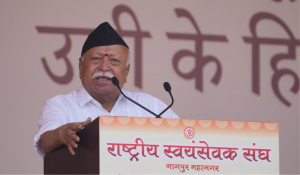
Rashtriya Swayamsevak Sangh (RSS) chief Mohan Bhagwat on Tuesday called for strengthening national unity, social harmony, indigenous practices...
Aries: The day will be auspicious...